IgNobel 2025
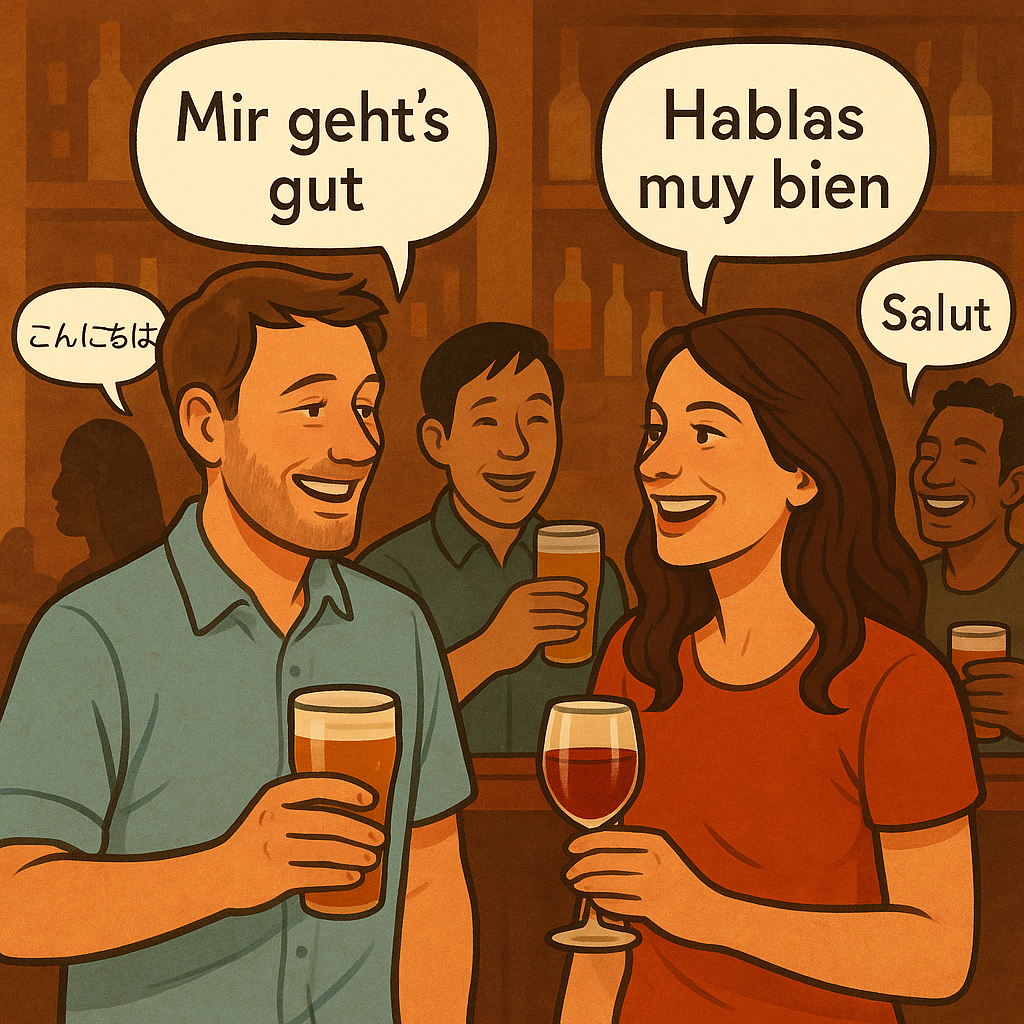
Can a tipple help you speak better in a foreign language. Research seems to say it can.
Can a tipple help you speak better in a foreign language. Research seems to say it can. Listen to the report (C1 Level)
Listen to part 1
Now listen to part 2
📰 Dutch Courage Vindicated: Ig Nobel Laureates Prove Alcohol’s Linguistic Benefits (C1)
Test Your Understanding & Learn Vocabulary
Answer each question to reveal its vocabulary explanation:
In the title, ‘vindicated’ suggests that the concept of Dutch courage has been:
The term ‘laureate’ in academic contexts specifically refers to someone who:
In this context, ‘provokes’ means to:
The phrase ‘dismissed such an approach outright’ indicates that conventional wisdom rejected it:
By beginning with ‘Intriguingly,’ the author signals that what follows is:
The ‘disconnect’ refers to:
In this sentence, ‘warranted’ most closely means:
In neuroscience, ‘memory consolidation’ refers to:
Something that is ‘counterproductive’ is:
‘Invariably’ indicates that the ceremony is festive and absurd:
The word ‘deliberately’ emphasizes that the ceremony’s absurdity is:
Saying ‘categorically no’ means rejecting something:
To ‘metabolize’ a substance means to:
The adverb ‘meticulously’ emphasizes that the tracking was done:
To ‘disseminate’ a finding means to:
Grammar Focus: Mixed conditionals (past hypothetical condition + past modal perfect result)
Among this year’s laureates were Maastricht University scientists who demonstrated that modest alcohol consumption could have enhanced language learners’ pronunciation—had conventional wisdom not dismissed such an approach outright.
The structure ‘could have enhanced…had conventional wisdom not dismissed’ expresses:
Grammar Focus: Modal perfects for retrospective judgment and speculation
Intriguingly, the slightly tipsy Germans themselves didn’t feel they were performing any better—a disconnect that might have warranted further investigation had the researchers pursued subjective perception as a variable.
The phrase ‘might have warranted’ suggests that further investigation:
Grammar Focus
Mixed conditionals (past hypothetical condition + past modal perfect result)
“Among this year’s laureates were Maastricht University scientists who demonstrated that modest alcohol consumption could have enhanced language learners’ pronunciation—had conventional wisdom not dismissed such an approach outright.”
Pattern: modal perfect (could/might/would + have + past participle) + inverted past perfect condition (had + subject + past participle)
Function: Expresses counterfactual situations combining different time frames; speculates about how a past condition that didn’t happen would have affected a past result; used for sophisticated hypothetical reasoning and critical evaluation
Contrast with: Third conditional uses ‘if + past perfect’ in condition clause; mixed conditional uses inverted structure (Had + subject) and often combines with present/past modal perfects to show unrealized potential or critique past decisions. More formal and academic than standard third conditional.
Modal perfects for retrospective judgment and speculation
“Intriguingly, the slightly tipsy Germans themselves didn’t feel they were performing any better—a disconnect that might have warranted further investigation had the researchers pursued subjective perception as a variable.”
Pattern: modal verb (could/should/might/would) + have + past participle
Function: Expresses speculation, criticism, or evaluation of past events; indicates what was possible, advisable, or likely in the past but did not occur; used for academic critique, counterfactual analysis, and expressing regret or missed opportunities
Contrast with: Simple past modals (could/should/might + base verb) refer to present or future possibility; modal perfects specifically reference past time and emphasize the unrealized nature of the action. ‘Should have’ expresses stronger criticism than ‘might have’ (speculation) or ‘could have’ (possibility).