Get – In Business Settings
Core PathWay
1 🌐 Introduction to ‘Get – In Business Settings’
The word get is very popular in business conversations. When you talk with your colleagues at work, you can use get in many ways. For example, you can say ‘I need to get back to that client‘ or ‘Let’s get together for a meeting.’ These phrases sound natural and friendly. But be careful! When you write formal emails or reports, you should not use get too much. In formal business writing, use words like ‘receive,’ ‘obtain,’ or ‘arrange’ instead. The word get is perfect for informal communication with your peers – the people you work with every day. You will hear many phrasal verbs and idioms with get in the office. These expressions help you sound natural when you speak English at work. Learning when to use get and when to avoid it will make your business English much better.
💬 Planning a Project Meeting
Two colleagues talk about starting a new project
2 🔬 The Key Phrases you need for ‘Get – In Business Settings’
get across – to make someone understand your idea or message
Example: I need to get across the importance of this deadline to my team.
get ahead – to become more successful than others in your work
Example: She works hard because she wants to get ahead in her career.
get along with – to have a good relationship with someone at work
Example: It’s important to get along with your colleagues.
get around to – to finally do something you planned to do
Example: I will get around to finishing that report tomorrow.
get back to – to contact someone again later
Example: I will get back to you about the project next week.
get behind – to become late with your work
Example: Don’t get behind with your tasks this month.
get down to – to start doing something seriously
Example: Let’s get down to work and finish this proposal.
get on with – to continue doing your work
Example: I need to get on with my presentation now.
get through – to finish something difficult
Example: We need to get through all these emails today.
get together – to meet with people
Example: Can we get together tomorrow to discuss the budget?
get up to speed – to learn the information you need to do something
Example: The new worker needs to get up to speed quickly.
get the ball rolling – to start something, to begin a process
Example: Let’s get the ball rolling on this new project today.
Key Terms
💬 Discussing Work Progress
Team members check on project status
3 🔍 Other Key Terms for ‘Get – In Business Settings’
get your foot in the door – to get your first chance to work in a company or industry
Example: This internship will help you get your foot in the door of the business world.
get down to business – to start talking about work, not personal things
Example: After coffee, we need to get down to business and discuss the sales numbers.
get cold feet – to become nervous or afraid about doing something
Example: He got cold feet before the big presentation.
get the green light – to receive permission or approval to do something
Example: We got the green light from the boss to start the new project.
deadline – the time or date when you must finish something
Example: The deadline for this report is Friday.
project – a piece of work that has a clear goal and takes time to complete
Example: Our team is working on a big project this month.
client – a person or company that pays for your services
Example: I have a meeting with an important client tomorrow.
proposal – a formal plan or suggestion for business
Example: We sent the proposal to the client last week.
feedback – comments or opinions about your work
Example: My boss gave me good feedback on my presentation.
approval – official permission to do something
Example: We need approval from the manager before we start.
schedule – a plan that shows when things will happen
Example: Please check your schedule for next week’s meetings.
task – a piece of work that you need to do
Example: I have three tasks to finish today.
Key Terms
💬 Waiting for Approval
Colleagues discuss getting permission for a new idea
4 🧠 Worth Thinking About
Here’s something interesting: the word ‘get’ is one of the most common verbs in spoken English, but many English teachers tell students not to use it in formal writing! Why? Because ‘get’ has over 50 different meanings, so it can be unclear. In business emails and reports, people prefer specific verbs like ‘receive,’ ‘obtain,’ ‘achieve,’ or ‘acquire.’ But in meetings and conversations, everyone uses ‘get’ all the time. Native speakers say ‘get’ hundreds of times every day at work. So remember: get is your friend when you speak, but not when you write formal documents. This makes English tricky, but also interesting!
Member-Exclusive Vocabulary Review & Acquisition System
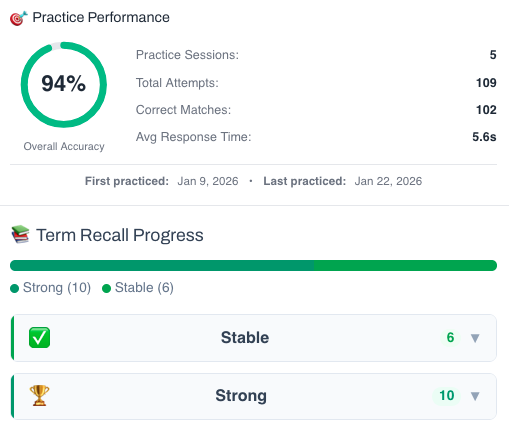
This isn’t a simple quiz — it’s a fully tracked learning system. You build knowledge through recognition, then recall, and your progress feeds directly into the Integrated Practice Bar (Writing tasks, AI Chat, and more).
- Practice sessions, accuracy, and response-time tracking
- Term strength levels (Learning → Stable → Strong)
- Personal progress history for each unit
This feature is available to YSP members.
Explore Membership Benefits