Airport Stress and Smart Design Solutions
Core PathWay
1 Section 1. Why Airports Make Us Anxious
Have you ever felt your heart racing as you rush through an airport, worried you’ll miss your flight? You’re definitely not alone. Airports are overwhelming places for millions of travellers, and there are clear reasons why. Understanding what triggers stress can help us think about solutions – and give you the vocabulary to talk about these experiences in English.
By the end of this lesson, you’ll be able to describe the specific problems that make airports stressful, discuss design features that could improve the experience, and use practical vocabulary for talking about spaces, crowds, and environmental factors. This language is useful not just for travel conversations, but also for discussing urban planning, workplace design, or any situation where physical spaces affect how people feel.
So what exactly makes airports so stressful? First, there’s the challenge of trying to navigate an unfamiliar building while watching the clock. You need to find your checkpoint, get through security, locate your gate – often while squeezing through packed corridors with heavy luggage. The time pressure creates anxiety that can quickly escalate.
Second, there’s uncertainty at every stage. Will the security queue take five minutes or fifty? Is your gate nearby or a twenty-minute walk away? Where exactly is the baggage claim? This lack of clear information keeps your stress levels high. Poor wayfinding – the system of signs and information that helps people find their way – makes this worse. When signage is confusing or contradictory, even simple tasks become frustrating.
Third, airports assault your senses. Fluorescent lighting, constant announcements echoing through terminals, crowds of strangers, and the smell of mixed food and cleaning products create sensory overload. Your brain is working overtime to process everything, which is exhausting even before your journey begins.
Key Terms
💬 Dialogue 1: Discussing Airport Stress Triggers
Two colleagues talking about a recent business trip
2 Section 2. How Design Can Alleviate Airport Stress
The good news? Thoughtful design can alleviate many of these problems. Airports aren’t just functional buildings – they’re complex environments where design choices directly impact how millions of people feel. Let’s explore five key areas where smart design makes a real difference.
Natural light transforms the airport experience. Instead of harsh fluorescent tubes, large windows and skylights reduce eye strain and help maintain your body’s natural rhythms. Some modern airports feature glass walls throughout the terminal, connecting passengers visually to the outside world. This transparency reduces the trapped feeling that windowless corridors create.
Acoustics matter enormously. Traditional terminals are echo chambers where every announcement, conversation, and rolling suitcase bounces off hard surfaces. Better design uses sound-absorbing materials on ceilings and walls, strategically placed to reduce echo without making spaces feel dead. Some airports create quiet zones specifically for passengers who need to escape the noise.
Managing passenger flow prevents the bottlenecks that cause stress. This means thinking carefully about where queues form, how wide corridors need to be, and how to separate different streams of people. When terminals are spacious and pathways are clear, even busy airports feel more manageable. Good flow design also includes plenty of seating near gates, so people aren’t standing anxiously or sitting on floors.
Calming elements can counteract the institutional feel. Greenery – living plants and even indoor gardens – provides visual relief and improves air quality. Water features create pleasant background sounds that mask harsh noises. Art installations give people something interesting to look at while waiting. These touches remind passengers that airports can be humane spaces, not just processing facilities.
Finally, intuitive wayfinding reduces cognitive load. This means clear sight lines so you can see where you’re going, consistent signage systems that use symbols as well as text, and digital displays that update in real-time. The best wayfinding is almost invisible – you find your way without thinking about it. Reducing visual clutter helps too; when every surface isn’t covered with advertisements, important information stands out.
Key Terms
💬 Dialogue 2: Proposing Design Solutions
Two friends discussing how to improve airport design
3 Section 3. Language Toolkit for Discussing Spaces and Solutions
Now let’s equip you with practical language for discussing airport design and spatial problems. These phrases work in many contexts – from describing your travel experiences to discussing workplace layouts or urban planning.
Sentence starters for describing problems:
– ‘The main issue is that…’
– ‘What makes it stressful is…’
– ‘One thing that doesn’t work is…’
– ‘The problem with the current design is…’
– ‘It’s particularly difficult when…’
– ‘People struggle with…’
Sentence starters for proposing solutions:
– ‘One way to improve this would be…’
– ‘It might help if they…’
– ‘A better approach could be…’
– ‘They could reduce stress by…’
Useful phrases for spatial discussions:
– ‘too cramped’ / ‘not enough space’
– ‘poorly lit’ / ‘harsh lighting’
– ‘difficult to find your way around’
– ‘creates a sense of…’ (calm / chaos / confusion)
– ‘the layout doesn’t make sense’
– ‘better use of space’
– ‘more thoughtful design’
– ‘passenger-friendly’
– ‘takes into account’ (people’s needs / stress levels)
– ‘makes a huge difference’
– ‘contributes to the problem’
– ‘from a design perspective’
Here are two mini-dialogues showing this language in action:
Dialogue 1: Discussing a stressful airport experience
A: How was your flight?
B: The flight was fine, but the airport was a nightmare. The main issue is that the signage is so confusing.
A: Yeah, I know that airport. It’s particularly difficult when you’re connecting to another terminal.
B: Exactly! And the corridors are too cramped when everyone’s rushing. People struggle with finding their gates on time.
Dialogue 2: Proposing design improvements
A: So what would you change about airport design?
B: Well, one way to improve this would be to add more natural light. Most terminals are so poorly lit.
A: That makes sense. It might help if they created some quiet zones too, away from all the announcements.
B: Absolutely. And better wayfinding would make a huge difference. The current layout doesn’t make sense when you’re stressed and in a hurry.
A: From a design perspective, it seems like they prioritize shops over passenger comfort.
Notice how these conversations use the present simple for general truths (‘the signage is confusing’), modal verbs for suggestions (‘it might help if’), and conditional structures for hypothetical improvements (‘one way to improve this would be’). ✓ When discussing problems, be specific about what doesn’t work. ✓ When proposing solutions, explain why they would help.
Key Terms
4 Section 4. Recap: Your Airport Design Discussion Toolkit
Let’s bring it all together. You now understand the three main stress triggers in airports: navigation challenges under time pressure, uncertainty about processes and locations, and sensory overload from crowds and noise. You’ve also explored five design solutions: natural light for better atmosphere, acoustic management for noise control, smart passenger flow to prevent bottlenecks, calming elements like greenery and art, and intuitive wayfinding systems.
Your vocabulary toolkit includes terms for describing crowded spaces (packed, cramped, squeeze through), navigation issues (wayfinding, signage, confusing), and design improvements (spacious, calming, intuitive). You can now use phrases like ‘the main issue is that’ to identify problems and ‘one way to improve this would be’ to propose solutions.
Next time you discuss spaces or design, remember to:
Whether you’re describing your travel experiences, discussing workplace design, or analyzing public spaces, you now have the language to talk about how physical environments affect people. Good design isn’t just about aesthetics – it’s about creating spaces that work for humans under real-world pressure. And now you can articulate exactly why that matters.
Member-Exclusive Vocabulary Review & Acquisition System
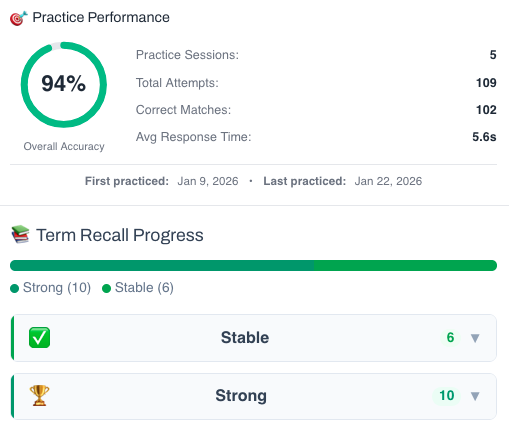
This isn’t a simple quiz — it’s a fully tracked learning system. You build knowledge through recognition, then recall, and your progress feeds directly into the Integrated Practice Bar (Writing tasks, AI Chat, and more).
- Practice sessions, accuracy, and response-time tracking
- Term strength levels (Learning → Stable → Strong)
- Personal progress history for each unit
This feature is available to YSP members.
Explore Membership Benefits🎮 Practice Games
Section 1 – Fill in the Gaps
Why are Airports so stressful for some people and can good design change that? – Section 1
Member-Exclusive Cloze Test
Fill in the gaps to complete authentic passages and reinforce your vocabulary in context.
This feature is available to YSP members.
Explore Membership BenefitsSection 2 – Fill in the Gaps
Why are Airports so stressful for some people and can good design change that? – Section 2
Member-Exclusive Cloze Test
Fill in the gaps to complete authentic passages and reinforce your vocabulary in context.
This feature is available to YSP members.
Explore Membership BenefitsSentence Scrambler
Why are Airports so stressful for some people and can good design change that? – Sentence Scramble
Member-Exclusive Sentence Builder
Reconstruct scrambled sentences to practice word order and develop your grammar intuition.
This feature is available to YSP members.
Explore Membership Benefits