All About Clothes and Wearing Them
Core PathWay
1 Why We Talk About Clothes Every Day
We all wear clothes every day. We talk about them with friends, family, and at work.
Clothes keep us warm when it is cold. They keep us cool when it is hot. We choose different clothes for different activities. We wear special clothes for work, for sports, and for parties. Some clothes are formal and some clothes are casual.
When we talk about clothes, we use important verbs. We say ‘I wear a jacket’ or ‘I put on my shoes’. We also name the clothes we have: shirts, trousers, dresses, shoes, and many more. Learning these words helps you talk about what you see and what you need.
In this lesson, you will learn the most common words for clothes. You will also learn the verbs that go with them. This will help you in shops, at home, and when you meet people.
2 Understanding ‘Wear’ and ‘Dress’
Many learners feel confused about wear and dress. These two verbs are different and we use them in different ways.
We use wear to say what clothes are on our body now. We use dress to talk about the action of putting clothes on. We also use special phrases like get dressed and be dressed. Read the examples below to understand the difference.
wear
- wear a coat
- wear jeans
- wear glasses
- wear shoes
- I’m wearing a blue shirt today.
- She always wears a dress to parties.
get dressed
- get dressed quickly
- get dressed for work
- get dressed in the morning
- I get dressed at 7 o’clock every morning.
- He gets dressed and then eats breakfast.
be dressed
- be dressed in black (to be wearing black clothes)
- be dressed nicely (to be wearing nice clothes)
- be dressed for winter (to be wearing warm clothes)
- She is dressed for a party (she is wearing her party clothes)
- Are you dressed? We need to leave now.
3 What We Wear on Our Heads and Necks
We wear different things on our heads and around our necks. These things keep us warm or protect us from the sun.
In winter, when it is cold, many people wear a hat. A hat covers your head and keeps it warm. Some people wear a cap. A cap has a flat part at the front that protects your eyes from the sun. In summer, we wear caps and hats to stay cool and safe from hot sun.
Many people wear glasses. Glasses help you see better. Glasses are not clothes, but we wear them on our face every day. Some people wear sunglasses when it is sunny.
We also wear things around our necks. In cold weather, we wear a scarf. A scarf is long and soft and it keeps your neck warm. Some people wear a tie with formal clothes. Men often wear ties with shirts at work or at special events.
These items are important because they change with the seasons and with different activities.
Key Terms
4 What We Wear on Our Upper Body
We wear many different clothes on our upper body. The upper body includes your chest, back, and arms.
The most common item is a shirt. People wear shirts at work, at home, and when they go out. A shirt usually has buttons at the front and long sleeves. Some shirts have short sleeves. Women often wear a blouse. A blouse is like a shirt but it is designed for women.
In casual situations, people wear a T-shirt. A T-shirt is comfortable and has no buttons. It is perfect for warm weather and for sports. Many people wear T-shirts at home and at the weekend.
When it is cold, we wear a jumper or a sweater. These are warm clothes made from wool or cotton. You pull them over your head. A cardigan is similar but it has buttons at the front so you can open it.
When it is very cold or rainy, we wear a coat or a jacket. A coat is long and warm. A jacket is shorter. Some jackets are waterproof and protect you from rain. In winter, people wear thick coats. In autumn and spring, people wear lighter jackets.
These clothes help us feel comfortable in all seasons and situations.
Key Terms
5 What We Wear on Our Lower Body
We wear different clothes on our lower body. The lower body includes your waist, legs, and feet.
The most common items are trousers. Trousers cover both legs and we wear them for work, at home, and when we go out. In American English, people say pants instead of trousers. Jeans are a special type of trousers made from strong blue cloth. Jeans are very popular and comfortable for casual wear.
In hot weather, people wear shorts. Shorts are like trousers but they are short and stop at your knees. People wear shorts in summer, at the beach, and when they play sports.
Women and girls often wear skirts or dresses. A skirt covers the lower body from the waist to the knees or below. A dress is one piece of clothing that covers both the upper body and the lower body together.
On our feet, we wear shoes. There are many types of shoes. We wear formal shoes for work, comfortable shoes for walking, and sports shoes for exercise. In summer, people wear sandals. Sandals are open shoes that keep your feet cool. When it rains, people wear boots. Boots cover your feet and part of your legs.
We also wear socks inside our shoes. Socks keep our feet warm and comfortable. In winter, people wear thick socks. In summer, people wear thin socks or no socks with sandals.
Choosing the right clothes for your lower body depends on the weather, the activity, and the situation.
Key Terms
6 Recap: Your Clothes Vocabulary
You now know many important words for clothes and how to use them.
You learned the difference between wear and dress. Remember: you wear clothes (they are on you now), but you get dressed (the action of putting them on).
You learned about clothes for different parts of your body. On your head and neck, you can wear hats, caps, scarves, and ties. On your upper body, you wear shirts, T-shirts, jumpers, jackets, and coats. On your lower body, you wear trousers, jeans, shorts, skirts, or dresses. On your feet, you wear shoes, boots, or sandals with socks.
Different clothes are right for different seasons and situations. In winter, you wear warm clothes like coats, jumpers, and scarves. In summer, you wear light clothes like T-shirts, shorts, and sandals. For work, you might wear formal clothes like shirts and trousers. At home, you wear comfortable clothes like jeans and T-shirts.
Now you can talk about what you wear, what you see other people wearing, and what you need to buy. Practice using these words every day and you will remember them easily.
Member-Exclusive Vocabulary Review & Acquisition System
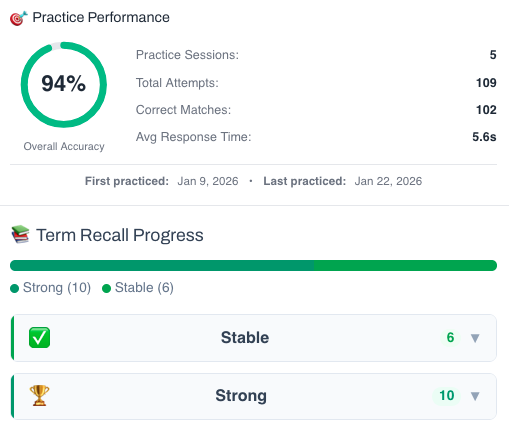
This isn’t a simple quiz — it’s a fully tracked learning system. You build knowledge through recognition, then recall, and your progress feeds directly into the Integrated Practice Bar (Writing tasks, AI Chat, and more).
- Practice sessions, accuracy, and response-time tracking
- Term strength levels (Learning → Stable → Strong)
- Personal progress history for each unit
This feature is available to YSP members.
Explore Membership Benefits
Member-Exclusive Practice Bar
Access a wide range of integrated practice for this unit — from Vocabulary and Grammar activities to AI-curated Writing tasks and Thematic Chat practice.
This feature is available to YSP members.
Explore Membership Benefits🎮 Practice Games
Section 1 – Fill in the Gaps
Gap Fill Vocabulary Practice 1
Member-Exclusive Cloze Test
Fill in the gaps to complete authentic passages and reinforce your vocabulary in context.
This feature is available to YSP members.
Explore Membership BenefitsSection 2 – Fill in the Gaps
Gap Fill Vocabulary Practice 2
Member-Exclusive Cloze Test
Fill in the gaps to complete authentic passages and reinforce your vocabulary in context.
This feature is available to YSP members.
Explore Membership BenefitsSentence Scrambler
Sentence Scramble
Member-Exclusive Sentence Builder
Reconstruct scrambled sentences to practice word order and develop your grammar intuition.
This feature is available to YSP members.
Explore Membership Benefits