Conditionals for HR: Zero and First Conditional in Talent Management
Core PathWay
1 Introduction: Conditionals in HR Communication
How do HR professionals communicate rules, make predictions, and discuss possibilities?
In human resources management, clear communication is essential for maintaining compliance and setting expectations. When you explain company policies or procedures, you need to state facts that are always true: ‘If an employee submits a request, the system generates a confirmation email.’ This is the zero conditional – perfect for guidelines and protocols that never change.
However, HR work also involves making predictions about future situations. When discussing performance outcomes, retention strategies, or potential consequences, you’re talking about real possibilities: ‘If we implement this new policy, employee engagement will improve.’ This is the first conditional – ideal for discussing likely future scenarios.
Understanding when to use each conditional form will help you communicate with greater consistency and professionalism. Whether you’re explaining requirements during onboarding, discussing accountability measures, or planning improvement initiatives, the right conditional structure makes your message clear and appropriate. Furthermore, mastering these forms enables you to distinguish between established rules and future possibilities, which is crucial when handling escalation procedures, setting deadlines, or addressing concerns with colleagues and employees.
Key Terms
2 Grammar Overview: The Zero Conditional
The zero conditional expresses facts, rules, and situations that are always true. In HR contexts, this structure is essential for communicating standard operating procedures, regulations, and automatic processes.
When you explain what happens every time a certain condition is met – without exception – you use the zero conditional. This makes it perfect for employee handbooks, onboarding materials, compliance documents, and any situation where you’re describing established systems rather than making predictions about the future.
Focus
- Used for facts, rules, and situations that are always true
- Both clauses use present simple tense
- Can use ‘if’ or ‘when’ interchangeably (when emphasises routine)
- Can use modal ‘can’ in the result clause for permissions/abilities
- Common in policies, procedures, regulations, and automatic systems
Rules
- Structure: If/When + present simple, present simple
- Alternative: If/When + present simple, can + infinitive
- The ‘if’ clause can come first or second (use comma if it comes first)
- Use ‘when’ instead of ‘if’ when the action is certain to happen regularly
- The result always happens – there are no exceptions
Examples
- If an employee exceeds their absence allowance, HR receives an automatic notification.
- When managers complete the evaluation form, the system forwards it to the department head for approval.
- If staff members have concerns about conduct, they can contact the ethics hotline directly.
- Employees receive a warning if they fail to meet punctuality standards three times in one month.
- When performance objectives aren’t achieved, a review meeting takes place within five working days.
Common mistake
3 Grammar Overview: The First Conditional
The first conditional expresses real possibilities and likely future outcomes. In HR management, you use this structure when discussing predictions, plans, decisions, and potential scenarios that haven’t happened yet but could realistically occur.
Unlike the zero conditional which describes what always happens, the first conditional talks about what will probably happen in a specific future situation. This makes it essential for strategic planning, performance discussions, policy changes, and any conversation about future possibilities in talent development.
Focus
- Used for real future possibilities and likely outcomes
- If-clause uses present tense (simple, continuous, or perfect)
- Result clause uses ‘will’, imperatives, or other future forms
- Expresses predictions, offers, promises, warnings, and decisions
- Common in strategic planning, negotiations, and performance discussions
Rules
- Basic structure: If + present simple, will + infinitive
- Alternative result clauses: If + present, imperative / If + present, going to / If + present, can/should/may/might
- Present perfect in if-clause: If + have/has + past participle, will/should + infinitive
- Present continuous in if-clause: If + am/is/are + -ing, will + infinitive
- The condition is realistic and possible (not hypothetical)
Examples
- If we increase flexibility in our workload policies, employee satisfaction will improve significantly.
- If you have completed the feedback form, please submit it to your line manager by Friday’s deadline.
- If the team is struggling with motivation, we’re going to implement a new recognition programme next quarter.
- Contact the resolution team immediately if any incidents arise during the negotiation process.
- If this candidate accepts our offer, she’ll bring valuable experience in risk management and compliance.
- We should schedule a follow-up meeting if the current approach doesn’t improve punctuality standards.
- If management hasn’t received approval by next week, the efficiency initiative may be delayed.
- Employees might leave the organisation if we don’t address their concerns about career development and priorities.
Common mistake
4 Choosing Between Zero and First Conditional
Understanding when to use zero versus first conditional is crucial for precise HR communication.
Use the zero conditional when you’re describing established standards, automatic processes, or permanent rules. These are situations where the outcome is certain and unchanging: ‘When employees submit expense claims, the finance team processes them within three days.’ This describes a procedure that always happens – it’s a fact about your system, not a prediction.
Conversely, use the first conditional when you’re making predictions, discussing future plans, or talking about possible outcomes that haven’t happened yet. These situations involve uncertainty and possibility: ‘If we implement the new absence policy, punctuality will probably improve.’ You’re predicting a likely result, but it’s not guaranteed.
The key distinction lies in certainty and timing. Zero conditional describes what always happens (timeless facts); first conditional describes what will probably happen (future possibilities). In HR contexts, this matters enormously. When explaining responsibilities to new employees, you use zero conditional for rules: ‘If you need authorisation for training, you contact your manager.’ However, when discussing potential policy changes with colleagues, you switch to first conditional: ‘If we introduce this commitment framework, behaviour patterns will shift.’
Consider these contrasting examples. Zero: ‘When performance falls below the objective, a review takes place’ (automatic rule). First: ‘If performance continues to decline, we’ll need to consider further action’ (future possibility). Zero: ‘If there’s a serious issue, the escalation protocol applies’ (permanent procedure). First: ‘If this concern escalates, we’ll involve senior management’ (potential future scenario).
Dialogue: HR Managers Discussing Policy Implementation
Sarah: Good morning, James. I wanted to discuss the new compliance framework. When does it come into effect?
James: If the board gives final approval next week, we’ll roll it out in September. Have you reviewed the updated guidelines?
Sarah: Yes, I have. I’m concerned about consistency across departments. If managers interpret the standards differently, we’ll face issues with accountability.
James: That’s a valid concern. If we provide comprehensive training before implementation, everyone will understand their responsibilities clearly. The protocol states that if any incidents occur, team leaders must report them within 24 hours.
Sarah: Right, that’s the requirement. But what happens if someone misses that deadline? Will there be consequences?
James: According to the procedure, if employees fail to meet reporting deadlines, they receive a formal warning. However, if this is their first time and they have a valid reason, we can show flexibility.
Sarah: That makes sense. If we implement this with proper support, I think engagement will actually increase. People appreciate clear expectations.
James: Absolutely. If the evaluation results are positive after three months, we’ll extend the framework to contractors as well. The resolution process should reduce escalation significantly.
Sarah: One more thing – if team members have questions during the transition, should they contact their manager or HR directly?
James: If it’s about general conduct or behaviour expectations, managers handle it. But if it concerns risk assessment or serious concerns, employees can reach HR directly. That’s in the agreement we’re sending out.
Sarah: Perfect. If we maintain this level of clarity, the efficiency improvements will be substantial. I’ll schedule training sessions for next month.
James: Excellent. If you need any additional resources or support, just let me know. We need to ensure everyone understands both their priorities and their availability for these sessions.
Key Terms
5 Preview: The Second Conditional for Hypothetical Scenarios
So far, you’ve learned about situations that are certain (zero conditional) and situations that are possible and likely (first conditional). But what about situations that are unlikely, hypothetical, or contrary to current reality?
This is where the second conditional becomes essential in HR discussions. When you want to discuss scenarios that probably won’t happen, or when you’re exploring ‘what if’ situations that differ from the current reality, the second conditional is your tool. The structure shifts: ‘If + past simple, would + infinitive.’
Why does this matter in HR contexts? Consider the difference between these statements:
First conditional (likely/possible): ‘If we change the retention policy, more people will stay.’ This suggests you’re seriously considering changing the policy, and you believe the outcome is probable.
Second conditional (unlikely/hypothetical): ‘If we changed the retention policy, more people might stay.’ This suggests you’re not really planning to change it, or you’re discussing a hypothetical scenario to explore possibilities without commitment.
The second conditional allows HR professionals to discuss sensitive topics diplomatically, explore hypothetical scenarios during negotiation, or consider options that aren’t currently on the table. It’s particularly useful when you want to sound less direct or when discussing situations that contradict current reality: ‘If I were the CEO, I would restructure the entire department’ (but I’m not the CEO, so this is hypothetical).
In the next lesson, you’ll explore this conditional form in depth, learning when and why to choose it over the first conditional for more nuanced HR communication.
Dialogue: First vs Second Conditional in HR Discussion
Manager A (Emma): I’ve been reviewing our retention data, and I think we need to take action. If we increase the professional development budget next quarter, we’ll see immediate improvement in employee motivation.
Manager B (David): I understand your point, Emma, but I’m not entirely convinced. If we increased the budget significantly, we might actually create unrealistic expectations that we couldn’t sustain long-term. It could backfire.
Emma: But the current situation is urgent. If we don’t address the workload concerns soon, we’ll lose three senior team members by December. That’s a real risk.
David: True, but let’s think about this differently. If we had unlimited resources, of course we’d invest heavily in development programmes. However, realistically, if we redistributed our existing budget more strategically, we could achieve similar results without the financial risk.
Emma: I see what you mean. So you’re saying if we implement targeted interventions rather than across-the-board increases, we’ll get better efficiency?
David: Exactly. And consider this: if the executive team were willing to approve a major budget increase, they would have done so already. They haven’t, which suggests we need to work within current constraints.
Emma: Fair point. If we presented a detailed proposal with clear objectives and measurable outcomes, do you think they’ll reconsider?
David: Possibly. But if I were in their position, I’d want to see evidence that smaller changes work first. If we could demonstrate success with a pilot programme, we’d have a much stronger case.
Emma: That’s actually quite sensible. If we launched a pilot focusing on the departments with the highest turnover, we could gather data within three months.
David: Now we’re thinking strategically. If we did that, and if the results were positive, the approval process for broader implementation would be much smoother. We’d have concrete evidence rather than predictions.
Emma: Agreed. If we’d had this conversation last month, we could have started the pilot already! Let’s draft a proposal this week. If we submit it by Friday, we’ll get feedback before the next budget review.
David: Perfect. And remember – if the pilot fails, we’ll learn valuable lessons. But if we don’t try anything at all, we definitely won’t solve the retention problem.
Key Terms
6 Lesson Recap
You’ve explored two essential conditional structures for HR communication and previewed a third.
The zero conditional (if/when + present, present) expresses permanent facts, rules, and automatic processes. Use it for policies, procedures, and situations that always happen the same way. It’s perfect for employee handbooks, compliance documents, and explaining how systems work: ‘When employees submit requests, the system processes them automatically.’
The first conditional (if + present, will) expresses real future possibilities and likely outcomes. Use it for predictions, plans, and realistic scenarios that haven’t happened yet: ‘If we implement this policy, retention will improve.’ This form is essential for strategic discussions, performance planning, and decision-making.
The key distinction: zero conditional describes what always happens (certainty); first conditional describes what will probably happen (possibility).
You also previewed the second conditional (if + past, would), which expresses hypothetical or unlikely scenarios. This form allows you to discuss situations diplomatically or explore options that differ from current reality: ‘If we changed the policy, results might differ.’
Mastering these conditional forms enables you to communicate with precision in HR contexts – whether you’re explaining established procedures, making predictions about future outcomes, or exploring hypothetical scenarios during negotiations. In the next lesson, you’ll develop your understanding of the second conditional and learn to navigate even more complex HR discussions with confidence.
🎮 Vocabulary Acquisition System: Unlock – then consolidate with Matching & Recall practice modes
Member-Exclusive Vocabulary Review & Acquisition System
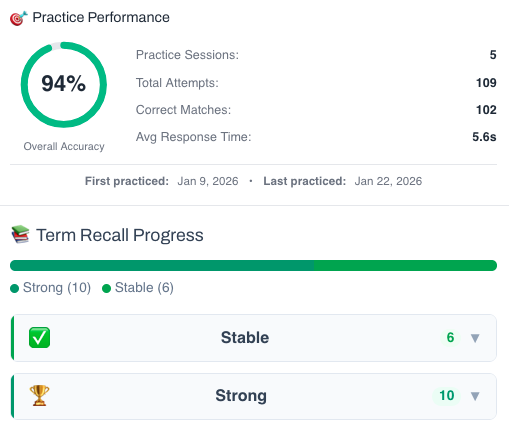
This isn’t a simple quiz — it’s a fully tracked learning system. You build knowledge through recognition, then recall, and your progress feeds directly into the Integrated Practice Bar (Writing tasks, AI Chat, and more).
- Practice sessions, accuracy, and response-time tracking
- Term strength levels (Learning → Stable → Strong)
- Personal progress history for each unit
This feature is available to YSP members.
Explore Membership Benefits🎮 Main Practice: Vocabulary & Grammar
Member-Exclusive Practice Bar
Access a wide range of integrated practice for this unit — from Vocabulary and Grammar activities to AI-curated Writing tasks and Thematic Chat practice.
This feature is available to YSP members.
Explore Membership Benefits🎮 Extra Practice: 2 x Gap Fill 2 X Sentence Scrambler
Section 1 – Fill in the Gaps
Conditionals for HR – Vocabulary Practice 1
Member-Exclusive Cloze Test
Fill in the gaps to complete authentic passages and reinforce your vocabulary in context.
This feature is available to YSP members.
Explore Membership BenefitsSection 2 – Fill in the Gaps
Conditionals for HR – Vocabulary Practice 2
Member-Exclusive Cloze Test
Fill in the gaps to complete authentic passages and reinforce your vocabulary in context.
This feature is available to YSP members.
Explore Membership BenefitsSentence Scrambler
Conditionals for HR – Sentence Scramble
Member-Exclusive Sentence Builder
Reconstruct scrambled sentences to practice word order and develop your grammar intuition.
This feature is available to YSP members.
Explore Membership BenefitsMember-Exclusive Sentence Builder
Reconstruct scrambled sentences to practice word order and develop your grammar intuition.
This feature is available to YSP members.
Explore Membership BenefitsPlease log in to access Advanced Practice.