Second and Third Conditionals in HR Contexts
Core PathWay
1 Understanding Second and Third Conditionals
Why do both second and third conditionals use past tense verbs when only one talks about the past?
You’ve already mastered zero and first conditionals, which help you express certainties and real possibilities. Now we’re moving into more sophisticated territory: the second conditional and the third conditional. Here’s the confusing part that trips up many learners: although both structures use past tense verbs in their ‘if’ clauses, the second conditional actually refers to the present or future, whilst the third conditional genuinely discusses the past. The second conditional uses past tense forms (if I had, if we were) to create psychological distance from reality, not to indicate past time. It’s a grammatical trick that signals ‘this isn’t real right now.’ The third conditional, however, uses the past perfect (if I had known, if they hadn’t implemented) because it genuinely refers to completed past events.
Why are these structures unavoidable in professional contexts? The second conditional is essential during negotiation and collective bargaining, where you need to make tentative proposals without committing yourself. Saying ‘If we increased salaries by 3%, would the union accept the new shift patterns?’ sounds more diplomatic than a direct first conditional. The third conditional becomes critical when analyzing failures and learning from mistakes. After a labour dispute or unfair dismissal case, HR professionals must examine what went wrong: ‘If we had involved union representation earlier, we might have avoided the strike action.’ Without these conditionals, you simply cannot participate effectively in performance reviews, post-incident analysis, or strategic planning discussions. They’re not optional extras; they’re fundamental tools for professional communication in human resources.
Key Terms
2 Second Conditional: Forms and Functions
The second conditional allows you to imagine different present realities and make tentative suggestions. In HR contexts, this structure is particularly valuable during sensitive conversations where direct statements might sound too forceful or presumptuous.
The basic pattern uses a past tense verb in the ‘if’ clause and a modal verb plus base form in the result clause. However, the choice of modal verb significantly changes the meaning of your statement, and understanding these nuances is essential for effective professional communication.
Focus
- Form: If + past simple/continuous, modal + base verb
- Time reference: Present or future situations (despite past tense forms)
- Function: Hypothetical, imaginary, or unlikely situations
- Modal verb choice changes meaning significantly
Rules
- WOULD in result clause = personal choice, preference, or logical consequence (‘If I were the HR director, I would implement 360-degree feedback’)
- MIGHT in result clause = possible consequence, uncertainty (‘If we offered flexible working, employees might be more engaged’)
- COULD in result clause = possible consequence OR ability (‘If we increased the training budget, we could develop better competencies’ – ability; ‘If we changed the rating scale, it could improve accuracy’ – possibility)
- SHOULD in result clause = rarely used; sounds like moral obligation (‘If they valued staff, they should pay more’ – implies criticism)
- Past continuous in ‘if’ clause emphasizes ongoing nature (‘If we were conducting performance reviews quarterly, we would identify issues earlier’)
- Use ‘were’ for all persons with ‘be’ in formal contexts (‘If I were responsible for this development plan…’)
Examples
- If the trade union called for strike action, management would need to enter collective bargaining immediately. (would = logical consequence)
- If we were offering better union representation, we might avoid future labour disputes. (might = possible outcome; past continuous = emphasis on ongoing provision)
- If I had more experience with arbitration, I could deal with this workplace conflict more effectively. (could = ability)
Common mistake
3 Second Conditional in Action
Let’s see how HR professionals use the second conditional in real workplace conversations.
Dialogue 1: Negotiation during collective bargaining
*Union representative:* ‘If management increased salaries by 5%, would you withdraw the threat of industrial action?’
*HR director:* ‘We might consider that proposal, but only if the trade union agreed to the new shift patterns. If we made that financial commitment, we would need flexibility in return.’
*Union representative:* ‘If we were negotiating a collective agreement that included both elements, we could present it to our members. But if the offer were only 3%, I don’t think they would accept it.’
Notice how the second conditional creates space for tentative proposals. Neither side commits definitively; they’re exploring possibilities. The union representative uses ‘would you’ to test management’s response, whilst the HR director uses ‘might’ to avoid firm commitment. This is classic negotiation language—if they used first conditionals (‘If you increase salaries, we will withdraw’), it would sound much more direct and potentially confrontational.
Dialogue 2: Performance review discussion
*Manager:* ‘Looking at your self-assessment, if you could change one aspect of your role, what would it be?’
*Employee:* ‘If I had more involvement in goal setting, I would feel more motivated. Currently, the objectives feel imposed rather than collaborative.’
*Manager:* ‘That’s valuable feedback. If we were conducting appraisal meetings more frequently, we could address this. What if I involved you in developing your own key performance indicators for next quarter?’
*Employee:* ‘That would be excellent. If I understood the rating scale criteria better, I could also improve my performance more strategically.’
Here, the second conditional creates a safe space for constructive criticism. The employee isn’t directly criticizing current practice; they’re imagining improvements. The manager responds by suggesting hypothetical changes, testing the employee’s reaction before committing to actual changes.
Dialogue 3: Discussing workplace conflict
*HR advisor:* ‘If you were in Sarah’s position, how would you deal with this situation?’
*Team leader:* ‘If I were receiving that kind of 360-degree feedback, I would request specific examples. The comments about her competencies are too vague to be useful.’
*HR advisor:* ‘Agreed. If we put her on a performance improvement plan without clearer evidence, it could lead to an unfair dismissal claim. If we offered conciliation between her and the team instead, we might resolve the workplace conflict without formal procedures.’
The second conditional here serves two functions: it encourages empathy (‘if you were in Sarah’s position’) and it allows the HR advisor to explore options without committing to a course of action. Using ‘could lead to’ and ‘might resolve’ maintains flexibility whilst analyzing risks and possibilities.
Key Terms
4 Third Conditional: Forms and Functions
The third conditional is your tool for analyzing past events, expressing regret, and learning from mistakes. In HR, this structure becomes essential during post-incident reviews, tribunal preparations, and strategic evaluations of past decisions.
The structure combines the past perfect in the ‘if’ clause with modal perfect forms in the result clause. Understanding pronunciation is crucial here: in natural speech, ‘have’ in ‘would have’, ‘might have’, and ‘could have’ reduces to a schwa sound (/həv/ or even /əv/), making it sound almost like ‘would’ve’. Many learners write ‘would of’ because that’s what they hear, but this is incorrect—it’s always ‘would have’ in writing.
Focus
- Form: If + past perfect, modal + have + past participle
- Time reference: Completed past events and their hypothetical consequences
- Function: Analyzing past decisions, expressing regret, imagining alternative outcomes
- Pronunciation: ‘have’ reduces to schwa /əv/ in speech
Rules
- Basic structure: If + had/hadn’t + past participle, would/might/could + have + past participle
- Past perfect simple: ‘If we had consulted the union…’ (completed action)
- Past perfect continuous: ‘If we had been monitoring performance regularly…’ (ongoing past action with duration)
- WOULD HAVE = the logical or certain consequence that didn’t happen (‘If they had followed procedure, they would have avoided the tribunal’)
- MIGHT HAVE = a possible consequence that didn’t happen (‘If we had offered arbitration, we might have resolved the dispute’)
- COULD HAVE = a possible consequence OR past ability that wasn’t used (‘If she had attended the training, she could have developed those competencies’)
- Contracted forms in speech: ‘would’ve’ /ˈwʊdəv/, ‘might’ve’ /ˈmaɪtəv/, ‘could’ve’ /ˈkʊdəv/ – but NEVER write ‘would of’
Examples
- If management had involved union representation from the beginning, we wouldn’t have faced strike action. (would have = certain consequence; past perfect simple = completed action)
- If we had been conducting regular performance reviews, we might have identified her weaknesses earlier. (might have = possible outcome; past perfect continuous = ongoing action over time)
- If the HR team had understood employment rights better, they could have prevented the unfair dismissal claim. (could have = past ability that wasn’t used)
Common mistake
5 Third Conditional in Action
The third conditional appears constantly in HR contexts where professionals analyze what went wrong and how to prevent future problems.
Dialogue 1: Post-dispute analysis
*HR director:* ‘If we had recognized the signs of labour dispute earlier, we could have initiated conciliation before the situation escalated.’
*Operations manager:* ‘Absolutely. If management had been more responsive to the trade union concerns about redundancy procedures, we might have avoided the strike action altogether. The collective bargaining process broke down because we weren’t listening.’
*HR director:* ‘And if we had involved union representation in the initial planning meetings, they wouldn’t have felt excluded. That sense of exclusion is what triggered the industrial action. We’ve learned an expensive lesson.’
This dialogue shows regret and analysis. Each ‘if’ clause identifies a missed opportunity, whilst the result clause describes the better outcome that could have occurred. Notice the mix of ‘could have’ (ability/possibility) and ‘might have’ (possibility) and ‘wouldn’t have’ (certain consequence). This is typical third conditional usage: analyzing multiple factors that contributed to a negative outcome.
Dialogue 2: Performance review failure analysis
*Senior HR manager:* ‘Looking at this unfair dismissal tribunal, if the line manager had documented the performance improvement plan properly, we would have had a much stronger case.’
*HR advisor:* ‘True. And if we had been providing regular constructive criticism throughout the year, rather than saving everything for the annual appraisal meeting, the employee wouldn’t have been so shocked by the negative performance rating.’
*Senior HR manager:* ‘If the manager had used the rating scale consistently and collected 360-degree feedback, we could have demonstrated objectivity. Instead, it looks like personal bias. If we had trained managers better in goal setting and measuring competencies against clear key performance indicators, we might not be facing this tribunal at all.’
*HR advisor:* ‘The employee’s self-assessment was actually quite accurate about their strengths and weaknesses. If we had taken that seriously and created a proper development plan, we could have improved their performance instead of losing them and facing legal action.’
This conversation demonstrates how the third conditional helps HR professionals learn from mistakes. They’re not just expressing regret; they’re systematically identifying where the process failed. Each conditional statement pinpoints a specific failure and its consequence, creating a roadmap for future improvement.
Dialogue 3: Negotiation reflection
*Union representative:* ‘If you had presented that collective agreement proposal two weeks ago, we could have avoided all this disruption.’
*HR director:* ‘You’re right. If we had understood your position on employment rights more clearly, we would have structured the offer differently from the start. The arbitration process has been costly for everyone.’
*Union representative:* ‘If management had been willing to enter genuine collective bargaining earlier, we might have reached this agreement without industrial action. Our members have lost wages; your company has lost production. If we had both been more flexible initially, we could have settled this in one meeting.’
*HR director:* ‘Agreed. If I had personally been able to cope with the pressure from the board to take a harder line, I would have recommended this compromise immediately. Sometimes workplace conflict escalates because of external pressures, not because of the actual issues between us.’
This dialogue shows how the third conditional can acknowledge shared responsibility. Both parties use it to reflect on missed opportunities without directly blaming each other in the present moment. The structure creates psychological distance that makes honest analysis possible.
Key Terms
6 Recap: Second and Third Conditionals
You’ve now explored two powerful conditional structures that are essential for professional HR communication.
The second conditional (if + past simple/continuous, would/might/could + base verb) allows you to discuss hypothetical present or future situations. Despite using past tense forms, it refers to imaginary present scenarios, not the past. You use it to make tentative proposals during negotiation and collective bargaining, to imagine different approaches during performance reviews, and to explore possibilities without commitment. The choice of modal verb matters: ‘would’ suggests logical consequences or personal choices, ‘might’ indicates possible outcomes with uncertainty, and ‘could’ expresses either possibility or ability.
The third conditional (if + past perfect, modal + have + past participle) helps you analyze completed past events and their hypothetical consequences. It’s indispensable when reviewing labour disputes, learning from unfair dismissal cases, or understanding why strike action occurred. You use it to express regret, identify missed opportunities, and ensure that mistakes aren’t repeated. Remember that in natural speech, ‘have’ in ‘would have’ reduces to a schwa sound, but you must always write ‘have’, never ‘of’.
Both structures create psychological distance—the second conditional distances you from current reality to explore hypothetical scenarios, whilst the third conditional distances you from past events to analyze them objectively. Mastering these forms will transform your ability to participate in sensitive HR discussions, deal with complex workplace conflict, and contribute meaningfully to strategic planning. In the next stage of this pathway, you’ll encounter mixed conditionals, where these forms combine to express even more nuanced relationships between past, present, and future.
🎮 1. Vocabulary Acquisition System: Unlock, Match, Recall
Member-Exclusive Vocabulary Review & Acquisition System
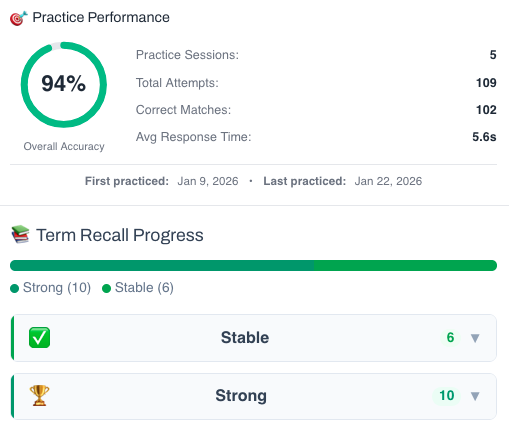
This isn’t a simple quiz — it’s a fully tracked learning system. You build knowledge through recognition, then recall, and your progress feeds directly into the Integrated Practice Bar (Writing tasks, AI Chat, and more).
- Practice sessions, accuracy, and response-time tracking
- Term strength levels (Learning → Stable → Strong)
- Personal progress history for each unit
This feature is available to YSP members.
Explore Membership Benefits🎮 2. Lexical & Grammar Practice Questions
Member-Exclusive Practice Bar
Access a wide range of integrated practice for this unit — from Vocabulary and Grammar activities to AI-curated Writing tasks and Thematic Chat practice.
This feature is available to YSP members.
Explore Membership Benefits🎮 3. Extra Practice
Member-Exclusive Sentence Builder
Reconstruct scrambled sentences to practice word order and develop your grammar intuition.
This feature is available to YSP members.
Explore Membership Benefits