Past Simple vs Present Perfect: Financial Accounting
Core PathWay
1 Why Learners Confuse Past Simple and Present Perfect
Many Italian speakers find it difficult to choose between Past Simple and Present Perfect. In Italian, you use passato prossimo for both situations. This means you say ‘Ho controllato le cifre’ for both ‘I checked the figures’ and ‘I have checked the figures’. But in English, these two sentences have different meanings. The difference is about time. Past Simple talks about finished time in the past. Present Perfect talks about unfinished time or non-specific time. This page will teach you how to choose the right tense when you talk about your accounting work. You will learn the time words that help you decide.
2 Past Simple: Form, Meaning and Use
We use Past Simple for finished actions in finished time. The WHEN is very important. You must know when the action happened. We use specific time words like yesterday, last week, last month, last year, in 2022, three days ago, on Monday. These words show finished time in the past. For example: ‘I filed the monthly report yesterday.’ We know when: yesterday. The time is finished. Another example: ‘She approved the invoices last Friday.’ We know when: last Friday. That day is finished. Past Simple is a past tense. It does not connect to now. Italian speakers often forget to use the time word. In Italian, you can say ‘Ho presentato il report’ without saying when. But in English, if you use Past Simple, you need the time word. If you say ‘I filed the report’ without a time word, it sounds incomplete.
Focus
- Past Simple shows finished actions in finished time
- You must say WHEN the action happened
- Time words like yesterday, last week, ago show finished past time
- Past Simple does not connect to the present moment
Rules
- Regular verbs: add -ed (check → checked, file → filed, approve → approved)
- Irregular verbs: learn the past form (get → got, meet → met, sign → signed)
- Questions: Did + subject + base verb (Did you reconcile the accounts?)
- Negatives: did not / didn’t + base verb (I didn’t submit the tax return)
- Always use a time word that shows finished past time
Examples
- I checked the figures yesterday.
- She filed the monthly report last week.
- We approved the invoices on Tuesday.
- He reconciled the accounts last month.
- They met the deadline three days ago.
- The team presented the results in January.
Common mistake
3 Present Perfect: Form, Meaning and Use
We use Present Perfect for finished actions in unfinished time or non-specific time. If you do not say WHEN, use Present Perfect. We use time words like already, just, yet, ever, never, recently, so far, this week, this month, this year. These words show unfinished time or non-specific time. For example: ‘I have checked the figures this morning.’ This morning is not finished yet. Another example: ‘She has already approved the invoices.’ We do not say when exactly. Present Perfect is a present tense. It builds a bridge between past and now. The action happened in the past, but the time period continues to now, or we care about the result now. Italian speakers often use Past Simple here because in Italian you use passato prossimo. But remember: if there is no specific past time word, use Present Perfect in English.
Focus
- Present Perfect shows finished actions in unfinished or non-specific time
- You do NOT say exactly WHEN the action happened
- Time words like already, just, yet, ever, this week show unfinished or non-specific time
- Present Perfect is a present tense that connects past actions to now
Rules
- Form: has/have + past participle (checked, filed, approved, reconciled)
- Regular past participles: add -ed (check → checked, file → filed)
- Irregular past participles: learn the form (get → got/gotten, meet → met)
- Questions: Have/Has + subject + past participle (Have you submitted the tax return?)
- Negatives: have not / haven’t or has not / hasn’t + past participle (I haven’t closed the books yet)
Examples
- I have checked the figures this morning.
- She has already filed the monthly report.
- We have just approved the invoices.
- He has reconciled the accounts recently.
- They have never met the deadline late.
- The team has presented the results this quarter.
Common mistake
4 Choosing the Right Structure: When and Why
The key question is: do you say WHEN the action happened? If yes, use Past Simple. If no, use Present Perfect. Look at the time words in the sentence. Past Simple time words show finished past time: yesterday, last week, last month, last year, last quarter, ago (three days ago, two weeks ago), in + year (in 2022, in January), on + day (on Monday, on 15th March), specific dates and times. These words mean the time is completely finished.
Present Perfect time words show unfinished or non-specific time: already, just, yet, ever, never, recently, so far, up to now, this week, this month, this year, this quarter, today, before, since + time point, for + time period (when the action continues). These words mean the time period is not finished or we do not specify exactly when.
Here are paired examples from accounting work: ‘I submitted the tax return last Friday’ (Past Simple – we know when: last Friday, finished time). ‘I have already submitted the tax return‘ (Present Perfect – we do not say exactly when, just that it is done). ‘She reviewed the budget yesterday’ (Past Simple – we know when: yesterday). ‘She has reviewed the budget this week’ (Present Perfect – this week is not finished yet). ‘We closed the books in December’ (Past Simple – December is finished). ‘We have closed the books for this quarter’ (Present Perfect – this quarter connects to now).
Ask yourself: Is there a specific past time word like yesterday or last week? If yes, use Past Simple. If there is no specific time word, or the time word shows unfinished time like this month, use Present Perfect.
For Italian speakers, this is difficult because you use passato prossimo for both situations. In Italian you say ‘Ho controllato le cifre ieri’ and ‘Ho controllato le cifre’ and both use passato prossimo. But in English, the first is ‘I checked the figures yesterday’ (Past Simple) and the second is ‘I have checked the figures’ (Present Perfect).
Remember: Past Simple is a past tense for finished time. Present Perfect is a present tense that makes a bridge between past and now. Another way to think about it:
Past Simple answers the question ‘When did you do it?’
Present Perfect answers the question ‘Have you done it?’ without saying exactly when.
More examples: ‘Did you track expenses last month?’ (Past Simple – asking about last month, finished time). ‘Have you tracked expenses yet?’ (Present Perfect – asking if the task is done, not asking when). ‘I flagged discrepancies on Tuesday’ (Past Simple – specific day). ‘I have flagged discrepancies recently’ (Present Perfect – recently does not say exactly when).
5 In Context: A Monthly Report Email
Subject: Monthly Financial Update – March 2024 – Update time 11am
Dear Team,
I have prepared the forecast for next quarter. I finished the monthly report yesterday and submitted it to management this morning. Last week, I reviewed the budget with the finance director and we approved all the changes on Thursday.
This month, we have tracked expenses carefully. I reconciled the accounts last Friday and everything is correct. We have already met the deadline for the tax documents. I signed off on payments two days ago.
So far this year, we have streamlined the process significantly. In January, we implemented new software and it has helped us work faster. Last quarter, we analyzed the variance and presented the results to the board.
I have checked the figures this morning and they look good. Please let me know if you have questions.
Best regards,
Maria
Noticing prompts: Can you find where Past Simple is used? Look for time words like yesterday, last week, last Friday. Why did Maria use Past Simple in those sentences? Can you find where Present Perfect is used? Look for time words like this morning, so far, already. Why did Maria use Present Perfect in those sentences? Notice how ‘this morning’ uses Present Perfect because the morning is not finished yet, but ‘yesterday’ uses Past Simple because yesterday is completely finished.
⚖️ Time Reference Words: Past Simple vs Present Perfect
Member-Exclusive Practice Bar
Access a wide range of integrated practice for this unit — from Vocabulary and Grammar activities to AI-curated Writing tasks and Thematic Chat practice.
This feature is available to YSP members.
Explore Membership BenefitsUse the VAS to build solid recognition and recall of the terms below.
✔ Every correct Match = +1 point
✔ Every correct Recall = +2 points
🎓 Reach 5 points with good accuracy and the term is automatically promoted to your Personal Dictionary.
Incorrect answers lower accuracy, meaning more correct Matches or Recalls may be needed to reach promotion.
Member-Exclusive Vocabulary Review & Acquisition System
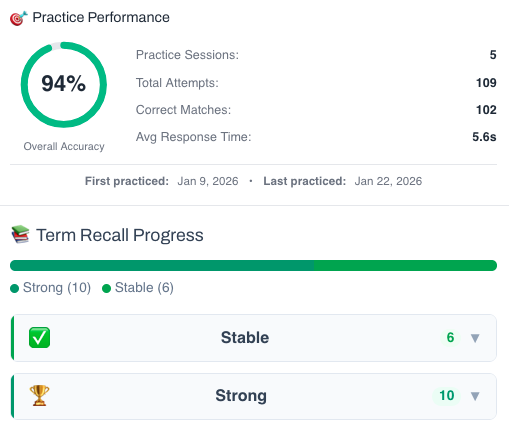
This isn’t a simple quiz — it’s a fully tracked learning system. You build knowledge through recognition, then recall, and your progress feeds directly into the Integrated Practice Bar (Writing tasks, AI Chat, and more).
- Practice sessions, accuracy, and response-time tracking
- Term strength levels (Learning → Stable → Strong)
- Personal progress history for each unit
This feature is available to YSP members.
Explore Membership BenefitsMember-Exclusive Sentence Builder
Reconstruct scrambled sentences to practice word order and develop your grammar intuition.
This feature is available to YSP members.
Explore Membership Benefits