Describing Your Day with Sophistication
Core PathWay
1 Beyond ‘Then’ and ‘Next’: Elevating Your Routine Descriptions
You know the present simple. That’s not the challenge here. The real issue? Many proficient speakers describe their day like this: ‘I wake up. Then I have breakfast. Then I check my emails. Next I commute to work.’ Grammatically correct, but it sounds like a shopping list rather than natural speech.
Great communicators don’t just sequence events — they show how activities overlap, how one thing leads to another, and how tasks involve different elements. They use expressions like ‘while’, ‘before’, ‘after’, ‘once’, ‘as soon as’, and structures like ‘having finished X, I move on to Y’. The grammar isn’t complex, but the cohesion — how ideas connect — makes all the difference.
Compare these two descriptions of the same morning:
Version A (Basic sequencing):
‘I wake up at 6:30. Then I make coffee. Next I check my phone for messages. Then I take a shower. After that I get dressed. Then I leave for work at 7:45.’
Version B (Sophisticated sequencing):
‘I wake up at 6:30 and, while the coffee is brewing, I quickly check my phone for any urgent messages. Once I’ve had my coffee, I take a shower. After getting dressed, I usually spend a few minutes reviewing my schedule for the day before leaving for work at 7:45.’
Notice how Version B feels more natural? The speaker shows simultaneous actions (‘while the coffee is brewing’), uses backward-looking references (‘once I’ve had my coffee’, ‘after getting dressed’), and includes details about what activities involve (‘spend a few minutes reviewing’). This is what we’re aiming for.
2 The Toolkit: Advanced Sequencing and Cohesion
Let’s explore the full range of techniques for creating sophisticated routine descriptions. This is about making your speech flow naturally, not just listing events.
Simultaneous Actions (showing overlap):
Use ‘while’ or ‘as’ to show two things happening at the same time:
– ‘While I’m having breakfast, I usually catch up on the news.’
– ‘As I commute to work, I listen to podcasts.’
– ‘I often think through my priorities for the day while getting ready.’
Backward-Looking References (connecting to what you’ve just mentioned):
These are powerful because they create cohesion by referring back:
– After + -ing form: ‘After checking my emails, I prioritise the urgent ones.’
– Once + present perfect: ‘Once I’ve finished my morning routine, I feel ready for the day.’
– Having + past participle: ‘Having dealt with urgent messages, I can focus on longer-term projects.’ (This is quite formal but very effective)
– Before + -ing form: ‘Before leaving the house, I always double-check I have everything.’
Notice the subtle difference: ‘before’ and ‘after’ can take either a clause (‘after I check my emails’) or an -ing form (‘after checking my emails’). The -ing form is more concise and often sounds more sophisticated.
Forward-Looking Sequences (setting up what comes next):
– As soon as: ‘As soon as I arrive at the office, I make myself a coffee.’
– The moment: ‘The moment I sit down at my desk, I review my task list.’
– By the time: ‘By the time I leave for work, I’ve usually been up for over an hour.’
Describing What Activities Involve:
Instead of just naming activities, explain what they involve or entail:
– ‘My morning routine involves checking three different email accounts.’
– ‘Getting ready for work entails not just showering and dressing, but also preparing lunch for the day.’
– ‘I typically spend about 20 minutes on my morning exercise routine.’
– ‘My commute takes roughly 40 minutes door-to-door.’
Time Expressions That Add Precision:
Move beyond ‘at 7:00’ to more nuanced expressions:
– ‘I’m usually out of the house by 7:45.’ (= no later than)
– ‘The whole process takes me roughly / approximately an hour.’
– ‘I tend to wake up naturally around 6:30.’ (= this is my habit)
– ‘I generally / typically / normally start work at 9:00.’ (= this is usual but not absolute)
– ‘I’ve been doing this routine for the past three years.’
Continuous Aspects for Ongoing Context:
Use present perfect continuous to show how long something has been your routine:
– ‘I’ve been commuting by train for the past two years.’
– ‘I’ve been trying to exercise before breakfast, but it’s challenging.’
This shows that the routine is established but might still be evolving.
The ‘Before’ and ‘After’ Trap:
Many learners mix these up. Remember:
– ‘Before leaving, I check the windows.’ = I check, THEN I leave.
– ‘After arriving, I make coffee.’ = I arrive, THEN I make coffee.
The -ing form refers to the action that comes first chronologically, not the first word you say. ‘Before leaving’ = the leaving hasn’t happened yet. ‘After arriving’ = the arriving has already happened.
3 In Practice: A Professional’s Morning Routine
Here’s how all these techniques come together in a natural conversation. Sam Jordan, a project manager at a tech company, is being interviewed by a business magazine about their typical working day.
Interviewer: Sam, could you walk us through a typical morning for you?
Sam: Sure. I’m usually awake by 6:15, though I tend to lie in bed for a few minutes checking notifications on my phone — probably not the healthiest habit! Once I’m up, I head straight to the kitchen. While the coffee machine is doing its thing, I spend a few minutes stretching. I’ve been trying to incorporate more movement into my morning routine, and those five minutes really help me feel more alert.
Interviewer: And what does breakfast involve for you?
Sam: It’s fairly simple — usually just coffee and toast, maybe some fruit. But breakfast time entails more than just eating. I use those 20 minutes to scan through my calendar and prioritise what needs addressing that day. Having reviewed my schedule, I have a much clearer sense of where my focus needs to be. By the time I’ve finished breakfast, I’ve usually identified the two or three critical tasks for the day.
Interviewer: How long does your commute take?
Sam: I’m fortunate — it’s only about 30 minutes door-to-door. Before leaving the house, I always do a final check: laptop, phone, keys, security pass. I learned that lesson the hard way! While I’m commuting, I typically listen to industry podcasts. It’s a good way to stay current without allocating specific work time to it.
Interviewer: And once you arrive at the office?
Sam: As soon as I get in, I make another coffee — I know, I know — and then I settle into my workspace. The first 30 minutes are crucial. Before getting pulled into meetings or addressing urgent emails, I dedicate that time to my most important task. Having dealt with that priority item, or at least made significant progress on it, I feel much more in control of the day. After completing my morning focus session, I’m ready to tackle whatever else comes my way — meetings, emails, unexpected issues. The morning routine I’ve been following for the past year really helps me maintain productivity and manage stress levels.
4 Recap: Describing Your Day with Sophistication
You’ve explored how skilled communicators move beyond basic sequencers to create fluent, detailed descriptions of their routines. The key insight? It’s not about complex grammar — it’s about cohesion and showing how activities connect, overlap, and flow into each other.
You now have a toolkit of advanced techniques: simultaneous actions with ‘while’ and ‘as’, backward-looking references using ‘after -ing’, ‘once + present perfect’, and ‘having + past participle’, forward-looking sequences with ‘as soon as’ and ‘the moment’, and vocabulary for describing what activities involve or entail.
You’ve also seen how professional speakers use precise time expressions (‘by 7:45’, ‘for the past three years’, ‘I tend to’), and how they employ continuous aspects to show established routines. The interview with Sam demonstrated all these elements working together naturally.
When you describe your own day, think about the relationships between activities, not just the sequence. Show what happens simultaneously, explain what tasks involve, and use backward-looking references to create cohesion. Your descriptions will sound more natural, more sophisticated, and more engaging.
Homework task – complete the correspondence email chain with Sarah
Dear Colleague,
Thank you for agreeing to participate in our 'A Day in the Life' profile series for Business Bytes magazine. Our readers are always fascinated to learn how professionals in different industries structure their days.
For this first part of the interview, I'd like to focus on your morning routine. Could you walk me through a typical morning from the moment you wake up until you arrive at your workplace? I'm particularly interested in:
– How you prepare for the day
– What you do simultaneously (for example, while having breakfast)
– The sequence of activities and how they connect
– Any rituals or habits that help you transition into work mode
Please be as detailed as possible – our readers love the authentic, human details that bring these profiles to life.
I'll follow up with questions about the rest of your working day once I've received your response.
Looking forward to hearing from you!
Best regards,
Sarah Mitchell
Senior Journalist, Business Bytes Magazine
Extra tasks – complete these as and when you find time
Member-Exclusive Practice Bar
Access a wide range of integrated practice for this unit — from Vocabulary and Grammar activities to AI-curated Writing tasks and Thematic Chat practice.
This feature is available to YSP members.
Explore Membership BenefitsMember-Exclusive Vocabulary Review & Acquisition System
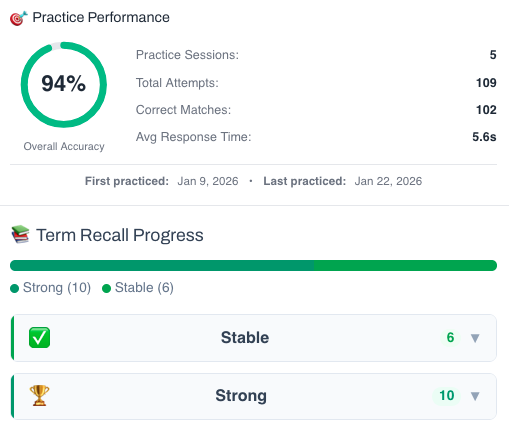
This isn’t a simple quiz — it’s a fully tracked learning system. You build knowledge through recognition, then recall, and your progress feeds directly into the Integrated Practice Bar (Writing tasks, AI Chat, and more).
- Practice sessions, accuracy, and response-time tracking
- Term strength levels (Learning → Stable → Strong)
- Personal progress history for each unit
This feature is available to YSP members.
Explore Membership Benefits🎮 Practice Games
Sentence Scrambler
Describing My Day – Home and Work – Sentence Scramble
Member-Exclusive Sentence Builder
Reconstruct scrambled sentences to practice word order and develop your grammar intuition.
This feature is available to YSP members.
Explore Membership Benefits