Deal With: Managing People, Problems, and Tasks at Work
Core PathWay
1 What Does ‘Deal With’ Mean?
At work, people often ask: ‘What do you deal with in your job?’ This means: ‘What things do you work on? Who do you work with?’
When you deal with something, you work on it or manage it. You can deal with people (talk to customers, help colleagues). You can deal with problems (fix issues, find solutions). You can deal with figures (work with numbers, check data). You can deal with issues (manage difficult situations).
Here is a conversation between two colleagues:
A: So, what and who do you deal with in your job?
B: Well, I deal with many things and many people. I deal with customers every day. I answer their questions. I also deal with complaints when people are not happy. I deal with orders and I deal with the delivery schedule. Sometimes I deal with problems in the computer system. I also deal with my manager and the sales team. It’s a busy job!
A: That sounds like a lot!
B: Yes, but I like it. I deal with different things every day.
Key Terms
2 Different Ways to Use ‘Deal With’
deal with (people)
- deal with clients
- deal with customers
- deal with suppliers
- deal with the public
- I deal with international clients every week. (present simple)
- She is dealing with a difficult customer right now. (present continuous)
- Yesterday I dealt with twenty customers. (past simple)
- Tomorrow I will deal with the new suppliers. (future with will)
deal with (problems/issues)
- deal with a problem
- deal with an issue
- deal with a crisis
- deal with difficulties
- My manager deals with big problems in the company. (present simple)
- We are dealing with a technical issue today. (present continuous)
- Last month we dealt with many complaints. (past simple)
- I will deal with this problem tomorrow morning. (future with will)
deal with (tasks/work)
- deal with paperwork
- deal with orders
- deal with emails
- deal with figures
- She deals with all the company finances. (present simple)
- I am dealing with the monthly reports now. (present continuous)
- He dealt with the budget last year. (past simple)
- They will deal with the accounts next week. (future with will)
The phrase deal with has different meanings in work situations. Sometimes it means ‘work with people’. Sometimes it means ‘solve problems’. Sometimes it means ‘manage tasks’. Let’s look at each meaning with examples in different tenses.
3 Dealing With Issues and Problems
Imagine your colleague says: ‘There’s an issue with the figures. Can you deal with it please?’ What does this mean?
It means: ‘There is a problem with the numbers. Can you fix it please?’ When you deal with an issue, you work to solve it. You find the problem and you fix it.
Some people say handle instead of deal with. ‘Can you handle this issue?’ This means the same thing, but handle is more formal. We use it in business writing and formal meetings. In everyday work conversations, we usually say deal with.
Some people also say look after. But look after is different! When you look after something, you take care of it regularly. For example: ‘I look after the company website’ means ‘I take care of the website every day.’ But ‘I deal with problems on the website’ means ‘I fix problems when they happen.’ Look after is about regular care. Deal with is about managing or solving things.
Examples:
– I deal with customer complaints. (I solve problems when customers are unhappy)
– I look after customer accounts. (I take care of customer information regularly)
– Can you handle this issue? (formal – can you solve this problem?)
– Can you deal with this problem? (normal – can you solve this problem?)
Key Terms
4 Help for Italian Learners
If you speak Italian, deal with can be difficult. In Italian, you use different words for different situations. In English, we use deal with for all of these!
In Italian you say ‘avere a che fare con’ (to have something to do with). In English: ‘I deal with customers’ or ‘I deal with the sales department.’
In Italian you say ‘trattare’ (to treat or negotiate). In English: ‘I deal with suppliers’ or ‘We deal with international companies.’
In Italian you say ‘risolvere’ (to resolve or solve). In English: ‘I deal with problems’ or ‘She deals with complaints.’
In Italian you say ‘portare avanti’ (to carry forward or manage). In English: ‘I deal with projects’ or ‘He deals with the accounts.’
Remember: In English, use deal with for all these meanings! You don’t need different words.
Examples for Italian speakers:
– Avere a che fare con i clienti = I deal with clients
– Trattare con i fornitori = I deal with suppliers
– Risolvere i problemi = I deal with problems
– Portare avanti i progetti = I deal with projects
The good news? English is simpler! Just use deal with in all these situations.
5 Review and Practice
Now you know how to use deal with in many work situations!
Remember these key points:
Deal with people: I deal with customers. She deals with clients. We dealt with suppliers yesterday.
Deal with problems: Can you deal with this issue? I am dealing with a problem now. He will deal with it tomorrow.
Deal with tasks: I deal with the figures every month. She is dealing with paperwork today. They dealt with the reports last week.
Questions: What do you deal with in your job? Who do you deal with? Do you deal with customers?
Negative sentences: I don’t deal with complaints. She doesn’t deal with the accounts. We didn’t deal with that problem.
You can use deal with in present simple (I deal with), present continuous (I am dealing with), past simple (I dealt with), and future with will (I will deal with).
For Italian speakers: Remember that deal with covers many Italian words: avere a che fare con, trattare, risolvere, and portare avanti. In English, just use deal with!
Now you can talk about your work responsibilities in English!
6 Final Recap
In this lesson, you learned about the phrase deal with. This phrase is very important for talking about work.
You learned that deal with means to work on something, manage something, or solve something. You can deal with people (customers, clients, colleagues). You can deal with problems and issues. You can deal with tasks like figures, paperwork, and orders.
You saw examples in different tenses: present simple (I deal with), present continuous (I am dealing with), past simple (I dealt with), and future with will (I will deal with).
You learned the difference between deal with, handle, and look after. Handle is more formal. Look after means regular care, not solving problems.
For Italian learners, you learned that deal with covers many Italian expressions. This makes English easier!
Now you can answer the question: ‘What do you deal with in your job?’ Good work!
Member-Exclusive Vocabulary Review & Acquisition System
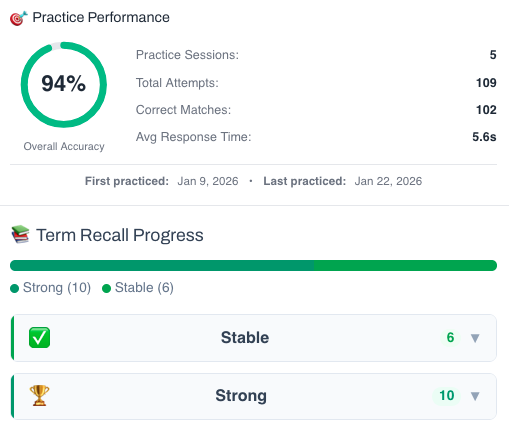
This isn’t a simple quiz — it’s a fully tracked learning system. You build knowledge through recognition, then recall, and your progress feeds directly into the Integrated Practice Bar (Writing tasks, AI Chat, and more).
- Practice sessions, accuracy, and response-time tracking
- Term strength levels (Learning → Stable → Strong)
- Personal progress history for each unit
This feature is available to YSP members.
Explore Membership Benefits🎮 Practice Games
Section 1 – Fill in the Gaps
Deal with – Section 1
Member-Exclusive Cloze Test
Fill in the gaps to complete authentic passages and reinforce your vocabulary in context.
This feature is available to YSP members.
Explore Membership BenefitsSection 3 – Fill in the Gaps
Deal with – Section 3
Member-Exclusive Cloze Test
Fill in the gaps to complete authentic passages and reinforce your vocabulary in context.
This feature is available to YSP members.
Explore Membership BenefitsSentence Scrambler
Deal with – Sentence Scramble
Member-Exclusive Sentence Builder
Reconstruct scrambled sentences to practice word order and develop your grammar intuition.
This feature is available to YSP members.
Explore Membership Benefits