🎙 Comparing Things With Adjectives
Comparatives“COMPARE”
Compare two things using adjectives like bigger, more expensive, and better. Use the correct form with than to talk about everyday differences.
One button, the whole episode. Good for the bus, the car or a walk.
Welcome
Josie: “Welcome to the YouSpeakPlus Audio Cast. Today we look at comparatives.”
Jon: “We use them to compare two things. For example: this cafe is cheaper than that one.”
Josie: “We also look at the word compare. It has more than one use.”
Jon: “And at the end, a short story. Two friends go shopping. They compare everything.”
Josie: “Ready? Let's start.”
Part 1 · Grammar
Josie: “Today we look at comparatives. We use them to compare two things. Listen to this example: Rome is bigger than Milan.”
Elena: “Oh, I use this a lot. I always compare things. Prices, places, everything.”
Josie: “Good. Now listen to four examples. The train is faster than the bus. This hotel is more expensive than that one. Summer is hotter than spring. And my new phone is better than my old one.”
Elena: “So we use comparatives when we talk about two things and one is different from the other?”
Josie: “Exactly. One thing is more, or less. Now let's look at the form. Short adjectives: add -er and then than. Big becomes bigger than. Short adjectives that end in the letter 'Y', for example BUSY, TIDY and THIRSTY, lose the 'Y' and add 'IER'. Long adjectives: say more before the adjective and then than. For example, more comfortable than. And notice this: never say more and -er together. Only one.”
Elena: “So I say cheaper than, not more cheap than?”
Josie: “Exactly right. Cheaper than. Good. Now you try. Think about your city and Rome. Which is bigger?”
Elena: “Rome is bigger than my city. My city is smaller than Rome.”
Josie: “Perfect. Both sentences are correct. Now think about the bus and the metro in the morning. Which is more crowded?,”
Elena: “The metro is more crowded than the bus in the morning.”
Josie: “Great. By the way, you can also use the adjective 'busy' to mean 'crowded' – so the metro is busier than the bus. One more. Coffee at home or coffee at a cafe. Which is cheaper?”
Elena: “Coffee at home is cheaper than coffee at a cafe. Much cheaper.”
Josie: “Good. Now let's look at two common mistakes. Listen to this: my bag is more bigger than yours. That is wrong. We say: my bag is bigger than yours. Bigger than yours. Never more and -er together.”
Elena: “Ah, so I cannot say more and -er together? Only one?”
Josie: “Only one, yes. Now the second mistake. Listen: this film is gooder than that one. That is wrong. We say: this film is better than that one. Better than that one. Good and bad are special. They change completely.”
Elena: “Better, not gooder. And the opposite is worse, not badder?”
Josie: “Exactly. Better and worse. Remember those two. They are different from all the others. So today: use -er than for short adjectives, use more… than for long adjectives, and remember better and worse. Try to compare two things you see today.”
Part 2 · Word focus
Josie: “Today our word is compare. Listen to this example. I always compare prices before I buy something.”
Elena: “Oh yes, I do that too. I compare prices online all the time.”
Josie: “Good. So compare means you look at two things. You want to see the difference. Or maybe you see they are similar.”
Elena: “So in the last lesson, we compared Rome and Milan. We used comparatives. Is that the same idea?”
Josie: “Exactly. When you say bigger than or more expensive than, you are comparing. The verb and the grammar work together. Now listen to two more examples. I compared the two hotels before I booked. She always compares her work to other people's work.”
Elena: “Okay. So you compare things, and then you decide. Like, this one is better than that one.”
Josie: “Yes, perfect. Now there is a second use. Sometimes we compare two things to explain something. We say one thing is like another. Listen to this. He compared the traffic in Rome to a river. It never stops moving.”
Elena: “Oh, that is a nice image. So you use compare to say something is similar to something else?”
Josie: “Right. You use it to explain or describe. Here is another one. She compared learning a language to learning to drive. Both need a lot of practice.”
Elena: “I like that. Learning Italian grammar is like driving in Naples. Very difficult.”
Josie: “Good example. Now listen to a very common phrase. Compared to. This is different from the verb. It is a fixed phrase. Listen. My town is quiet compared to Rome.”
Elena: “So compared to means when you put two things next to each other?”
Josie: “Yes. You use it to show a difference. One more example. This phone is cheap compared to that one. You can also say compared with. Both are correct.”
Elena: “Compared to, compared with. Okay. Is one more common?”
Josie: “Compared to is more common in everyday speaking. Use that one. Now, one more expression. Compare notes. Listen. After the holiday, we compared notes about the food.”
Elena: “Compare notes? Like, real notes? Like a notebook?”
Josie: “No, not a real notebook. It means you talk with someone about the same experience. You share what you think. For example, two friends go to the same restaurant on different days. Then they compare notes.”
Elena: “Ah, I understand. Like, what did you think? What did I think? We compare.”
Josie: “Exactly. Now, one thing to watch. Some learners say, this is not comparable. But in speaking, we almost never say that. We say, you cannot compare them. Or, there is no comparison. Use those.”
Elena: “So not comparable is too formal for speaking?”
Josie: “Yes, too formal. Say you cannot compare them. That sounds natural. Now a quick check. I say a sentence. You tell me which use it is. Ready?”
Elena: “Ready.”
Josie: “First. She compared the two jobs and chose the better one.”
Elena: “That is the first use. She looked at both jobs to see the difference.”
Josie: “Good. Second. His room is very small compared to mine.”
Elena: “That is the fixed phrase. Compared to. To show a difference.”
Josie: “Perfect. Last one. After the course, we compared notes about the teacher.”
Elena: “Compare notes. You talked about your experiences. What did you think, what did I think.”
Josie: “Excellent. So remember this. Compare means you look at two things to see how they are different or similar. Compared to is your fixed phrase for showing a difference. And compare notes means you share your experience with someone. Use all three today.”
- look at two or more things to see how they are different or the same I always compare prices before I buy something.
- say that one thing is like another thing, often to explain it She compared the city to a big village.
- be compared to or with: be put next to something else to show a difference My salary is low compared to his.
- compare notes: talk with someone about your experiences of the same thing After the trip, we compared notes about the hotels.
Part 3 · Story
Josie: “Here is a story. It brings today's lesson to life. It is Saturday afternoon. We are in a big shopping centre. Two friends, Sara and Mia, are looking for a winter jacket. Listen carefully.”
Sara: “Okay, I need a jacket. Something warm. But not too expensive.”
Mia: “Let's compare the shops first. There are three good ones here.”
Sara: “Good idea. Let's start with that one. It looks cheaper than the others.”
Mia: “Hmm. Yes, but look at this jacket. It feels thinner than the one I have at home.”
Sara: “You're right. And the colour is darker than I want. I don't like it.”
Mia: “Let's try the next shop. I think it's more popular than this one.”
Sara: “Oh, this is nicer. Look at these two. The blue one or the green one?”
Mia: “I like the green one. It's more stylish than the blue one, I think.”
Sara: “Really? I think the blue one is more comfortable. Let me try it on.”
Josie: “Sara tries on the blue jacket. But there is a problem.”
Sara: “Oh no. It's too tight. My arms feel bigger than the sleeves.”
Mia: “Ha! Try the next size. Or compare it to the green one. The green one looks bigger.”
Sara: “Okay, you're right. The green one is bigger than the blue one. And it fits well.”
Mia: “And look at the price. It's more expensive than the blue one. Twenty euros more.”
Sara: “Hmm. But it's warmer and it fits better. I think it's worth it.”
Mia: “I agree. Compared to the ones in the first shop, this is a much better deal.”
Sara: “Okay, I'm going to go for the green one. Done. Now let's compare notes about lunch. I'm hungrier than you, I think.”
Mia: “No, I'm hungrier. I didn't have breakfast. The pizza place here is better than the sandwich bar.”
Sara: “Perfect. Pizza is always a better idea than a sandwich. Let's go.”
Josie: “Now listen to the story again. Count the comparatives. Things like bigger, more expensive, better. There are ten. And listen for the words compare and compared to. You hear them four times. Good luck.”
Member-Exclusive Practice Bar
Access a wide range of integrated practice for this unit — from Vocabulary and Grammar activities to AI-curated Writing tasks and Thematic Chat practice.
This feature is available to YSP members.
Explore Membership BenefitsMember-Exclusive Vocabulary Review & Acquisition System
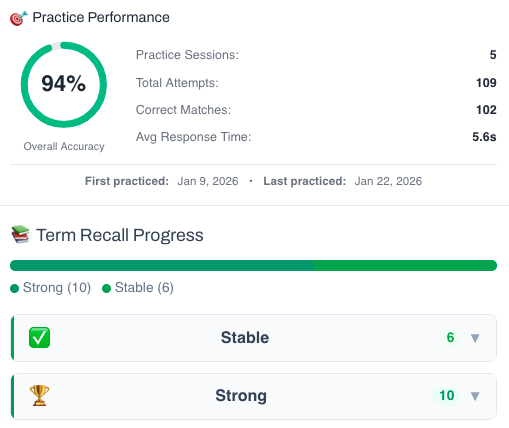
This isn’t a simple quiz — it’s a fully tracked learning system. You build knowledge through recognition, then recall, and your progress feeds directly into the Integrated Practice Bar (Writing tasks, AI Chat, and more).
- Practice sessions, accuracy, and response-time tracking
- Term strength levels (Learning → Stable → Strong)
- Personal progress history for each unit
This feature is available to YSP members.
Explore Membership Benefits