🎙 Tell Your Story: Past Simple Sequence
Past Simple — narrative sequence“Before, After”
Tell a short story about your day using past simple verbs in the right order. Use sequencers like 'first', 'then', 'after that', and 'in the end' to connect your ideas clearly.
One button, the whole episode. Good for the bus, the car or a walk.
Welcome
Josie: “Welcome to the YouSpeakPlus Audio Cast. Today we're working on past stories — telling events in order.”
Marco: “So things like: I woke up, then I left the house, after that I missed my bus?”
Josie: “Exactly. Every verb stays in the past, all the way through. That's the grammar point.”
Marco: “And the vocabulary?”
Josie: “Two small words that do a lot of work: 'before' and 'after'. They have more than one use, and we'll hear both.”
Josie: “We'll have some dos and don'ts, one question to remember, and a story that puts it all together. Ready? Let's start.”
Part 1 · Grammar
Josie: “Today we're telling stories. Past stories, in order. Listen to this: I woke up late, so I missed my train. Every verb stays in the past, from start to finish.”
Marco: “OK. So I need to keep all the verbs in the past? Not just the first one?”
Josie: “Exactly. Every verb, all the way through. That's the key idea today.”
Josie: “Listen to four short stories. First: I left work early, so I got home before dinner. Every verb: 'left', 'got'. Both past.”
Marco: “Right. And both tell me the order of what happened.”
Josie: “Yes. Second story: I called a friend, then we met for coffee. 'Called', 'met'. Both past. The order is clear.”
Josie: “Third: I cooked dinner, after that I watched a film. 'Cooked', 'watched'. Notice the words 'after that'. They show what came next.”
Marco: “So 'after that' is like a sign that says: the next thing is coming?”
Josie: “Perfect. And fourth: I rushed to the meeting, but in the end I was late. 'Rushed', 'was'. Still past, still in order.”
Marco: “I see. So 'first', 'then', 'after that', 'in the end' — these are the words that connect the events?”
Josie: “Yes. They show the order. And the verbs show the time. Both stay past.”
Josie: “Here's the frame. You say: first I did something, then I did something else, after that I did one more thing, in the end something happened. All past verbs, all in order.”
Marco: “And I can use 'afterwards' too, right? Instead of 'after that'?”
Josie: “Yes, 'afterwards' works the same way. One thing to remember: never say just 'after' alone at the start. Say 'after that' or 'afterwards'.”
Josie: “Now you. Tell me about a morning at work. It went badly. Start with 'first'.”
Marco: “OK. First I arrived late, then my computer didn't work, so I missed an important call.”
Josie: “Really good. Three past verbs, all in order. The consequence — 'missed the call' — makes the story real.”
Josie: “One more. You went shopping at the weekend. Tell me what happened. Use 'after that'.”
Marco: “I went to the market in the morning. After that, I buy some vegetables and went home for lunch.”
Josie: “Almost. Listen: 'I buy some vegetables'. You're in a past story, so what does 'buy' need to be?”
Marco: “Oh — 'bought'. I went to the market, after that I bought some vegetables and went home for lunch.”
Josie: “Say it once more.”
Marco: “I went to the market, after that I bought some vegetables and went home for lunch.”
Josie: “Good. You kept every verb in the past this time. That's exactly what we need.”
Josie: “Now, two things to watch. Listen to this wrong sentence: I walked to the station, then I see my colleague. What's the problem?”
Marco: “You changed the tense. 'Walked' is past but 'see' is present.”
Josie: “Right. 'Walked' says past, 'see' says now. Those two ideas fight. The right sentence: I walked to the station, then I saw my colleague. Say that.”
Marco: “I walked to the station, then I saw my colleague.”
Josie: “Once more.”
Marco: “I walked to the station, then I saw my colleague.”
Josie: “Don't switch to present in the middle of a past story. Do keep every verb in the past.”
Josie: “Second one. Listen: 'After, we went home.' What's missing?”
Marco: “Hmm. Is it 'after that'? You need the word 'that'?”
Josie: “Yes. 'After' alone sounds incomplete. The right sentence: after that, we went home. Say it.”
Marco: “After that, we went home.”
Josie: “Once more.”
Marco: “After that, we went home.”
Josie: “Don't say 'after' alone. Do say 'after that' or 'afterwards'.”
Marco: “So 'after' needs a partner. Got it.”
Josie: “Here's your decision test. Before you speak, ask yourself: am I telling a past story? Then keep every verb in the past, all the way to the end.”
Marco: “So I ask: is this a past story? If yes, every verb stays past — first, then, after that, in the end — all past.”
Josie: “Exactly. Use that test every time you tell a story. Keep the verbs in the past and use those connecting words to show the order.”
Part 2 · Word focus
Josie: “OK Marco, we just practised telling stories in order. Now I want to look at two small words that do a lot of work: 'before' and 'after'. Listen to this: I checked my phone before the meeting, so I was ready. Those two words organise your whole day.”
Marco: “I use these words in Italian all the time. But in English I'm not always sure which form comes after them.”
Josie: “That's exactly what we're going to look at today. Let's start with the simplest use. 'Before' means the first action. 'After' means the second. I always eat breakfast before work, so I'm not hungry. Notice: 'before' plus the noun 'work'. Simple.”
Marco: “So I can say: I drink coffee before work. That means coffee is first, work is second.”
Josie: “Exactly right. And 'after' does the opposite. I went for a walk after dinner, so I felt better. 'After' plus the noun 'dinner'. Dinner is first, the walk is second. Your turn. Tell me one thing you do after work, and why.”
Marco: “After work, I call my wife, so she knows when I'm coming home.”
Josie: “Good. You put 'after' with a noun and added a consequence. That's the pattern working well. Now a second use. You can put 'before' or 'after' in front of a verb. But the verb needs the '-ing' form. Listen: before leaving the office, I always check my bag. Did you hear that?, 'Before leaving' – this is an alternative to 'Before I leave'. The beauty of using the gerund form, by which I mean the '-ing' form' is that you do not need to conjugate it for tense.”
Marco: “So 'Before plus the gerund, the 'ing' form, can be used in an tense? Present and Past?”
Josie: “Exactly. with 'before' and 'after'plus '-ing' you communicate an action, not when it happens, the OTHER verbs in the sentence tell you WHEN the action happens. Listen to these exaples: 'Before leaving home, I always lock the door' – that's Present Simpel for habit, but 'Before leaving home, I locked the door' is a Past Simple Narrative.”
Marco: “I see. So 'finishing' and 'leaving' — they describe and action, and the other verbs in the sentence say when the sentance is located in time, present or past.”
Josie: “Exactly. Now you. Tell me something you do before leaving the house every morning. Use 'before leaving' and add a consequence.”
Marco: “Before leaving the house, I check the weather, so I know if I need a coat.”
Josie: “Really good. 'Before leaving' plus a consequence. That's the pattern. One more use now. You can also use 'before' or 'after' with a full sentence — a subject and a verb. Listen: I called the client before she left the office, so we didn't miss each other. 'Before' plus 'she left' — two different people, two different actions.”
Marco: “So when it's two different people, I use the full verb, not '-ing'?”
Josie: “Yes. Same person: 'before leaving'. Different people: 'before she left'. Listen to both: before leaving, I locked the door. Before he left, I gave him the report. Notice the difference.”
Marco: “OK. So '-ing' is for me doing both things. The full verb is for two different people.”
Josie: “Exactly. Now, there's one trap I want to show you. Italian speakers sometimes say 'ago' when they mean 'before'. Listen: I arrived two hours ago. That counts back from now — two hours ago, from this moment. But: I arrived before the meeting. That means earlier than the meeting. 'Ago' and 'before' are not the same.”
Marco: “Ah, I think I did this. I said: 'I sent the email two hours before.' I meant 'ago'.”
Josie: “Yes, that's the classic mix. 'Two hours before' needs a reference point — before what? 'Two hours ago' counts from now. So what's the right sentence for your email?”
Marco: “I sent the email two hours ago.”
Josie: “Say it once more.”
Marco: “I sent the email two hours ago.”
Josie: “Good. 'Ago' counts back from now. 'Before' connects two events. Keep those two separate. Now let's practise. I'll name a situation and you make a sentence. Use 'after' plus '-ing' and add a consequence. You arrive home from a long day at work.”
Marco: “After arriving home, I changed my clothes, so I felt more relaxed.”
Josie: “Good. 'After arriving' plus a consequence. Now use 'before' with a full sentence — two different people. Your manager sent you a document. You read it before the meeting started.”
Marco: “I read the document before the meeting started, so I was ready to talk.”
Josie: “Good. Two people, full verb, consequence. One more. Use 'after' with a noun. You finished a difficult phone call.”
Marco: “After the call, I wrote some notes, so I didn't forget anything.”
Josie: “That's a strong sentence. Now one to fix. Listen to this and tell me what's wrong: after finish work, I went to the supermarket.”
Marco: “Hmm. Is it 'finishing'? You need '-ing' after 'after'?”
Josie: “Yes. 'After' is followed by '-ing', not the base verb. So what's the right sentence?”
Marco: “After finishing work, I went to the supermarket.”
Josie: “Say it once more.”
Marco: “After finishing work, I went to the supermarket.”
Josie: “Good. Now a quick check. I say a sentence, you tell me which use it is. Listen: she called me before I left the house.”
Marco: “That's 'before' with a full sentence — two different people. 'She' called, 'I' left.”
Josie: “Right. Now: after lunch, I felt tired, so I had a short rest.”
Marco: “'After' with a noun — 'lunch'. The noun comes straight after 'after'.”
Josie: “Exactly. And one more: before sending the report, I checked every number.”
Marco: “'Before' plus '-ing'. Same person doing both things — checking and sending.”
Josie: “Perfect. So here's your decision test. Before you speak, ask yourself: which action comes first in time? The first action belongs with 'before', the second belongs with 'after'. Then ask: same person or two people? Same person: use '-ing'. Two people: use the full verb.”
Marco: “So I ask: which comes first? That gives me 'before' or 'after'. Then I ask: same person or two people? Same person gets '-ing', two people get the full verb. And I keep 'ago' separate — that's only for counting back from now.”
‘before’
- earlier than a time or event; something happens first, then something else follows I always check my email before a meeting, so I know what to expect.
‘after’
- later than a time or event; one thing finishes, then the next thing starts I had a coffee after lunch, so I felt more awake.
‘before + subject + verb’
- used to connect two actions with their own subjects; the second action happens first in time I called her before she left the office, so we could speak in person.
‘after + subject + verb’
- used to connect two actions with their own subjects; the first action finishes, then the second begins After the meeting ended, I went straight to lunch.
‘before + gerund’
- used when the same person does both actions; the verb takes the '-ing' form I always eat something before leaving the house, so I'm not hungry on the train.
‘after + gerund’
- used when the same person does both actions; the verb takes the '-ing' form After finishing work, I went to the gym, so I felt good in the evening.
‘before + noun’
- used with a noun to say something happens earlier than that event or time I always read the agenda before a meeting, so I'm ready.
‘after + noun’
- used with a noun to say something happens later than that event or time After dinner, we walked home, so we got some fresh air.
Part 3 · Story
Josie: “Now here is a story that puts both lessons into practice. It's Monday morning. Two students, Clara and Tom, are waiting outside their classroom. They're talking about what they did at the weekend.”
Tom: “So, how was your weekend, Clara?”
Clara: “Honestly? A bit of a disaster. I went to the market on Saturday morning.”
Tom: “Oh, the big one near the station? I love that market.”
Clara: “Yes, that one. Before leaving the house, I checked the weather. It said sunny all day.”
Tom: “Let me guess. It wasn't sunny.”
Clara: “Not at all. I got to the market, then I found a great vegetable stall. After that, the rain started.”
Tom: “Oh no. Did you have an umbrella?”
Clara: “No, because I checked the weather before I left, remember? So I rushed to the bus stop.”
Tom: “And did you catch the bus?”
Clara: “I missed it. I ran to the stop, but the bus left one minute before I arrived. I stood in the rain for fifteen minutes.”
Tom: “Fifteen minutes? You were soaked.”
Clara: “Completely. In the end, I got home, changed my clothes, and made a big cup of tea. That was the best part of the day.”
Tom: “Ha. After all that, a cup of tea sounds perfect.”
Clara: “It really was. OK, what about you? Did you have a good weekend?”
Tom: “Mine was strange too. I planned a nice, quiet Saturday. Before breakfast, I wrote a list of things to do.”
Clara: “That sounds very organised.”
Tom: “I thought so. First, I went to the supermarket. After that, I wanted to go for a walk in the park.”
Clara: “But something went wrong?”
Tom: “At the supermarket, I waited in a very long queue. I stood there for twenty minutes. I almost left.”
Clara: “Twenty minutes! What happened?”
Tom: “I finally paid and walked out. But before reaching the park, my phone rang. It was my sister.”
Clara: “And she needed something, of course.”
Tom: “She needed help with her computer. So I went to her flat. I sat there for two hours and fixed it.”
Clara: “So your quiet walk never happened.”
Tom: “Never happened. Afterwards, I went home, ate dinner, and watched a film. In the end, it was a nice evening.”
Clara: “So we both had a bad afternoon and a good evening.”
Tom: “Exactly. Maybe that's just what weekends are.”
Josie: “Listen to the story again. Count the past verbs used in sequence — you'll hear at least eight. And listen for 'before' and 'after' — they come up at least four times, and in more than one way.”
Josie: “And remember the two questions. First: am I telling a past story? Then every verb stays in the past, all the way to the end. Second: which action comes first in time? The first action belongs with 'before', the second belongs with 'after'.”
Member-Exclusive Practice Bar
Access a wide range of integrated practice for this unit — from Vocabulary and Grammar activities to AI-curated Writing tasks and Thematic Chat practice.
This feature is available to YSP members.
Explore Membership BenefitsMember-Exclusive Vocabulary Review & Acquisition System
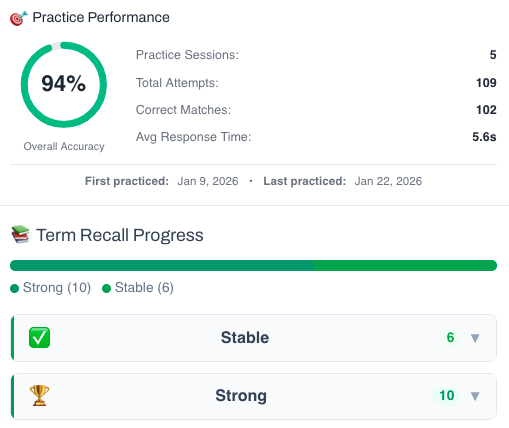
This isn’t a simple quiz — it’s a fully tracked learning system. You build knowledge through recognition, then recall, and your progress feeds directly into the Integrated Practice Bar (Writing tasks, AI Chat, and more).
- Practice sessions, accuracy, and response-time tracking
- Term strength levels (Learning → Stable → Strong)
- Personal progress history for each unit
This feature is available to YSP members.
Explore Membership Benefits