Lexical Investigation: Stake in Business Settings
Core PathWay
1 🌐 Introduction Section
The word stake is fascinating because it shifts from concrete to abstract meanings in business English. Originally referring to a physical wooden post, it now describes financial investment, personal interest, and risk levels. In professional contexts, you’ll hear ‘Our reputation is at stake‘ or ‘She’s a key stakeholder‘ – expressions that confuse learners because the connection to the original meaning isn’t obvious. Understanding stake and its family unlocks important business vocabulary about ownership, risk, and consequences. This investigation reveals how native speakers use these expressions naturally in meetings, negotiations, and project discussions.
💬 Project Risk Discussion
Maria and Tom are in a business meeting discussing whether to continue with a challenging project
2 🔍 Lexical Breakdown
1. Stake (noun) – Financial Meaning
Definition: Money that you put into a business or project because you want to own part of it or get money back later.
Example: “Sarah bought a 30% stake in the new restaurant, so she owns nearly a third of the business.”
Example: “The company sold a stake to foreign investors to raise money for expansion.”
Register note: Common in business news, financial reports, and investment discussions. Neutral/formal register.
—
2. Stake (noun) – Interest/Involvement Meaning
Definition: A strong reason to care about something because it affects you directly.
Example: “Everyone on the team has a stake in this project’s success because our bonuses depend on it.”
Example: “Local residents have a stake in the new development plans for their neighborhood.”
Register note: Used in both formal and informal business contexts.
—
3. To stake (verb) – To risk or invest
Definition: To risk something important, or to use your money to support a business idea.
Example: “He staked his entire savings on the startup idea.”
Example: “I wouldn’t stake my reputation on that plan – it’s too risky.”
Register note: Somewhat formal. More common in written business English than everyday conversation.
—
4. To be at stake
Definition: To be in danger of being lost, or to be the thing that people might win or lose.
Example: “Our company’s future is at stake if this product launch fails.”
Example: “With so much money at stake, we need to make the right decision.”
Register note: Common in both spoken and written business English. Used to emphasize importance or risk.
—
5. Stakeholder (noun)
Definition: A person or group who is affected by a business decision or who has an interest in how a project develops.
Example: “We need to consult all the stakeholders before we change the project timeline.”
Example: “Key stakeholders include employees, customers, and local community members.”
Register note: Very common in business, project management, and corporate communication. Professional/formal register.
—
6. High stakes / Low stakes
Definition: High stakes means a situation where you could win or lose something very important. Low stakes means the possible loss or gain is small and not very important.
Example: “This is a high-stakes negotiation – if we lose this client, we’ll have serious financial problems.”
Example: “It’s just a low-stakes meeting to share ideas, so don’t worry about making mistakes.”
Register note: ‘High stakes’ is very common; ‘low stakes’ is less frequent. Both used in business and everyday contexts.
—
7. To stake a claim
Definition: To say publicly that something belongs to you or that you have a right to something.
Example: “The marketing team staked their claim to the new budget before anyone else could request it.”
Example: “She staked a claim to the leadership position early in the project.”
Register note: Somewhat informal. Originally from gold mining history, now used metaphorically in business.
💬 Investment Negotiation
Sarah is pitching her startup to James, a potential investor who wants to discuss ownership
3 📚 Word Family and Variants
Core Word Family:
Noun: stake, stakeholder, stakeholding
– *A stake* = financial investment or personal interest
– *A stakeholder* = person affected by or interested in something
– *A stakeholding* = the shares or interest someone holds (less common)
Verb: to stake, staking, staked
– *To stake* = to risk or invest something
– *He’s staking everything on this deal* = present continuous
– *She staked her reputation* = past simple
Adjective forms:
– High-stakes (hyphenated when used before a noun)
– Example: “It’s a high-stakes decision” ✓
– Example: “The stakes are high” (no hyphen when used after verb) ✓
– Low-stakes (same hyphen rule)
—
Common Compounds:
Stakeholder is the most important compound:
– Key stakeholders = the most important people affected
– Internal stakeholders = people inside the organization (employees, managers)
– External stakeholders = people outside the organization (customers, suppliers, community)
—
Usage Differences:
💬 Team Strategy Meeting
Lisa is expressing concerns to her manager about a high-risk decision the team is considering
4 🔗 Collocations and Combinations
Strong Verb + Stake Combinations:
To have a stake in (something)
– “We all have a stake in making this project successful because it affects our department’s budget.”
To hold a stake (formal)
– “The investment firm holds a 25% stake in the technology company.”
To buy/acquire a stake
– “They’re planning to buy a stake in their main competitor.”
To sell a stake
– “The founder decided to sell his stake and retire early.”
To increase/raise a stake
– “The company wants to increase its stake from 30% to 51% ownership.”
—
Adjective + Stake Combinations:
Majority stake (more than 50%)
– “Holding a majority stake gives you control over company decisions.”
Minority stake (less than 50%)
– “Even with just a minority stake, you can still influence strategic direction.”
Significant stake
– “She has a significant stake in the outcome because she invested heavily.”
Controlling stake
– “They purchased a controlling stake, which means they now make all major decisions.”
—
Stakeholder Collocations:
Key stakeholders
– “We need to identify the key stakeholders before the next meeting.”
To engage stakeholders
– “The project manager’s job is to engage stakeholders throughout the process.”
To consult stakeholders
– “We should consult stakeholders before making this major change.”
Stakeholder management
– “Good stakeholder management is essential for project success.”
—
Stakes Phrases:
To raise the stakes
– “The competitor’s new product really raised the stakes – now we have to innovate faster.”
What’s at stake
– “Let me explain what’s at stake here: our reputation, our funding, and five people’s jobs.”
The stakes are high
– “The stakes are high in this negotiation – we could win or lose everything.”
High-stakes decision/meeting/situation
– “This is a high-stakes decision that will affect the company for years.”
5 🤔 Metaphors & Idioms
The word stake creates several metaphorical expressions in business English. ‘To stake a claim’ originally meant to mark land boundaries with wooden posts during the gold rush, but now means to assert your right to something before others do. ‘To raise the stakes’ comes from gambling, where you increase your bet, and now describes making a situation more risky or competitive. When we say ‘everything is at stake,’ we’re using the gambling metaphor where stakes are the money you risk losing. These expressions are common in native speaker business communication, and while learners should understand them (receptive skill), using them naturally (productive skill) takes practice. It’s better to comprehend these idioms when colleagues use them than to risk using them incorrectly in your own speech too early. Notice how native speakers use them in context before trying them yourself.
Member-Exclusive Vocabulary Review & Acquisition System
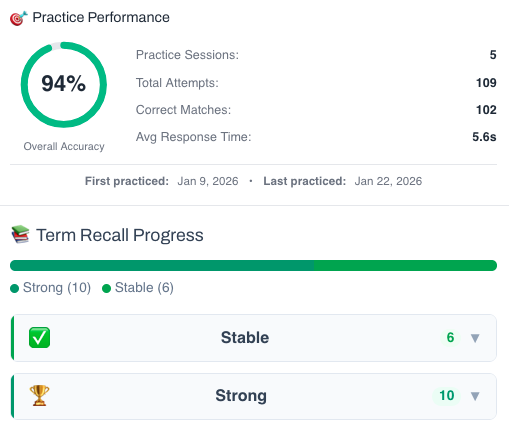
This isn’t a simple quiz — it’s a fully tracked learning system. You build knowledge through recognition, then recall, and your progress feeds directly into the Integrated Practice Bar (Writing tasks, AI Chat, and more).
- Practice sessions, accuracy, and response-time tracking
- Term strength levels (Learning → Stable → Strong)
- Personal progress history for each unit
This feature is available to YSP members.
Explore Membership Benefits