Overcrowding in Rome: Tourism and Urban Challenges
Core PathWay
1 The Reality of 30 Million Visitors
Rome is one of the most visited cities in the world. Every year, about 30 million visitors come to see its history and culture. The problem is that Rome’s historic centre is very small—only about 5 square kilometres. This means millions of people crowd into a tiny area.
During peak hours in summer, popular places like the Trevi Fountain or Spanish Steps become almost impossible to visit comfortably. Locals who live in the centre feel overwhelmed by the constant flow of tourists. Many residents say they avoid the centre during tourist season because the congestion makes daily life difficult.
The city’s infrastructure struggles to cope. Public transport is packed, streets are full, and heritage sites show signs of deterioration from millions of visitors touching walls and monuments. City officials talk about the city’s carrying capacity—the maximum number of visitors Rome can handle without damage to its culture, buildings, and quality of life for people who live there.
💬 Tourist and Local at Trevi Fountain
A tourist tries to reach the Trevi Fountain during peak hours and speaks with a local resident
2 Impact on Daily Life
For Romans living in the historic centre, overcrowding affects everything. Marco, who has lived near the Pantheon for 40 years, explains: ‘I can’t walk to the bakery without pushing through crowds. My street is always full of day-trippers taking photos.’
Local shops that once served residents have closed. They’ve been replaced by tourist shops selling souvenirs. Rents have increased because property owners prefer short-term tourist rentals. Many Romans have moved out of the centre to quieter neighbourhoods.
The city also faces practical problems. Rubbish bins overflow because of the huge number of visitors. Noise levels are high all day and night. Some heritage sites are getting damaged because too many people touch them or climb on them.
City officials are trying to preserve Rome’s character while still welcoming tourists. They know tourism brings money and jobs, but they also see that sustainable tourism is necessary. Without changes, the city centre could become a place only for tourists, not for Romans.
💬 Discussing Solutions with a City Official
A tour guide asks a city official about new measures to manage tourist numbers
3 Solutions and Management Strategies
Rome is testing different ways to manage tourist numbers. One approach is crowd control at major sites. The Colosseum now uses a timed entry system. Visitors must book a specific time slot. This helps disperse crowds throughout the day instead of everyone arriving at once.
The city has introduced restrictions in some areas. For example, sitting on the Spanish Steps is now banned, and eating near fountains can result in fines. These rules aim to protect monuments and reduce congestion.
Some European cities charge a tourist tax—a small fee that visitors pay when they stay overnight. Rome already has this tax, and officials are discussing whether to increase it. The money helps maintain heritage sites and public spaces.
Another strategy is encouraging tourists to visit during the off-season. Winter months are much quieter, and visitors can enjoy sites without crowds. The city is also promoting lesser-known neighbourhoods to disperse tourists away from the main centre.
A booking system for popular sites helps control numbers. When sites reach their carrying capacity, no more visitors can enter until others leave. This protects both the monuments and the visitor experience.
4 Vocabulary Recap
Here are the key terms from this lesson:
Overcrowding = when too many people are in one place, making it uncomfortable or difficult to move
Tourist season = the time of year when most tourists visit (usually summer)
Peak hours = the busiest times of day when most people are in a place
Locals = people who live in a particular place (not visitors)
Residents = people who live in a specific area or building
Overwhelmed = feeling that something is too much to deal with
Sustainable = able to continue without causing damage or problems for the future
Carrying capacity = the maximum number of people or things that a place can support
Heritage site = a place with historical or cultural importance
Restrictions = official rules that limit what people can do
Tourist tax = money that visitors must pay to enter or stay in a place
Crowd control = methods used to manage large groups of people
Off-season = the time of year when fewer tourists visit
Day-tripper = a person who visits a place for just one day
Congestion = when a place is so crowded that movement is difficult
Deterioration = the process of becoming worse or damaged over time
Preserve = to protect something and keep it in good condition
Timed entry = a system where visitors can only enter at a specific time
Booking system = an organized way for people to reserve a place or time in advance
Disperse = to spread out over a larger area
Key Terms
Member-Exclusive Practice Bar
Access a wide range of integrated practice for this unit — from Vocabulary and Grammar activities to AI-curated Writing tasks and Thematic Chat practice.
This feature is available to YSP members.
Explore Membership BenefitsMember-Exclusive Vocabulary Review & Acquisition System
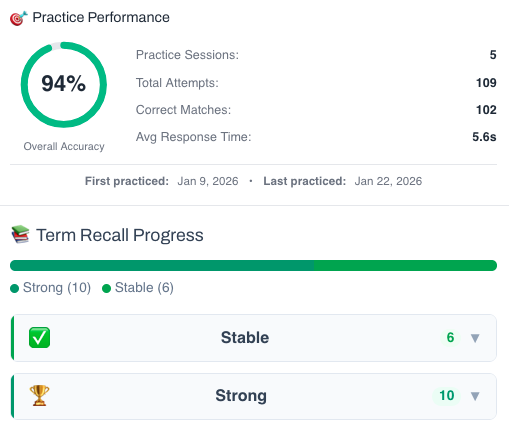
This isn’t a simple quiz — it’s a fully tracked learning system. You build knowledge through recognition, then recall, and your progress feeds directly into the Integrated Practice Bar (Writing tasks, AI Chat, and more).
- Practice sessions, accuracy, and response-time tracking
- Term strength levels (Learning → Stable → Strong)
- Personal progress history for each unit
This feature is available to YSP members.
Explore Membership Benefits🎮 Practice Games
Member-Exclusive Sentence Builder
Reconstruct scrambled sentences to practice word order and develop your grammar intuition.
This feature is available to YSP members.
Explore Membership Benefits