Are You a Risk Taker? The Language of Risk
Core PathWay1 Section 1. Living with Risk
Some people check the weather before they leave the house. Others just walk out and hope for the best. Both approaches involve risk — the difference is how much of it each person is willing to accept.
Risk is part of everyday life. We cannot remove it completely, no matter how carefully we plan. Crossing a road, changing jobs, trying a new restaurant — each of these carries an element of risk. The question is not whether we face risk, but what our attitude to risk is. Are we cautious, or are we comfortable with uncertainty?
Some people seem almost attracted to risk. They seek out situations where the outcome is uncertain and the stakes are high. Others prefer to minimize the risk wherever possible, choosing the safer, more predictable path. Neither approach is wrong — but understanding your own position helps you make better decisions.
What about you? Do you tend to take a risk when the opportunity arises, or do you prefer to play it safe? Your answer probably depends on the situation. Most people are not simply ‘brave’ or ‘cautious’ — their attitude to risk shifts depending on what is at stake.
2 Section 2. The Word Family of ‘Risk’
The word ‘risk’ works hard in English. It functions as a verb, a noun, an adjective, and an adverb — and each form has its own patterns and partners. Pay close attention to the grammar rule for the verb: after ‘risk’, you always use the -ing form, never the infinitive with ‘to’.
risk (verb) — risk doing something
- She decided to speak up, even though she was risking a change in how her colleagues saw her.
- He didn’t want to risk missing the flight, so he arrived two hours early.
risk (noun)
- There is always an element of risk when you invest money, but you can take steps to minimize the risk.
- Running the risk of failure is part of any creative process — there is no room for risk-free thinking in innovation.
risky (adjective) / riskily (adverb)
- Quitting a stable job without another one lined up is generally considered a risky move.
- He had invested riskily in several new companies, and not all of them survived.
3 Section 3. Risk Takers, Thrill Seekers, and Playing It Safe
Not everyone takes risks for the same reason. Understanding why people accept risk — or avoid it — is as interesting as the risks themselves.
A true risk taker is someone who regularly accepts uncertainty as part of how they live. This is not the same as being reckless. Many risk takers calculate the odds carefully before they act — they simply have a higher tolerance for what might go wrong. At the other end of the scale, some people avoid unnecessary risk at every turn, preferring to keep things predictable and controlled.
Then there are thrill seekers — people who are attracted to risk specifically for the excitement it produces. They go skydiving, start businesses on a whim, or move to a new country without a plan. For them, the risk itself is part of the reward. There is, in their view, always room for risk if the experience is worth it.
It is also worth noticing how we talk about what people do with risk. We say someone takes risks with their health, their money, or their relationships — meaning they behave carelessly with something important. This is different from simply taking a calculated risk. If you take risks with other people’s trust, the consequences can be serious.
Finally, some people are drawn to risking a change — making a big shift in their life even when the outcome is uncertain. Starting a new career, ending a long relationship, relocating abroad. These are moments when the risk of getting it wrong feels smaller than the cost of staying still.
4 Section 4. Talking About Risk — A Conversation Between Friends
Alex, Sam, and Jordan are catching up over coffee. The conversation turns to risk — and it quickly becomes clear that the three of them see it very differently.
💬 Dialogue 1: Are You a Risk Taker?
Three friends, a coffee shop, a Saturday afternoon
📝 Comprehension Check: Taking Risks
Answer the questions based on what you heard in the audio.
Which speaker was inspired to try a new activity after hearing about a work colleague's experience?
Which speaker said they would prefer not to put their physical wellbeing in danger?
Which speaker used a career decision as an example of their attitude towards uncertainty?
Which speaker argued that careful preparation can reduce the danger of a risky activity?
Which speaker admitted at the end of the conversation that they might be overly careful?
Which speaker suggested that not changing can itself be a form of risk?
Which speaker felt "fully alive"?
Alex: “I've been thinking about taking up rock climbing. My colleague does it every weekend and says it completely changes how you see things. I'm seriously considering giving it a go.”
Sam: “Rock climbing? Seriously? You'd be risking a broken arm every time you go out. I mean, one slip and that's it. That's not my idea of a good weekend, I have to say.”
Jordan: “I don't know — there's always an element of risk in anything worth doing, isn't there? You run the risk of getting hurt, sure, but you also get something most people never experience. That feeling of being fully alive, you know?”
Alex: “Exactly. And you can minimize the risk with proper training and the right equipment. It's not like jumping off a cliff with no preparation. My colleague spent months learning the basics before he ever went outdoors.”
Sam: “Maybe. But I'd rather not take that kind of risk at all. I suppose my attitude to risk is just different from yours. I genuinely don't see why you'd take an unnecessary risk when you could do something equally enjoyable and stay in one piece.”
Jordan: “That's fair — but I think some people genuinely need that uncertainty. If I'm honest, I'm probably a bit of a risk taker. I've always been attracted to risk, even in everyday decisions. Changing jobs last year, for example — everyone told me it was a risky move, but staying felt worse.”
Alex: “That's it, isn't it? Sometimes risking a change is less frightening than the risk of standing still. I'd rather take a risk and find out than always wonder what might have happened. At least you know.”
Sam: “I get that, I really do. I just don't want to take risks with my health or my safety. Life's risky enough as it is — I don't need to go looking for more of it. But I'll admit, listening to you two, maybe I'm a little too cautious sometimes.”
5 Are You a Risk Taker? Six People answer the question
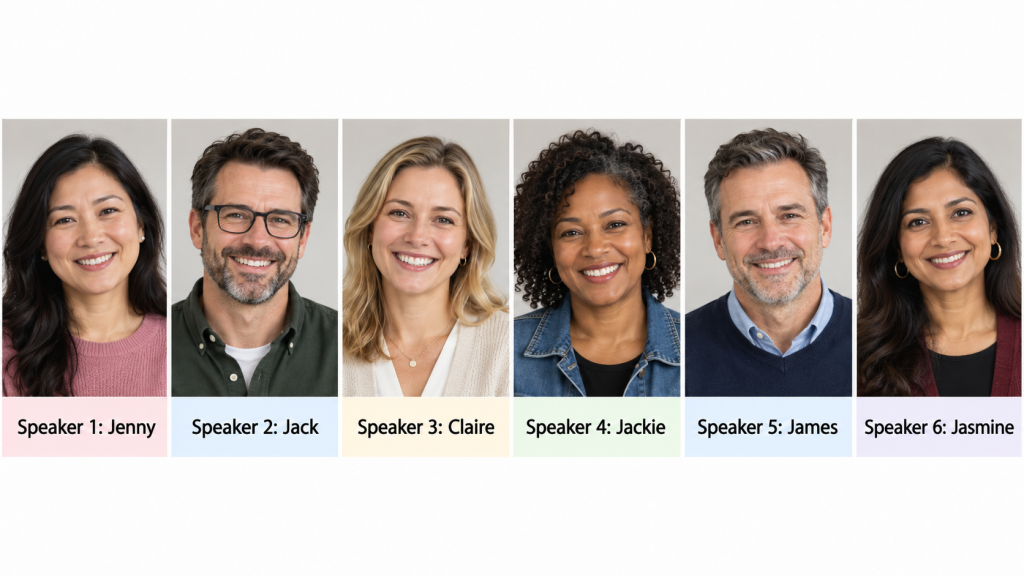
💬 Attitude to Risk: 6 Speakers
In this more detailed listening, six people answer the question “Are you a risk taker?“. Listen carefully to what they say. Before opening the ‘line by line’ replay, answer the comprehension quiz questions.
Narrator: “Speaker 1: Jenny”
Jenny: “Yes, I think I am, or anyway more than I used to be. I think my attitude to risk has changed as I’ve got older, for example I’m more open to risking a change in appearance, because I think I’m less self-conscious now. I often change hairstyles and colour but when I was younger I had the same hairstyle for years and years. I also think I would take more risks travelling now because I’m more self-confident, so I’m pretty sure I could cope with any problems.”
Narrator: “Speaker 2: Jack”
Jack: “Yes, I’m definitely a risk taker. I take risks to do things that I enjoy, like skiing or cycling in London, which is pretty dangerous. In fact, I think the element of risk probably makes them even more enjoyable. The only time I wouldn’t take a risk would be if I couldn’t see that I was going to get any pleasure from it. I wouldn’t do something risky just for the sake of it.”
Narrator: “Speaker 3: Claire”
Claire: “I’m the sort of person who likes to know exactly what I’m doing and when I’m doing it, so there’s not much room for risk in my life. For me, risk means not being completely in control and that can make me feel really nervous. For example, if I’m meeting a friend for dinner, I always make sure we have a table booked somewhere nice. I wouldn’t risk just turning up and hoping that there was a table. And I never buy clothes online because I don’t want to run the risk of them being the wrong size and having to send them back.”
Narrator: “Speaker 4: Jackie”
Jackie: “I’m definitely not a risk taker. I might like to think that I am, as it seems exciting, but I’m not. I live in a suburb of London and I’d never walk home on my own in the evening when it’s dark, as that just seems like an unnecessary risk to take. And I’d never get into a taxi on my own at night. But on the other hand, I would love to do something like bungee jumping or paragliding which other people would probably think is risky.”
Narrator: “Speaker 5: James”
James: “I don’t see myself as a risk taker. I’ve done a lot of mountain climbing, and everyone assumes, because of this, that I’m attracted to risk, but it isn’t really true. In fact when you’re climbing high mountains you’re always trying to minimize the risk. The biggest risk I’ve ever taken in my life was a professional one – after 20 years in the same job, I left and set up my own company – and that’s given me a lot more sleepless nights than climbing in the Andes or the Himalayas.”
Narrator: “Speaker 6: Jasmine”
Jasmine: “I am happy to take risks. I love driving fast, in fact I bought myself a sports car when I had some money and I got quite a few speeding tickets – though probably not as many as I deserved! I also take risks with money, like lending to people who probably won’t pay me back, or spending all I have on something a bit unnecessary. Last year I went on a balloon ride and I was amazed that so many people said, ‘Ooh, I wouldn’t do that!’ I loved it and I’d happily do it again – it was fantastic!”
📝 Comprehension Check: Are You a Risk Taker?
Answer the questions based on what you heard in the audio.
Which speaker says their attitude to risk has shifted as they have grown older?
Which speaker says that a sense of danger actually makes an activity more fun?
Which speaker feels uncomfortable whenever they are NOT fully in control of a situation?
Which speaker is cautious about personal safety in their local area but would happily try an extreme sport?
Which speaker says the biggest chance they ever took was related to their working life, NOT a physical activity?
Which speaker mentions receiving official penalties because of the way they drive?
Which speaker says they try to reduce danger rather than seek it out, even in an activity that looks risky to others?
Which TWO speakers describe taking financial risks or spending money in ways others might consider unwise?
Which TWO speakers describe themselves as NOT risk takers, yet each gives an example that shows they do accept some form of risk?
6 Writing Task — What Is Your Attitude to Risk?
You have explored a wide range of language for talking about risk. Now use it. Write a short paragraph about your own attitude to risk, using the framework below to guide you.
Framework:
1. Start with this sentence: ‘When it comes to risk, I would describe myself as…’
2. Give ONE example of a risk you are happy to take — and why. (Think about: travel, food, sport, new experiences, social situations.)
3. Give ONE example of a risk you try to avoid — and why. (Think about: health, money, relationships, safety.)
4. Finish with a general statement about your attitude to risk overall.
Use at least FOUR of these expressions in your paragraph:
an element of risk / take a risk / minimize the risk / unnecessary risk / risky / attitude to risk / attracted to risk / risk of (something) / risking a change / risk taker
Target: approximately 80 words.
6 Section 6. Recap — The Language of Risk
You have covered a lot of ground in this unit. Here is a quick summary of the key patterns to keep in mind.
The verb risk is always followed by the -ing form — never the infinitive. Say ‘I risk losing everything’, not ‘I risk to lose everything’. This is one of the most common errors learners make with this word, so it is worth fixing early.
As a noun, risk connects with a wide range of verbs and adjectives: you take a risk, run the risk, minimize the risk, or face an unnecessary risk. You can also talk about the risk of something happening, or note that there is always an element of risk in a situation.
The adjective risky describes decisions, moves, or behaviour that involve significant risk. And a person who regularly accepts risk is a risk taker — someone who is attracted to risk and sees room for risk where others see only danger.
Finally, notice the difference between taking risks with something (being careless with it) and simply taking a risk (making a deliberate choice under uncertainty). The first implies irresponsibility; the second is simply part of being human.
Coming up next: how risk language works in professional and analytical contexts — risk assessment, risk management, and the vocabulary of decision-making under pressure.
Member-Exclusive Practice Bar
Access a wide range of integrated practice for this unit — from Vocabulary and Grammar activities to AI-curated Writing tasks and Thematic Chat practice.
This feature is available to YSP members.
Explore Membership BenefitsMember-Exclusive Vocabulary Review & Acquisition System
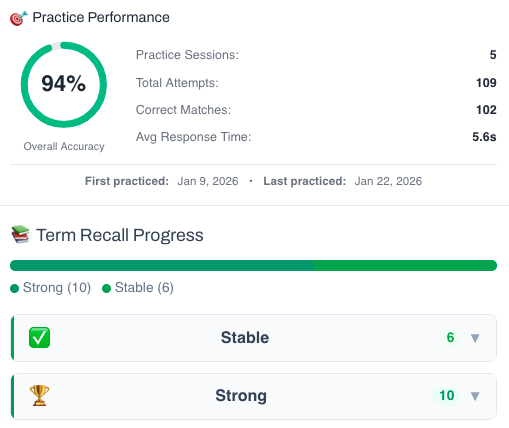
This isn’t a simple quiz — it’s a fully tracked learning system. You build knowledge through recognition, then recall, and your progress feeds directly into the Integrated Practice Bar (Writing tasks, AI Chat, and more).
- Practice sessions, accuracy, and response-time tracking
- Term strength levels (Learning → Stable → Strong)
- Personal progress history for each unit
This feature is available to YSP members.
Explore Membership Benefits