Talking About Your Daily Routine
Core PathWay1 Your Daily Routine
Everyone has a daily routine. A routine is the things you do every day at the same time. When you talk about your routine, you use the present simple tense. You also use words like always, usually, often, sometimes, and never. These words tell people how often you do something.
For example: ‘I always wake up at 7 a.m.’ or ‘I usually have breakfast at 8 a.m.’ or ‘I never drink coffee in the evening.’ You can also say how many times you do something: ‘I go for a walk three times a week’ or ‘I meet friends once a month.’
When people want to know about your routine, they ask questions like ‘What time do you get up?’ or ‘How often do you go to the gym?’ You answer with present simple sentences. It is important to use the correct form of the verb. For ‘I’, ‘you’, ‘we’, and ‘they’, use the base verb: ‘I leave home at 8.30.’ For ‘he’, ‘she’, and ‘it’, add -s or -es: ‘She starts work at 9 a.m.’
Here is a short dialogue between a journalist and someone talking about their morning routine:
Journalist: What time do you wake up?
Alex: I wake up at 6.30 every day.
Journalist: Do you have breakfast at home?
Alex: Yes, I always have breakfast. I usually eat toast and drink coffee.
Journalist: What time do you leave home?
Alex: I leave home at 7.45. I commute to work by train.
Journalist: How long does your commute take?
Alex: It takes about 40 minutes. I usually read a book on the train.
Key Terms
2 Grammar: Present Simple for Routines
You use the present simple tense to talk about things you do regularly. This means your habits, your routines, and things that happen again and again. The present simple shows that something is a normal part of your life, not something special that happens only once.
When you describe your daily routine, you need the present simple. For example, ‘I start work at 9 a.m.’ or ‘She finishes work at 5 p.m.’ These sentences tell people what happens every day.
Focus
- Use present simple for habits and routines
- Add -s or -es to the verb for he/she/it
- Use base verb form for I/you/we/they
- Use do/does in questions and negatives
Rules
- Positive: I/you/we/they + base verb (I wake up at 7). He/she/it + verb + s/es (She wakes up at 7).
- Negative: I/you/we/they + do not (don’t) + base verb (I don’t drink coffee). He/she/it + does not (doesn’t) + base verb (He doesn’t drink coffee).
- Question: Do + I/you/we/they + base verb (Do you have breakfast?). Does + he/she/it + base verb (Does she have breakfast?).
Examples
- I get up at 6.30 every morning.
- She commutes to work by bus.
- Do you watch TV in the evening?
Common mistake
3 Talking About Frequency
When you talk about your routine, you need to say how often you do things. You can use frequency adverbs like ‘always’, ‘usually’, ‘often’, ‘sometimes’, and ‘never’. You can also use expressions of frequency like ‘every day’, ‘once a week’, ‘twice a month’, or ‘three times a year’.
Frequency adverbs usually go before the main verb but after the verb ‘be’. Expressions of frequency usually go at the end of the sentence. When you want to ask about frequency, use the question ‘How often do you…?’
frequency adverbs
- I always set the alarm before I go to bed.
- She never eats breakfast at home.
expressions of frequency
- I go to the gym twice a week.
- We have a meeting every Monday morning.
How often do you…?
- How often do you have lunch at a restaurant? – About once a week.
- How often does he commute to work? – Five days a week.
4 Interview: Daily Routine at Home
Here is an interview between a journalist and Sam. The journalist asks Sam about a normal day at home. Notice how Sam uses present simple tense and frequency words to describe regular activities.
Sam’s Routine
💬 Daily Routine
Journalist: “What time do you usually wake up?”
Sam: “I wake up at 6 a.m. every day. I always set the alarm the night before.”
Journalist: “Do you get up immediately?”
Sam: “No, I never get up immediately! I usually stay in bed for 10 minutes. Then I get up and take a shower.”
Journalist: “What do you do after your shower?”
Sam: “I get dressed and then I go to the kitchen. I always have breakfast at home. I usually eat cereal and drink coffee.”
Journalist: “What time do you leave home?”
Sam: “I leave home at 7.30. I commute to work by car. It takes about 30 minutes.”
Journalist: “And what about your evening routine? What time do you come home?”
Sam: “I usually come home at 6 p.m. I’m always tired after work, so I relax at home for a bit. Sometimes I watch TV for 30 minutes.”
Journalist: “Do you cook dinner every day?”
Sam: “Yes, I cook dinner most evenings. I eat dinner at about 7.30. After dinner, I do the washing up and tidy up the kitchen.”
Journalist: “What do you do in the evening?”
Sam: “It depends. Sometimes I go for a walk. I meet friends once or twice a week. We usually go to a café or a restaurant. On other evenings, I stay at home and read a book or watch TV.”
Journalist: “What time do you go to bed?”
Sam: “I usually go to bed at 10.30 or 11 p.m. I always set the alarm before I sleep. I need eight hours of sleep every night!”
Key Terms
5 Interview: Daily and Weekly Routine at Work
Here is another interview. This time the journalist asks Sam about work routines. Sam talks about daily tasks and also things that happen once a week or once a month.
💬 work_routine
Journalist: “Do you work from home or do you go to an office?”
Sam: “I usually go to the office. I work from home on Fridays, but Monday to Thursday I commute to work.”
Journalist: “What time do you start work?”
Sam: “I start work at 9 a.m. The first thing I do is check emails. I always have a lot of emails in the morning!”
Journalist: “What do you do after you check emails?”
Sam: “I usually reply to messages. Then I make phone calls. I contact clients and suppliers every day.”
Journalist: “Do you have meetings every day?”
Sam: “No, not every day. I have a meeting with my team twice a week, on Monday and Thursday. We also have a big department meeting once a month.”
Journalist: “When do you take a break?”
Sam: “I take a break at 11 a.m. I usually drink coffee and talk to my colleagues. Then I work until lunchtime.”
Journalist: “What time do you have lunch?”
Sam: “I have lunch at 1 p.m. I usually eat at my desk, but sometimes I go to a café with colleagues.”
Journalist: “What do you do in the afternoon?”
Sam: “In the afternoon, I check emails again and reply to messages. I also work on projects. Sometimes I have a meeting in the afternoon.”
Journalist: “What time do you finish work?”
Sam: “I finish work at 5.30 p.m. Then I commute home. When I work from home on Fridays, I finish at 5 p.m. because I don’t need to commute!”
Journalist: “Do you do any work tasks at home?”
Sam: “Sometimes. If I have a big project, I work at home in the evening. But I try to relax at home most evenings.”
Journalist: “Do you do the shopping during the week?”
Sam: “I do the shopping on Saturday mornings. I never do the shopping during the week because I’m too busy. I buy food and household items once a week.”
Key Terms
6 Recap
You now know how to talk about your daily and weekly routines in English. You use the present simple tense to describe things you do regularly. Remember to add -s or -es to the verb when you talk about he, she, or it.
You can use frequency adverbs like always, usually, often, sometimes, and never to say how often you do something. These words go before the main verb. You can also use expressions of frequency like every day, once a week, or twice a month. These expressions usually go at the end of the sentence.
When someone asks ‘How often do you…?’, you can answer with a frequency adverb or an expression of frequency. For example: ‘How often do you go to the gym?’ – ‘I go three times a week’ or ‘I usually go on Monday, Wednesday, and Friday.’
Now you are ready to describe your own routine. Think about your morning, your work day, and your evening. What do you do every day? What do you do once a week? What do you never do? Use the language from this lesson to talk about your life!
⚖️ Two Ways to Sequence Daily Routines
⚖️ WHILE vs DURING
Dear Reader,
Thank you for agreeing to this email interview for our 'A Day in the Life' series in Modern Living magazine!
I'd like to learn about your typical day, and I'll ask you about different parts of your routine in separate emails. Let's start with your morning.
Could you tell me about your morning routine? For example:
– What time do you usually wake up?
– What do you do first?
– What do you have for breakfast?
– How do you get ready for work or your day?
– What time do you usually leave home?
Please give me as much detail as you can – our readers love to know the small things that make each person's day special!
I look forward to hearing from you.
Best wishes,
Sarah Mitchell
Features Writer, Modern Living Magazine
🎧 What I do everyday – module 1357 Review
Member-Exclusive Practice Bar
Access a wide range of integrated practice for this unit — from Vocabulary and Grammar activities to AI-curated Writing tasks and Thematic Chat practice.
This feature is available to YSP members.
Explore Membership BenefitsMember-Exclusive Vocabulary Review & Acquisition System
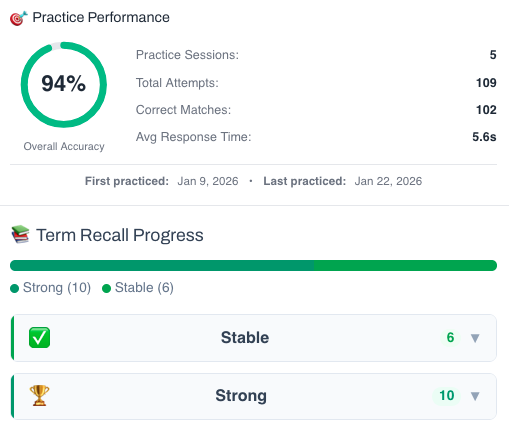
This isn’t a simple quiz — it’s a fully tracked learning system. You build knowledge through recognition, then recall, and your progress feeds directly into the Integrated Practice Bar (Writing tasks, AI Chat, and more).
- Practice sessions, accuracy, and response-time tracking
- Term strength levels (Learning → Stable → Strong)
- Personal progress history for each unit
This feature is available to YSP members.
Explore Membership Benefits🎮 Practice Games
Sentence Scrambler
Talking about what I do regularly – Sentence Scramble
Member-Exclusive Sentence Builder
Reconstruct scrambled sentences to practice word order and develop your grammar intuition.
This feature is available to YSP members.
Explore Membership Benefits