The Universe, Galaxies, and Solar Systems
Core PathWay
1 What Is the Universe?
The universe is everything that exists – all of space, time, matter, and energy. When we look up at the night sky, we’re seeing just a tiny part of something incredibly vast. Scientists believe the universe is infinite, which means it has no end. However, we can only observe the part of the universe that light has had time to reach us from since the beginning of time.
The universe contains billions of galaxies, and each galaxy contains billions of stars. Between these celestial bodies (objects in space), there’s mostly empty space. The cosmos is another word for the universe that sounds more poetic – you’ll hear both terms used.
Everything in the universe is held together by gravity, an invisible force that pulls objects towards each other. Gravity is why planets orbit stars, and why moons orbit planets. Without gravity, the universe would be very different!
Key Terms
💬 Dialogue 1: At the Observatory
Alex, an amateur astronomer, is showing their friend Jordan around a local observatory. It’s evening, and they’re preparing to observe the night sky.
2 Understanding Galaxies
A galaxy is like a cosmic city – a massive collection of stars, gas, dust, and dark matter all held together by gravity. Our galaxy is called the Milky Way, and it contains over 200 billion stars. When you look at the night sky on a clear night, every star you can see belongs to our galaxy.
Galaxies come in different shapes. Some are spiral-shaped, like a giant pinwheel spinning in space. Others are elliptical (oval-shaped) or irregular (no clear shape). The shape depends on how the galaxy formed and what has happened to it over billions of years.
At the centre of most galaxies, there’s a supermassive black hole – a region where gravity is so strong that nothing, not even light, can escape. Don’t worry though – these black holes are millions of kilometres away and don’t affect us!
Galaxies aren’t alone in space. They exist in groups called clusters, and these clusters form even larger structures. Our Milky Way is part of a cluster called the Local Group, which includes about 54 galaxies.
Key Terms
💬 Dialogue 2: Discussing a Space Documentary
Two friends, Alex and Jordan, are having coffee after watching a documentary about the universe. They’re excited to discuss what they learned.
3 Our Solar System
A solar system is a star and all the objects that orbit around it. Our solar system contains the Sun (our star), eight planets, their moons, and millions of smaller objects like asteroids and comets.
The Sun is at the centre, and everything else revolves around it because of the Sun’s powerful gravity. The planets don’t just orbit – they also rotate, which means they spin like tops as they move through space. Earth’s rotation gives us day and night, while its orbit around the Sun gives us seasons.
Let’s look at the relationships between these elements:
– The Sun is a star that produces light and heat through nuclear reactions
– Planets are large objects that orbit the Sun (Mercury, Venus, Earth, Mars, Jupiter, Saturn, Uranus, Neptune)
– Moons are smaller objects that orbit planets (Earth has one moon, but Jupiter has 79!)
– Asteroids are rocky objects, mostly found in a belt between Mars and Jupiter
– Comets are icy objects that develop bright tails when they get close to the Sun
– Meteors are small pieces of rock or dust that burn up in Earth’s atmosphere – we call them ‘shooting stars’
Our solar system is just one of billions in the Milky Way galaxy. Each star you see in the night sky might have its own solar system with planets orbiting it.
Key Terms
4 Observing and Exploring Space
Humans have always been fascinated by space, and we’ve developed amazing tools to study it. An astronomer is a scientist who studies celestial bodies and the universe. They use telescopes – instruments that make distant objects appear closer and clearer.
The best place to use powerful telescopes is at an observatory, usually built on mountains where the air is clearer and there’s less light pollution from cities. Some telescopes are even sent into space, like the famous Hubble Space Telescope, to get an even better view.
When astronomers measure distances in space, regular kilometres aren’t useful – everything is too far away! Instead, they use light years. A light year is the distance light travels in one year, which is about 9.5 trillion kilometres. The nearest star to our Sun is over 4 light years away.
At night, ancient people noticed that some stars formed patterns, which they called constellations. These patterns helped them navigate and tell stories. While the stars in a constellation might look close together from Earth, they’re actually at very different distances from us.
Today, we don’t just observe space – we explore it. We’ve sent satellites to orbit Earth and spacecraft to visit other planets. A satellite is any object that orbits a larger body, while a spacecraft is a vehicle designed to travel through space.
Key Terms
5 Space Language in Everyday English
Space vocabulary has entered our daily conversations in fascinating ways. When something is extremely large or impressive, people might say it’s ‘astronomical’ or ‘galactic’. For example: ‘The price of that car is astronomical!’ or ‘That party was galactic!’
When we talk about someone being in their own little world, we might say they’re ‘spaced out’ or ‘in another orbit’. If someone is very intelligent or their ideas are hard to understand, we say their thinking is ‘out of this world’ or they’re ‘on another planet’.
Here are some common space expressions:
– ‘Over the moon’ – extremely happy (British English especially)
– ‘Reach for the stars’ – try to achieve something difficult
– ‘Come back down to Earth’ – return to reality after being too idealistic
– ‘Not rocket science’ – something that isn’t very difficult to understand
– ‘Space to breathe’ – having enough room or time to relax
– ‘Universal truth’ – something that’s true everywhere and for everyone
In business and technology, we use ‘orbit’ to describe areas of influence: ‘That issue is outside my orbit’ means it’s not my responsibility. We also talk about ‘satellite offices’ – smaller offices that are connected to but separate from the main office.
When something fails dramatically, especially in technology or business, people sometimes say it ‘crashed and burned’ – like a meteor entering the atmosphere!
Key Terms
Member-Exclusive Vocabulary Review & Acquisition System
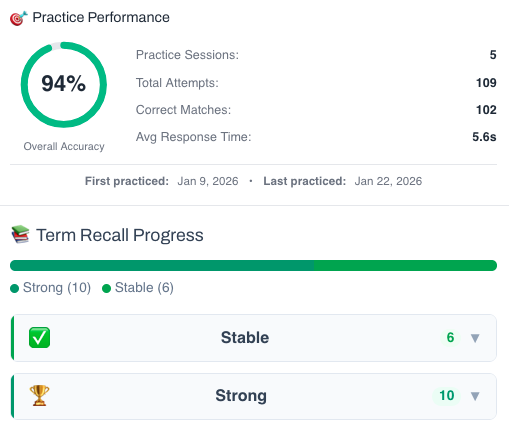
This isn’t a simple quiz — it’s a fully tracked learning system. You build knowledge through recognition, then recall, and your progress feeds directly into the Integrated Practice Bar (Writing tasks, AI Chat, and more).
- Practice sessions, accuracy, and response-time tracking
- Term strength levels (Learning → Stable → Strong)
- Personal progress history for each unit
This feature is available to YSP members.
Explore Membership BenefitsMember-Exclusive Practice Bar
Access a wide range of integrated practice for this unit — from Vocabulary and Grammar activities to AI-curated Writing tasks and Thematic Chat practice.
This feature is available to YSP members.
Explore Membership BenefitsMember-Exclusive Sentence Builder
Reconstruct scrambled sentences to practice word order and develop your grammar intuition.
This feature is available to YSP members.
Explore Membership Benefits