Beach Holidays: Essential Vocabulary for Your Perfect Trip
Core PathWay
1 Section 1. Welcome to the Beach
Ready to build your vocabulary for beach holidays? Great choice! Let’s start with the basics. The beach is the flat area of sand or small stones next to the sea. People go there to relax and have fun. The sea is the large area of salt water where people swim and play. When you are at the beach, you can see the waves – those lines of water that move across the surface and break on the shore. Under your feet, there is sand – the soft, pale material made of tiny pieces of rock. These four words are the heart of any beach trip. You will use them every day!
2 Section 2. Getting Ready for Your Trip
Before you go, you need to plan. First, you should book your hotel – that means you arrange and pay for the room in advance. A hotel is a building where you pay to sleep and eat while you are away from home. Many people choose a resort, which is a town near the sea with hotels, restaurants, and activities. You also need to pack (a bag) – this means putting clothes and things you need into a bag or suitcase. A suitcase is a large bag with a handle that you use to carry your clothes. Don’t forget your towel – a large piece of soft cloth to dry your body or lie on. And of course, your swimsuit for swimming in the sea!
3 Section 3. Fun in the Sun (and Safe Too!)
When you arrive, you will want to enjoy the sun. Many people like to sunbathe – that means lying or sitting in the sun to get warmer and darker. But be careful! You need sunscreen – a cream that stops the sun from burning your skin. If you stay too long without protection, you might get sunburn – the painful red colour on your skin. To protect your eyes, wear sunglasses – special glasses with dark lenses. And for your feet, flip-flops are perfect – simple open shoes with a strap between your toes. When the sun is too strong, find some shade – an area that is cooler because something blocks the sun. If you need help, look for the lifeguard – the person who watches swimmers and helps them if they are in danger.
4 Section 4. Activities and the Sea
The sea offers many fun activities. You can swim – move through the water using your arms and legs. If you want to see underwater life, try to snorkel – that means swimming just under the surface with a tube to breathe and a mask to see. On the beach, you can build a sandcastle – a model of a castle made from wet sand. Remember that the tide changes – it is the regular rise and fall of the sea level. Sometimes the water comes closer, and sometimes it moves away. Always check the tide before you set up your towel!
5 Section 5. Exploring and Enjoying
After a day at the beach, you might want to explore the surrounding area – that means going around a new place to discover what is there. You can try local seafood – fish and other animals from the sea, like prawns and mussels. Before you leave, buy a souvenir – a small object that reminds you of the place. And most importantly, take time to relax – rest and stop thinking about work or problems. Beach holidays are all about enjoying yourself. Now you have the words to talk about every part of your trip!
Member-Exclusive Practice Bar
Access a wide range of integrated practice for this unit — from Vocabulary and Grammar activities to AI-curated Writing tasks and Thematic Chat practice.
This feature is available to YSP members.
Explore Membership BenefitsMember-Exclusive Vocabulary Review & Acquisition System
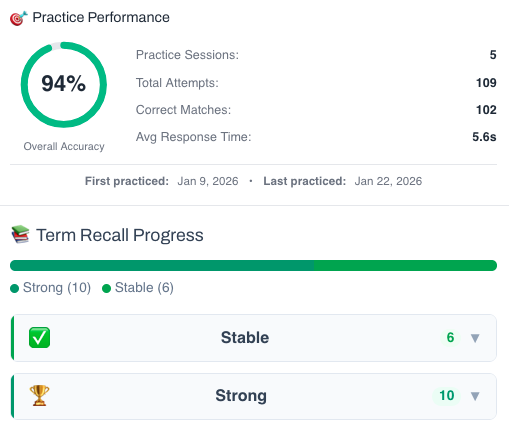
This isn’t a simple quiz — it’s a fully tracked learning system. You build knowledge through recognition, then recall, and your progress feeds directly into the Integrated Practice Bar (Writing tasks, AI Chat, and more).
- Practice sessions, accuracy, and response-time tracking
- Term strength levels (Learning → Stable → Strong)
- Personal progress history for each unit
This feature is available to YSP members.
Explore Membership Benefits