Core Meanings & Usage Patterns
This verb has 8 main meanings. Each card shows the meaning, grammatical pattern, and usage rules.
Growth and improvement
Essential
When people, skills, or things develop, they grow, improve, or become stronger over time. This happens naturally or through effort. Children develop quickly as they learn new abilities. You can develop your skills through regular practice. Companies and economies also develop rapidly when conditions are favorable.
subject + develop (intransitive)Create or produce something new
Essential
Develop means to create, design, or produce something new through work and innovation. Scientists develop vaccines, companies develop products, and teams develop strategies. This meaning emphasizes the process of bringing something from an idea to reality through planning, research, and effort.
subject + develop + object (product/idea)Land and property construction
Important
In real estate and construction, develop means to build on land or change it for commercial or residential use. Developers develop sites by constructing buildings, roads, and infrastructure. This meaning is very common in discussions about urban planning, housing, and property investment.
subject + develop + land/siteDisease or problem emergence
Essential
When someone develops an illness or something develops a problem, it means the condition appears or begins when it wasn't there before. This is common in medical contexts (develop symptoms, develop cancer) and technical contexts (the car developed a fault).
subject + develop + illness/problemRelationship or feeling formation
Important
Develop describes how relationships, feelings, interests, or habits form gradually over time. People develop friendships through shared experiences, develop an interest in hobbies, or develop a taste for certain foods. This process happens slowly and naturally, not suddenly.
subject + develop + relationship/feelingSituation evolution and change
Useful
Situations, events, and stories can develop, meaning they change, evolve, or progress into something different or more serious. A crisis develops when a problem becomes worse. A story develops as the plot unfolds. This meaning emphasizes ongoing change and progression.
situation + develop (intransitive change)Idea or argument elaboration
Important
In academic and formal writing, develop means to explain, expand, or add detail to ideas, arguments, or themes. Writers develop their main points by providing examples, evidence, and analysis. This makes arguments clearer and more convincing.
subject + develop + idea/argumentPhotography processing
Useful
In traditional photography, develop means to treat film with chemicals so images become visible. Though less common now due to digital photography, this meaning is still used when discussing film cameras and darkroom processes.
subject + develop + film/photosFormal vs Informal Usage
Learn when to use “DEVELOP” and when to choose more formal alternatives.
All Forms of “DEVELOP”
| Base Form | develop |
|---|---|
| 3rd Person | develops |
| Past Simple | developed |
| Past Participle | developed |
| Present Participle | developing |
Common Collocations
These are the most natural word combinations with “DEVELOP” – learn them as fixed phrases.
- develop skills
- develop technology
- develop software
- develop a strategy
- develop a plan
- develop a system
- develop a problem
- develop symptoms
- develop cancer
- develop an interest
- develop a relationship
- develop feelings
- develop rapidly
- develop quickly
- develop slowly
- develop land
- develop a site
- develop property
- develop further
- develop fully
- develop naturally
- develop an argument
- develop a theme
- develop ideas
- fully develop
- gradually develop
- successfully develop
- develop products
- develop solutions
- develop applications
- develop countries
- develop economies
- develop regions
- develop confidence
- develop understanding
- develop awareness
Common Mistakes to Avoid
Learn from these typical errors and avoid them in your own usage.
No 'e' at the end of develop in base form; only in developing/developed.
Develop is transitive here; no preposition needed before the direct object.
Use develop, not make, for illnesses and medical conditions that appear.
Use present perfect continuous with since for ongoing development over time.
Interest needs the article 'an' when used with develop in this pattern.
Use the verb form developing, not the noun development, in continuous tenses.
Develop takes a direct object; use adverb further instead of preposition on.
Use passive voice with past tense for completed development of property or land.
Member-Exclusive Vocabulary Review & Acquisition System
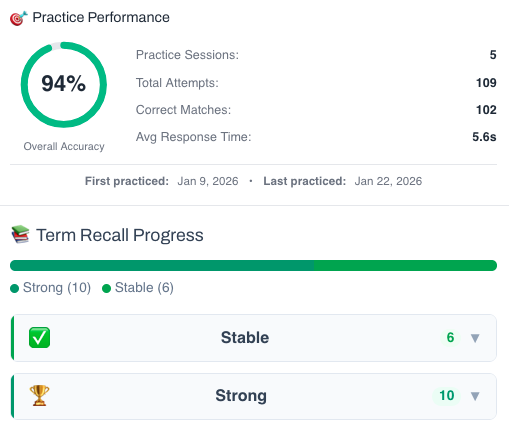
This isn’t a simple quiz — it’s a fully tracked learning system. You build knowledge through recognition, then recall, and your progress feeds directly into the Integrated Practice Bar (Writing tasks, AI Chat, and more).
- Practice sessions, accuracy, and response-time tracking
- Term strength levels (Learning → Stable → Strong)
- Personal progress history for each unit
This feature is available to YSP members.
Explore Membership BenefitsWhen you feel ready, go to page 2 for more exercises