Get – In Medical Settings: Essential Uses for Healthcare Professionals
Core PathWay1 🌐 Introduction to 'Get – In Medical Settings'
The verb ‘get’ is very common in medical English, but it has many different meanings. When you talk to patients, you often say they get better or get worse. This means their health improves or becomes bad. Doctors get results from tests and labs. This means they receive the information. Patients get an infection when bacteria or viruses enter their body. They get a prescription from their doctor – they receive the paper for medicine. Sometimes patients need time to get well after an illness. This means they need time to become healthy again. Medical staff also get sick sometimes – they become ill. When you get treatment, you receive medical care. Understanding these uses of ‘get’ helps you communicate clearly with patients and colleagues every day in your medical practice.
Key Terms
💬 Doctor and Patient Discussion
A doctor talks to a patient about recovery after surgery
2 🔬 The Key Phrases you need for 'Get – In Medical Settings'
get over – to become healthy after an illness or injury. Example: ‘It takes time to get over the flu.’
get through – to survive a difficult medical situation or to finish a treatment. Example: ‘The patient got through the surgery very well.’
get back to – to return to a normal activity or state of health. Example: ‘When can I get back to work after my operation?’
get in touch with – to contact someone by phone, email, or in person. Example: ‘Please get in touch with me if your symptoms return.’
get hold of – to find someone or something, usually by phone. Example: ‘I need to get hold of the specialist today.’
get on with – to continue doing something, especially treatment or recovery. Example: ‘Let’s get on with the examination now.’
get around to – to finally do something after waiting or delaying. Example: ‘Many patients don’t get around to taking their medicine on time.’
get across – to make someone understand information clearly. Example: ‘I need to get across how important this medication is.’
get down – to make someone feel sad or worried, often about health. Example: ‘Chronic pain can really get patients down.’
get by – to manage or survive with difficulty, often with limited resources. Example: ‘She gets by with basic pain medication.’
get rid of – to remove or eliminate something, like symptoms or infection. Example: ‘This antibiotic will help get rid of the infection.’
get up – to stand or rise from bed, often used to check patient mobility. Example: ‘Can you get up and walk a little today?’
💬 Nurse to Colleague
Two nurses discuss a patient on the ward
3 🔍 Other Key Terms for 'Get – In Medical Settings'
symptoms – the physical problems that show someone is sick, like pain or fever. Example: ‘What symptoms do you have today?’
diagnosis – the name of the illness or medical problem a doctor finds. Example: ‘The diagnosis is a simple chest infection.’
recovery – the time when someone gets better after being sick or having surgery. Example: ‘Your recovery will take about six weeks.’
medication – medicine that a doctor gives to treat an illness. Example: ‘Take this medication three times a day.’
appointment – a time when a patient meets with a doctor or nurse. Example: ‘Your next appointment is on Monday.’
test results – information from medical tests that show what is wrong. Example: ‘Your test results came back today.’
side effects – bad things that can happen when you take medicine. Example: ‘This drug has very few side effects.’
discharge – when a patient leaves the hospital to go home. Example: ‘We can arrange your discharge for tomorrow.’
💬 Patient at Pharmacy
A patient asks about medication at the pharmacy
4 🧠 Worth Thinking About
The verb ‘get’ is one of the most common words in medical English conversations, but many non-native speakers use it less than native speakers. Why? Because in many languages, there are different specific verbs for each meaning of ‘get.’ In English, we use ‘get’ for receiving, becoming, obtaining, and arriving – all very different ideas! Native English speakers use ‘get’ in about 80% of informal medical conversations with patients. It feels friendly and simple. When you write formal medical notes, you use more specific verbs like ‘receive,’ ‘obtain,’ or ‘develop.’ But when you talk to patients, ‘get’ makes your English sound natural and easy to understand.
Member-Exclusive Practice Bar
Access a wide range of integrated practice for this unit — from Vocabulary and Grammar activities to AI-curated Writing tasks and Thematic Chat practice.
This feature is available to YSP members.
Explore Membership BenefitsMember-Exclusive Vocabulary Review & Acquisition System
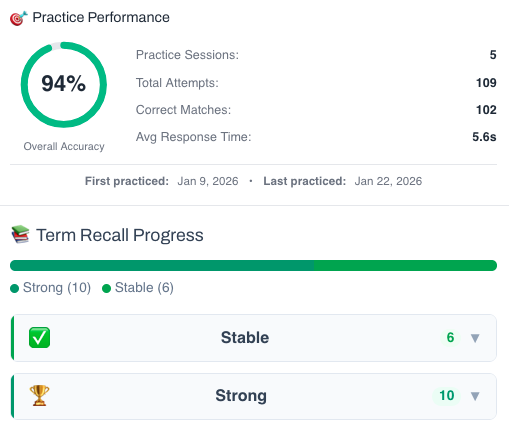
This isn’t a simple quiz — it’s a fully tracked learning system. You build knowledge through recognition, then recall, and your progress feeds directly into the Integrated Practice Bar (Writing tasks, AI Chat, and more).
- Practice sessions, accuracy, and response-time tracking
- Term strength levels (Learning → Stable → Strong)
- Personal progress history for each unit
This feature is available to YSP members.
Explore Membership Benefits