The Role of a Mentor in Corporate Settings
Core PathWay
1 👤 The Role of a Mentor
A mentor is an experienced professional who provides guidance and support to help others develop in their careers. In a corporate setting, particularly in pharmaceutical multinationals, mentors work with mentees – staff members who want to grow professionally. The mentor’s main responsibility is to help mentees with their career development and professional growth.
Mentors typically have one-to-one sessions with their mentees, usually once or twice a month. These meetings are confidential, which means the mentor doesn’t share what they discuss with others unless there’s a serious concern. This confidentiality helps build trust and rapport between the mentor and mentee. During a typical week, a mentor might spend two to three hours in mentoring sessions, plus time preparing for meetings or following up on previous discussions.
Mentors don’t manage their mentees directly – that’s the job of the line manager. Instead, mentors offer a different kind of support. They listen to mentees talk about their goals and challenges, share their own experiences, and help mentees think about solutions. Mentors often liaise with the HR department to understand company development programs, but they keep specific mentoring conversations private. They report to no one about their mentoring work, though they might update HR about the general progress of mentoring programs.
The mentor role involves asking thoughtful questions, providing feedback, and helping mentees identify their strengths and areas for improvement. It’s about guiding someone to find their own answers rather than telling them exactly what to do.
Key Terms
💬 Role Interview: Tell us about your role
An HR Director is being interviewed about their mentoring responsibilities in a pharmaceutical company
2 🎯 Typical Skills
A good mentor needs to be excellent at active listening. This means really paying attention to what the mentee says, not just waiting to speak. Mentors need empathy – the ability to understand how someone else feels. They should be good at asking open questions that encourage mentees to think deeply rather than just answer ‘yes’ or ‘no’.
Mentors need patience because change and development take time. Strong communication skills are essential – mentors must explain ideas clearly and adapt their style to different people. They should have significant experience in their field so they can offer valuable perspective on workplace situations. Good mentors are non-judgmental – they don’t criticize mentees for their concerns or mistakes. Instead, they’re encouraging and help mentees see their potential. Finally, mentors excel at relationship building, creating a safe space where mentees feel comfortable discussing their worries and ambitions.
Key Terms
💬 Skills Interview: What skills do you need in your role?
Discussion about the key skills required for effective mentoring in a corporate environment
3 🔍 Role Based Lexis
Mentors frequently talk about the mentoring relationship – the connection between mentor and mentee that develops over time. They schedule mentoring sessions where they meet to discuss progress. During these sessions, mentors often help create an action plan – a list of specific steps the mentee will take to reach their goals.
Mentors regularly follow up on previous discussions, checking what happened after their last meeting. They check in with mentees between formal sessions, perhaps sending a quick email to see how things are going. Conversations often focus on the mentee’s career path – the route they want to take in their professional life.
Mentors discuss skill gaps – abilities the mentee needs to develop – and identify development areas where the mentee can improve. They might suggest a stretch assignment – a challenging project that pushes the mentee outside their comfort zone. Mentors provide constructive feedback – comments that are helpful and focused on improvement rather than just criticism. Good mentors ensure mentoring is a two-way conversation where both people share ideas, not just the mentor talking and the mentee listening.
Key Terms
💬 Communication Challenge Interview: What language challenges do people face?
Exploring the communication challenges that arise in mentoring relationships
Member-Exclusive Vocabulary Review & Acquisition System
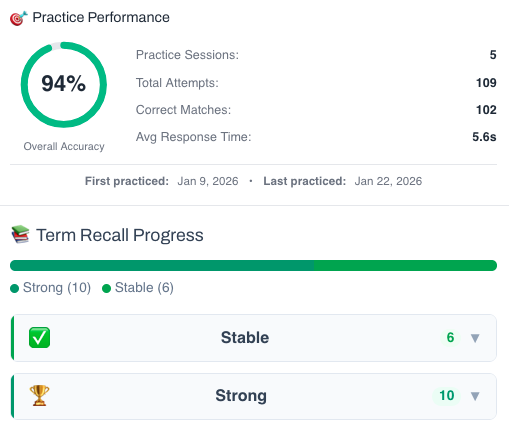
This isn’t a simple quiz — it’s a fully tracked learning system. You build knowledge through recognition, then recall, and your progress feeds directly into the Integrated Practice Bar (Writing tasks, AI Chat, and more).
- Practice sessions, accuracy, and response-time tracking
- Term strength levels (Learning → Stable → Strong)
- Personal progress history for each unit
This feature is available to YSP members.
Explore Membership Benefits