What Underpins Effective Project Management
Core PathWay
1 What is Project Management?
Project management is the process of planning, organizing, and controlling work to achieve specific goals. Project managers are responsible for making sure that projects are completed successfully. This means they must manage several important areas at the same time.
First, they create a schedule that shows when each task should be completed. They set a deadline for the final result, which is the date when everything must be finished. Project managers also allocate resources, which means they decide who will do each job and what materials or equipment are needed. They work with a budget, which is the amount of money available for the project. It is important to stay within budget and not go over budget, which means spending more money than planned.
Project managers use delegation to give different tasks to team members. They must make sure everyone understands what deliverables are expected, which are the specific results that must be produced. Good teamwork is essential during the planning and implementation phases, when ideas become reality.
Dialogue:
A: So, how’s the project going?
B: Pretty well, actually. We’re on schedule and the team is working hard on the main deliverables.
A: That’s great news. What about the budget? Are you managing to stay within it?
B: Yes, so far. We had to allocate some extra resources last week, but we haven’t gone over budget yet. I’m keeping a close eye on costs.
Key Terms
2 Respecting the Timeline
One of the most important responsibilities in project management is respecting the timeline. This means following the planned schedule and making sure work is completed when it should be. When a project is on track, everything is progressing as planned and the team will probably meet the deadline.
However, sometimes problems occur and a project can fall behind schedule. This means the work is taking longer than expected and the team might miss the deadline. When this happens, the project manager must find ways to catch up with the schedule. One solution is to allocate extra resources to get back on track, which means adding more people, time, or equipment to speed up the work.
Project managers regularly check progress to identify problems early. They ask team members for updates and compare actual progress with the planned schedule. This helps them take action before small delays become big problems.
Dialogue:
Project Manager: Hi Sarah, I wanted to ask about the testing phase. Are we on track to finish by next Friday?
Engineer: Well, we’ve fallen behind schedule a bit. We discovered some technical issues that took longer to fix than expected.
Project Manager: I see. How much time do you need to catch up? Can we meet the deadline if we allocate extra resources?
Engineer: If we can get another engineer to help, we should be able to get back on track and finish on time.
Key Terms
3 Understanding Time Expressions
on time
- arrive on time
- finish on time
- deliver on time
- complete on time
- The report was submitted on time, exactly at 5 PM as planned.
- We need to finish this phase on time or the whole project will be delayed.
in time
- arrive in time
- finish in time
- get there in time
- just in time
- We finished the repairs in time to avoid any delays to the launch.
- Did you arrive in time for the meeting, or had it already started?
be on track
- stay on track
- get back on track
- keep on track
- remain on track
- The construction project is on track to be completed in June.
- After the delays last month, we’re finally back on track with our schedule.
fall behind
- fall behind schedule
- fall behind with work
- fall further behind
- start to fall behind
- We’ve fallen behind because two team members were sick last week.
- If we fall behind now, it will be very difficult to catch up later.
catch up
- catch up with
- catch up on work
- need to catch up
- try to catch up
- We’re working overtime this week to catch up with the schedule.
- After the delay, the team managed to catch up by working more efficiently.
Project managers use specific expressions to talk about time and progress. Understanding the differences between similar phrases is important for clear communication. Let’s explore some key expressions that are often confused.
These terms help you report accurately on whether a project is meeting its timeline goals or experiencing delays.
4 Staying Within Budget
Managing money effectively is just as important as managing time in project management. Every project has a budget, and project managers must make sure they stay within it. When a project spends more money than planned, we say it has had a budget overrun, or that costs have run over or gone over the budget.
Budget overruns can happen for several reasons. Sometimes there are unforeseen costs, which are expenses that nobody expected or planned for. For example, materials might cost more than expected, or unexpected technical problems might require extra work. When this happens, project managers must act quickly.
One important strategy is to look for efficiencies, which means finding ways to do the same work but spend less money or use fewer resources. This might involve negotiating better prices with suppliers, using different methods, or reorganizing the work. Good project managers regularly monitor spending and compare it with the budget. This helps them identify problems early, before a small overspend becomes a serious overrun.
Staying within budget requires constant attention and sometimes difficult decisions. However, it is essential for project success and for maintaining trust with clients and stakeholders.
Key Terms
5 Key Takeaways
Effective project management depends on mastering the language of schedules, budgets, and resources. Throughout this introduction, you have learned the essential vocabulary that project managers use every day to discuss their work.
You now understand how to talk about time management, including expressions like being on track, falling behind schedule, and catching up. You have explored the important differences between ‘on time’ and ‘in time’, which helps you communicate more precisely about deadlines.
You have also learned the key vocabulary for budget management, including how to discuss overruns, unforeseen costs, and the importance of looking for efficiencies. These terms will help you participate in project discussions and understand project reports.
In the following pages of this learning pathway, you will explore these concepts in greater depth and learn additional professional vocabulary and grammar structures that will strengthen your ability to communicate effectively about project management.
Member-Exclusive Vocabulary Review & Acquisition System
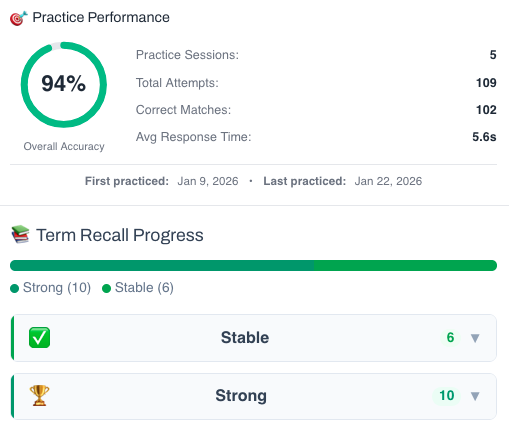
This isn’t a simple quiz — it’s a fully tracked learning system. You build knowledge through recognition, then recall, and your progress feeds directly into the Integrated Practice Bar (Writing tasks, AI Chat, and more).
- Practice sessions, accuracy, and response-time tracking
- Term strength levels (Learning → Stable → Strong)
- Personal progress history for each unit
This feature is available to YSP members.
Explore Membership Benefits
🎮 Practice Games
Section 1 – Fill in the Gaps
What Underpins Effective Project Management – Vocabulary Practice 1
Member-Exclusive Cloze Test
Fill in the gaps to complete authentic passages and reinforce your vocabulary in context.
This feature is available to YSP members.
Explore Membership BenefitsSection 2 – Fill in the Gaps
What Underpins Effective Project Management – Vocabulary Practice 2
Member-Exclusive Cloze Test
Fill in the gaps to complete authentic passages and reinforce your vocabulary in context.
This feature is available to YSP members.
Explore Membership BenefitsSentence Scrambler
What Underpins Effective Project Management – Sentence Scramble
Member-Exclusive Sentence Builder
Reconstruct scrambled sentences to practice word order and develop your grammar intuition.
This feature is available to YSP members.
Explore Membership Benefits