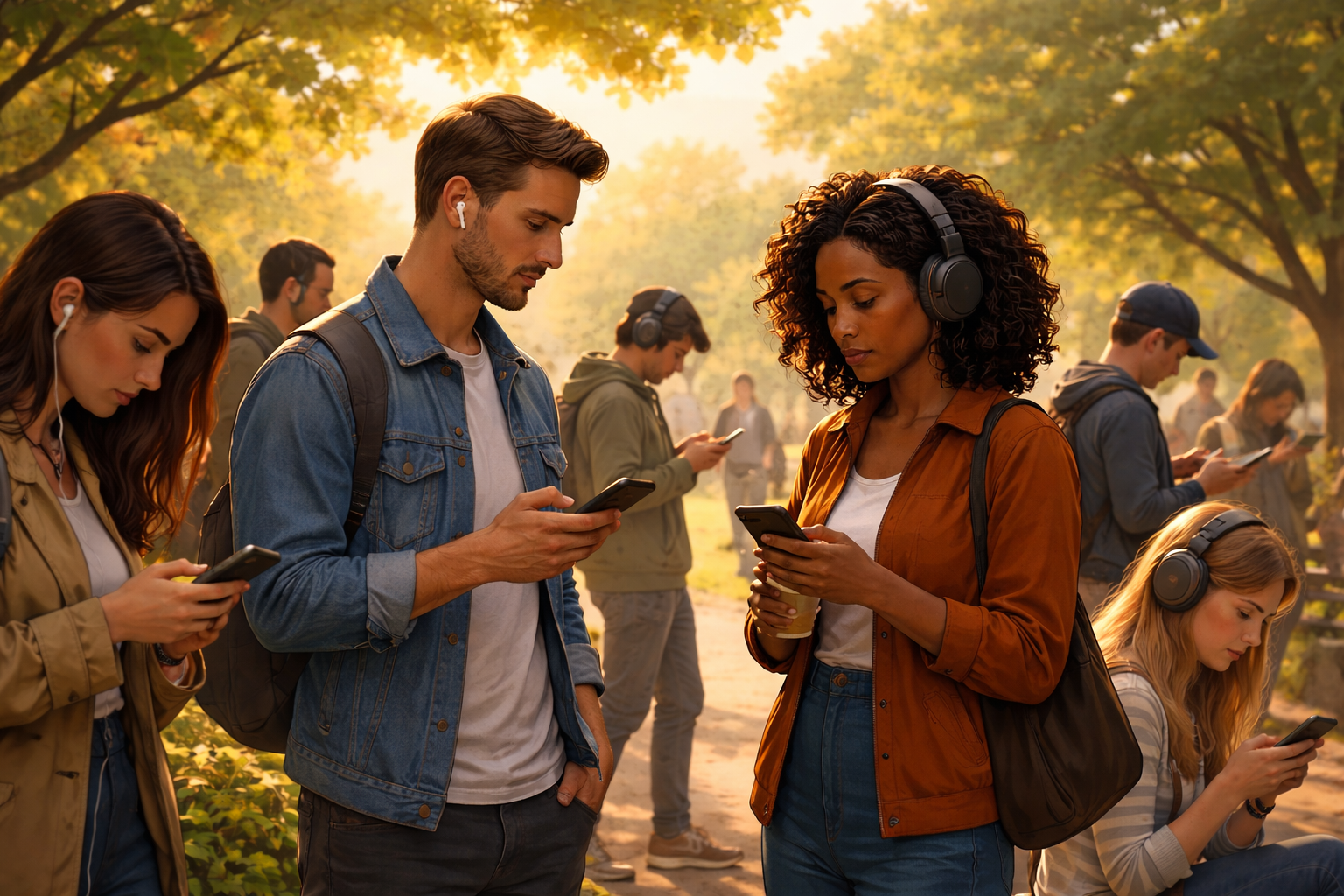
Are We Losing the Art of Talking to Strangers?
This article explores whether the decline in casual conversation with strangers in public spaces is a problem or simply a natural evolution in social behavior.
🎧 Are We Losing the Art of Talking to Strangers?
Comprehension Check: The Quiet Carriage: Are We Losing the Art of Talking to Strangers?
Answer the questions based on what you heard in the audio.
According to the audio, what term do researchers use to describe the phenomenon of people having limited time and energy for social interaction?
Why does the audio suggest that the decline in stranger interaction is more complex than simply blaming technology?
What specific benefits of small talk with strangers does the research on weak social ties identify?
According to the audio, which groups are specifically mentioned as potentially experiencing unwanted conversation as intrusive or threatening?
What does the audio imply about the relationship between neurodivergent individuals and public interaction?
What signal does the audio suggest headphones typically convey in public spaces?
What is the central argument the audio makes about Anglo-American expectations regarding casual conversation?
Based on the audio's discussion of urban planning, what does the hypothetical third conditional suggest about public space design?
According to the audio, what do researchers claim to have been documenting over the past decade?
What practical advice does the audio offer for initiating interactions respectfully?
What underlying message does the audio convey about the value judgment of declining stranger interaction?
Which of these two summaries best captures the main points of the audio?
📰 The Quiet Carriage: Are We Losing the Art of Talking to Strangers? (C1)
Test Your Understanding & Learn Vocabulary
Answer each question to reveal its vocabulary explanation:
In the sentence ‘Longer working hours and exhausting commutes leave little energy to strike up a conversation with a stranger’, what does ‘strike up a conversation’ mean?
What does ‘small talk’ refer to?
In the sentence ‘It’s worth the punt to occasionally break the ice, advocates argue’, ‘break the ice’ means to…
‘Take a chance on’ could be replaced with which phrase?
In the sentence ‘These moments of small talk help us develop social skills and read social cues more effectively’, what does ‘social cues’ mean?
What does ‘lower the stakes’ mean in this context?
In the sentence ‘For women and minorities especially, unwanted conversation in public spaces can quickly overstep a boundary, becoming intrusive or threatening’, ‘overstep a boundary’ indicates…
‘Navigate’ in this context means to…
In the sentence ‘Many people are coping with what researchers call time poverty’, what does ‘coping with’ mean?
‘Give up on’ could be replaced with which expression?
What does ‘shared humanity’ refer to?
In the sentence ‘But before we give up on privacy entirely, we need to weigh up the legitimate reasons people avoid stranger interaction’, ‘weigh up’ means to…
‘Duck out of’ in this context means to…
In the sentence ‘In our rush to either celebrate or condemn changing social patterns, we shouldn’t take for granted that one approach fits all people, all cultures, or all circumstances’, what does ‘take for granted’ mean?
What does ‘read too much into’ mean?
In the sentence ‘A simple comment about the weather or a kind word to someone serving you might genuinely brighten someone’s day’, ‘brighten someone’s day’ means to…
‘Worth the punt’ is a British informal expression meaning…
What does ‘make eye contact’ mean?
In the sentence ‘If someone doesn’t reciprocate, get over it quickly rather than persisting’, ‘get over it’ means to…
‘Back up’ in this context means to…
Member-Exclusive Vocabulary Review & Acquisition System
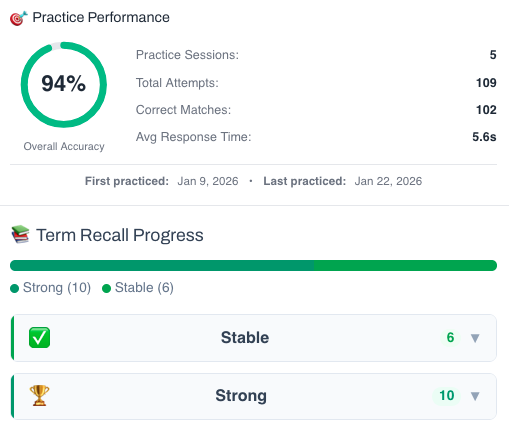
This isn’t a simple quiz — it’s a fully tracked learning system. You build knowledge through recognition, then recall, and your progress feeds directly into the Integrated Practice Bar (Writing tasks, AI Chat, and more).
- Practice sessions, accuracy, and response-time tracking
- Term strength levels (Learning → Stable → Strong)
- Personal progress history for each unit
This feature is available to YSP members.
Explore Membership Benefits
Member-Exclusive Practice Bar
Access a wide range of integrated practice for this unit — from Vocabulary and Grammar activities to AI-curated Writing tasks and Thematic Chat practice.
This feature is available to YSP members.
Explore Membership Benefits