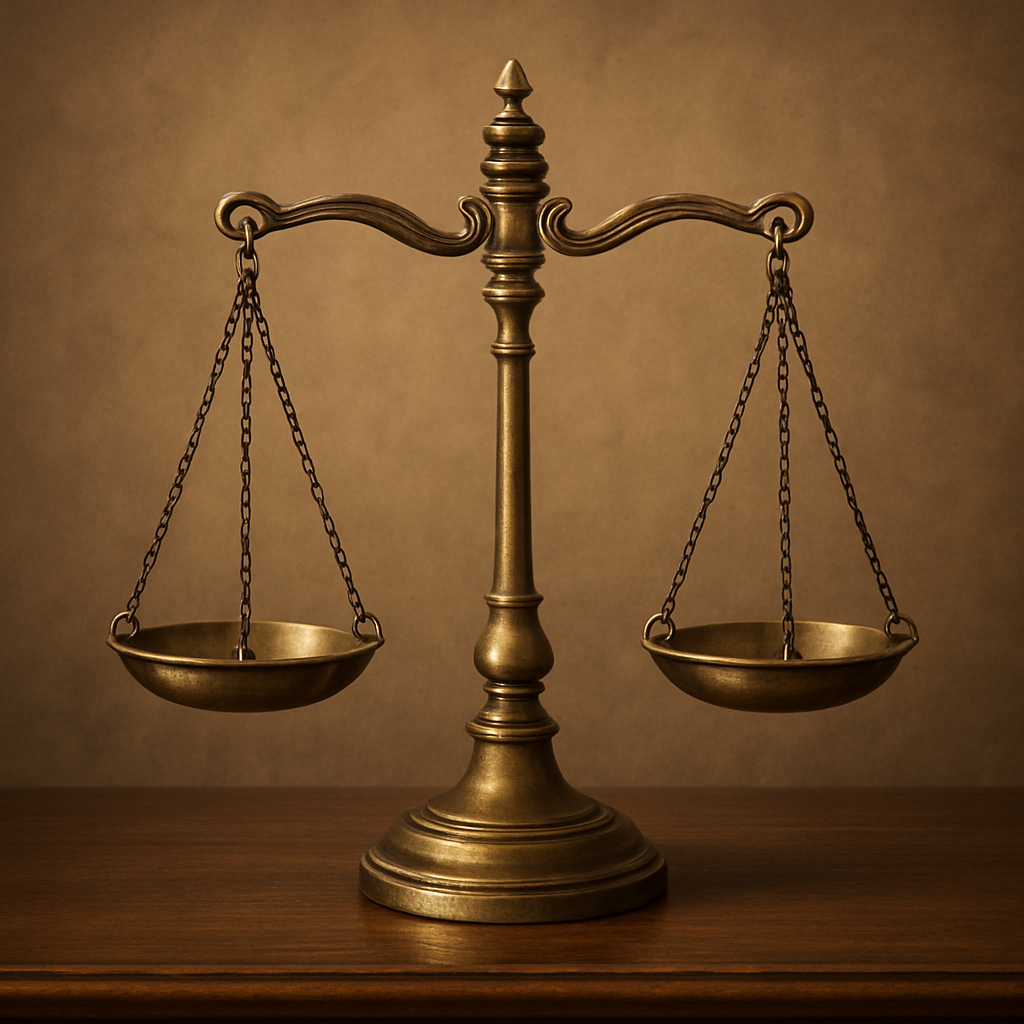
PHARMA COMPANY GETS SUED
Johnson & Johnson Must Pay $966 Million in Baby Powder Cancer Case
Comprehension Questions
Answer these questions based on the report you just heard.
What is the primary legal issue that Johnson & Johnson has been facing in recent years?
What was the outcome of Johnson & Johnson’s legal strategy regarding these claims?
What distinguishes punitive damages from compensatory damages in these types of lawsuits?
How did the concept of “foreseeable” harm factor into the company’s potential liability?
What specific financial mechanism did plaintiffs seek through the legal system?
What does the text suggest about the resolution of the scientific questions at the heart of these lawsuits?
What strategic consideration likely influenced Johnson & Johnson’s decision to settle rather than continue litigation?
What broader implication does this case have for corporate liability in product safety disputes?
Now read the report for a more detailed understanding
📰 Johnson & Johnson Ordered to Pay $966 Million in Talc Cancer Case After Jury Finds Company Liable (C1)
Test Your Understanding & Learn Vocabulary
Answer each question to reveal its vocabulary explanation:
In the sentence ‘finding the pharmaceutical giant liable in the latest trial alleging its talc products cause cancer’, the word ‘alleging’ indicates that the claims about the talc products are:
When the jury found Johnson & Johnson ‘liable’, this means the company was determined to be:
The term ‘pharmaceutical giant’ is used to describe Johnson & Johnson as:
The ‘$16 million in compensatory damages’ awarded in this case serves to:
The significantly larger amount of ‘punitive damages’ ($950 million) compared to compensatory damages suggests these are intended to:
Erik Haas’s title ‘vice president of litigation’ indicates his role involves overseeing:
By describing the verdict as ‘egregious’, Haas characterizes it as:
The use of ‘claimed’ rather than ‘stated’ or ‘said’ in ‘Haas claimed’ suggests that his assertion:
When the text states that mesothelioma has been ‘definitively linked’ to asbestos exposure, this indicates the connection is:
The term ‘lawsuits’ in this context refers specifically to:
In the sentence ‘The number of lawsuits alleging talc caused mesothelioma constitutes a small subset’, the verb ‘constitutes’ means:
J&J’s attempt to use ‘bankruptcy’ to resolve litigation, despite the company not being insolvent, suggests the term is being employed as:
When the text states that J&J ‘settled some of those claims’, this means the company:
The phrase ‘struck a nationwide settlement’ uses ‘struck’ to mean:
The expression ‘for the foreseeable future’ indicates that the legal battles will continue:
Grammar Focus: Present Perfect for ongoing situations with legal/temporal relevance
J&J has sought to resolve the litigation through bankruptcy, a controversial proposal that has been rejected three times by federal courts.
Why does the text use ‘has sought’ and ‘has been rejected’ (Present Perfect) rather than ‘sought’ and ‘was rejected’ (Past Simple)?
Grammar Focus: Passive voice in formal/legal reporting
Mesothelioma, a particularly aggressive form of cancer, has been definitively linked to asbestos exposure.
In the sentence ‘Mesothelioma has been definitively linked to asbestos exposure’, the passive construction is used to:
Grammar Focus
Present Perfect for ongoing situations with legal/temporal relevance
“J&J has sought to resolve the litigation through bankruptcy, a controversial proposal that has been rejected three times by federal courts.”
Pattern: Subject + has/have + past participle (+ time expression/frequency)
Function: Expresses actions or situations that began in the past and continue to have relevance or consequences in the present; commonly used in legal and journalistic contexts to show ongoing impact
Contrast with: Past Simple would suggest the action is completely finished with no present relevance; Present Perfect emphasizes the connection to the current situation
Passive voice in formal/legal reporting
“Mesothelioma, a particularly aggressive form of cancer, has been definitively linked to asbestos exposure.”
Pattern: Subject + be (conjugated) + past participle (+ by agent [optional])
Function: Focuses attention on the action or result rather than the agent; creates formal, objective tone typical of legal and scientific discourse; allows omission of the agent when unknown or unimportant
Contrast with: Active voice emphasizes who performs the action; passive is preferred in formal contexts to maintain objectivity and when the action/result is more important than the actor
Try these extra grammar exercises
Which sentence uses the present perfect continuous correctly?
Complete the sentence: “The new bridge __________ by the government next year.”
In the sentence “She’s been working on that project all morning,” the present perfect continuous is used to express:
Which sentence contains an error with the passive voice?
Choose the sentence that correctly uses the present perfect continuous:
What is the correct passive form of “They are repairing the road”?
Which sentence is grammatically correct?
Why is the passive voice used in “The decision was made after careful consideration”?
What is wrong with this sentence: “The house has been building for six months”?
Choose the most appropriate response: “You look tired!” — “Yes, I __________.”
Which passive sentence is in the past perfect tense?
In which situation would you use the present perfect continuous instead of the present perfect simple?