🎧 TP Audio Magazine – 22 June 26 – B1|B2 – More Detail
B1|B2 – 22 June 26
The Stories
10,000 Steps
Available as a long listen on the Talking Points Browser
The Oldest Words
If you could travel back 15,000 years, which words would Stone Age people understand? According to remarkable research from the University of Reading, there are at least 23 words that have survived with high fidelity across millennia.
Linguists identified these ultra-conservative words by studying extinct languages that branched out from a common ancestor called proto-Eurasiatic. By comparing words across seven ancient language families, researchers reached a consensus on which terms have changed least over time.
Some survivors are predictable—’mother’, ‘father’, and ‘fire’ have remained stable across cultures. But others are surprising. The word ‘worm’ has persisted for thousands of years, as has the verb ‘to spit’. These everyday terms have been passed down through countless generations with little change.
Perhaps most touching is the survival of ‘to give’. Researchers were delighted that this word has endured, suggesting that reciprocity and cooperation have always been central to human society. It seems that sharing and generosity are not modern inventions—they’re encoded in our most ancient vocabulary, connecting us directly to our distant ancestors through the simple act of giving.
Free Hand Luggage
Passengers flying within or from the European Union will soon see a significant change to how airfares are advertised. Under new aviation rules that have been agreed by the bloc, airlines must now include the cost of hand luggage in their ticket prices.
The regulation, which will be enforced from later this year, ends the common practice of budget carriers charging separately for carry-on bags. Previously, passengers often found that the advertised fare was just the beginning, with additional fees added for bringing even a small bag into the cabin.
Consumer groups have welcomed the change, saying it will make price comparisons easier and more transparent. Airlines will no longer be able to advertise ultra-low fares that don’t include basic necessities like hand luggage.
The new rules apply to all flights departing from EU airports, regardless of which airline operates the flight. This means that even non-European carriers will have to comply when flying from European destinations. While the change was negotiated after airlines and regulators managed to strike a deal, it represents a clear victory for passenger rights and transparent pricing in the aviation industry.
Misinformation Battle
NHS doctors and nurses have reported that correcting misinformation about health supplements has become a routine part of their job. A recent YouGov poll revealed that 40% of healthcare workers encounter misleading claims about dietary supplements at least once a week.
Dr. Sarah Chen, a GP in Manchester, said she regularly has to dispel myths about products that patients are clutching when they arrive for appointments. ‘Many people believe that because something is natural and available over the counter, it must be safe,’ she explained. ‘But that’s simply not true.’
The problem has been made worse by social media influencers who endorse supplements without medical training. Patients often trust these online personalities more than scientific evidence.
Healthcare professionals have highlighted specific risks that concern them. High-dose turmeric supplements have been linked to liver injury in some cases. St John’s wort, a popular herbal remedy for mild depression, can interact dangerously with prescription medications. Even magnesium supplements, widely promoted for sleep and anxiety, can cause serious side effects in people with kidney problems. Doctors emphasize that ‘natural’ doesn’t automatically mean harmless.
No Frills
Ryanair has become Europe’s most profitable airline by doing something that seems impossible—removing almost every comfort while attracting more passengers than its competitors. The secret lies in its no-frills strategy, which has been carefully engineered to yield maximum efficiency.
The airline has systematically stripped away traditional amenities that other carriers consider essential. Everything from meals to seat selection is treated as an optional extra. Even the aircraft cabins themselves have been redesigned to reduce costs.
The seats, which are manufactured specifically for Ryanair, have no recline mechanism. Safety information is printed directly onto the seat backs rather than provided in pocket leaflets—because there are no seat pockets at all. These modifications reduce both weight and cleaning time between flights.
But the real genius of the model lies in turnaround times. Ryanair’s ground crews can unload, clean, refuel and reload a plane in just 25 minutes—half the industry average. This keeps aircraft in the air, where they make money, rather than on the ground, where they represent pure overhead. It’s a system that prioritizes efficiency over comfort, and the financial results prove that millions of passengers are willing to accept the trade-off.
Member-Exclusive Practice Bar
Access a wide range of integrated practice for this unit — from Vocabulary and Grammar activities to AI-curated Writing tasks and Thematic Chat practice.
This feature is available to YSP members.
Explore Membership BenefitsMember-Exclusive Vocabulary Review & Acquisition System
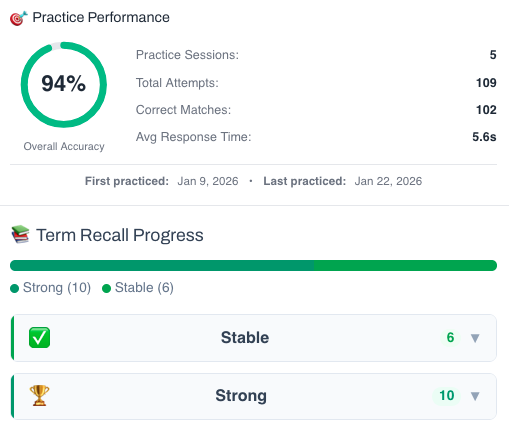
This isn’t a simple quiz — it’s a fully tracked learning system. You build knowledge through recognition, then recall, and your progress feeds directly into the Integrated Practice Bar (Writing tasks, AI Chat, and more).
- Practice sessions, accuracy, and response-time tracking
- Term strength levels (Learning → Stable → Strong)
- Personal progress history for each unit
This feature is available to YSP members.
Explore Membership Benefits