Three friends talking at the end of a working week — Friday afternoon
CAN WE PLACE THE QUIZ HERE???
Alex: “Finally — Friday! So what are you two doing this weekend?”
Sam: “I’m driving up to see my parents on Saturday morning. We’re having a big family lunch — my sister’s coming too, so it should be fun. What about you, Jordan?”
Jordan: “I’m staying in the city. I’m going to the gallery on Saturday afternoon — they’ve got a new photography exhibition on. Then in the evening I’m meeting some friends for dinner. We booked a table weeks ago, so that’s all confirmed.”
Alex: “Oh, which restaurant are you going to?”
Jordan: “That little Italian place near the station. We booked a table weeks ago — it’s really hard to get in. You should try it sometime. Anyway, what about you, Alex? Are you doing anything on Saturday?”
Alex: “On Saturday I’m playing tennis with Chris in the morning — we play most weekends. Then in the afternoon I’m probably just cooking at home and watching something. Nothing too exciting.”
Sam: “Nothing exciting? You’re playing tennis AND cooking a proper meal — sounds like a perfect Saturday to me. I never have time to cook properly.”
Alex: “Ha — fair point. And what about Sunday, Sam? Are you doing anything after the family lunch?”
Sam: “Not much. I’m not doing anything on Sunday — I might just read or go for a walk. I need a quiet day after the family lunch. My nephew is four years old and very loud.”
Jordan: “That’s very relatable. I love kids, but they are exhausting. I’m just having a slow morning on Sunday — coffee, maybe a walk. Nothing planned.”
Alex: “Sounds good. Okay, well — have a great weekend, both of you. See you Monday.”
Jordan: “You too. Oh — and Alex, don’t forget we’re presenting to the new clients on Monday morning. Nine o’clock sharp. It’s in the diary.”
Alex: “Already in my diary. I’m not missing that one. See you both Monday!”
Blank Page:
Core PathWay
Member-Exclusive Practice Bar
Access a wide range of integrated practice for this unit — from Vocabulary and Grammar activities to AI-curated Writing tasks and Thematic Chat practice.
This feature is available to YSP members.
Explore Membership BenefitsMember-Exclusive Vocabulary Review & Acquisition System
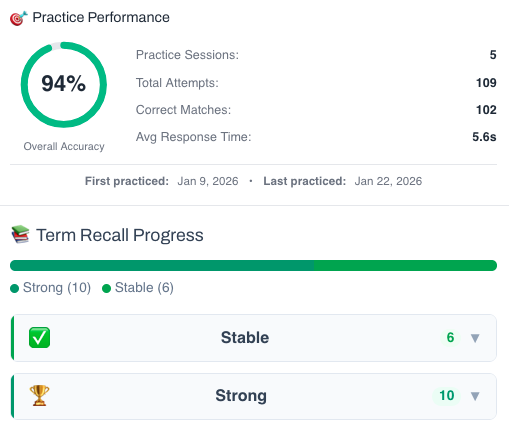
This isn’t a simple quiz — it’s a fully tracked learning system. You build knowledge through recognition, then recall, and your progress feeds directly into the Integrated Practice Bar (Writing tasks, AI Chat, and more).
- Practice sessions, accuracy, and response-time tracking
- Term strength levels (Learning → Stable → Strong)
- Personal progress history for each unit
This feature is available to YSP members.
Explore Membership BenefitsI'm Not Doing It Now — I'm Doing It Tomorrow
Core PathWay
1 Section 1. How Do We Use the Present Continuous for the Future?
A student asks a very good question. The teacher’s answer might surprise you — because the real answer is a little more interesting than the grammar book suggests.
💬 Dialogue 1: A Question About the Future
A classroom conversation between a student and a teacher
Student: “I have a question. We use the present continuous for things happening now, right? So how can we also use it for the future? That seems strange.”
Teacher: “Great question — and you're right to notice it. The key idea is this: when you use the present continuous for the future, you're talking about something already fixed. It's in your diary. It's arranged. It's happening. For example: 'I'm meeting my bank manager tomorrow at midday.' I called the bank. They gave me a time. We both agreed. It's done.”
Student: “So it has to be arranged with another person?”
Teacher: “That's the classic grammar rule, yes. The idea is that there's a mutual agreement — two people have confirmed the plan. 'I'm having lunch with Sara on Friday.' 'We're flying to Rome next Tuesday.' These are fixed arrangements. But here's where it gets interesting — because real life is a little more flexible than the grammar book.”
Student: “Oh? What do you mean? Is there another way to use it?”
Teacher: “Yes. In real life, native speakers use this form even for personal plans — things they haven't arranged with anyone else. For example: 'I'm washing my hair tonight.' Nobody agreed to that with you. It's just something you've decided to do. But it feels fixed in your mind, so the present continuous works perfectly naturally.”
Student: “So native speakers don't always say 'I'm going to wash my hair tonight'? Both forms are possible?”
Teacher: “Exactly. Both are correct, but 'I'm washing my hair tonight' sounds more natural in conversation. The present continuous gives the plan a feeling of certainty — like it's already decided. 'Going to' is fine too, but you'll often hear native speakers drop it and use the continuous instead. The difference is small, but the feeling is different. 'Going to' can sound a little more like you're announcing a plan. The present continuous sounds like the plan is simply a fact.”
Student: “That's really useful. So I can use it for arrangements with other people AND for my own fixed plans — as long as I add a time expression?”
Teacher: “Yes — and that last point is very important. Always add a future time expression. Without one, people will think you mean right now. 'I'm meeting a client' sounds like it's happening this second. 'I'm meeting a client tomorrow morning' — now everyone knows it's a future arrangement. The time expression is what signals the future meaning.”
Student: “What about questions? How do I ask someone about their plans using this form?”
Teacher: “Just invert the subject and the verb 'be'. So: 'What are you doing this weekend?' or 'Are you coming to the party on Saturday?' Notice — not 'What you are doing?' That's a very common mistake. The 'be' always moves to the front in questions. So the structure is: be + subject + verb-ing + time expression. Try it — ask me about my plans for this evening.”
Student: “Okay — are you doing anything interesting this evening?”
Teacher: “Perfect — that's exactly right. 'Are you doing' — 'be' first, then subject, then verb-ing. You've got it. So to summarise: if the plan feels real, certain, and already decided — whether it's in your diary or firmly in your head — the present continuous is your friend. Just remember the time expression, and get that question word order right.”
2 Section 2. Grammar Guide: Present Continuous for the Future
Here is a clear summary of how this grammar works. We look at the classic rule AND the real-life usage. We also show you when ‘going to’ is still the right choice — because sometimes it really is.
Focus
- Form: am/is/are + verb-ing + future time expression
- Classic use: fixed arrangements made with another person (appointments, meetings, bookings)
- Real-life use: personal plans that feel certain and decided — even without another person involved
- Always include a future time expression (tonight, tomorrow, on Friday, next week) — without one, the sentence refers to NOW
- Questions: invert subject and 'be' — 'What are you doing on Saturday?' NOT 'What you are doing?'
- Stative verbs (know, believe, want, understand) cannot be used in the continuous — use 'will' or a different verb instead
Rules
- Use present continuous + future time when a plan is fixed and certain — in your diary or firmly in your mind.
- The classic rule: the plan involves a mutual agreement with another person (e.g. a booked appointment, a confirmed meeting).
- The real-life rule: native speakers also use it for personal intentions that feel decided — 'I'm cooking dinner tonight' is natural even with no one else involved.
- Use 'going to' — not present continuous — when you are making a prediction based on evidence: 'Look at those clouds — it's going to rain.' This is NOT an arrangement.
- Use 'going to' — not present continuous — when 'going to' means 'is about to': 'Watch out — she's going to fall!' This describes something happening in the next few seconds, not an arrangement.
- Use 'going to' for general future intentions where no specific time or arrangement exists: 'I'm going to learn Spanish one day.' This is a vague intention, not a fixed plan.
- Both 'I'm seeing the dentist on Monday' and 'I'm going to see the dentist on Monday' can be correct — context decides. If you've booked the appointment, the present continuous is the more natural choice.
Examples
- 'I'm having dinner with Jordan on Friday — we booked the restaurant last week.' (Classic: mutual arrangement, fixed time, confirmed booking)
- 'I'm staying in tonight — I'm exhausted.' (Real-life: personal decision, no other person involved, but feels certain and decided)
- 'Look at that sky — it's going to storm.' (Prediction based on evidence — present continuous is WRONG here; 'going to' is needed)
Common mistake
3 Section 3. What Are You Doing This Weekend?
Three friends — Alex, Sam, and Jordan — are catching up at the end of the week. Listen to how naturally they use the present continuous to talk about their weekend plans.
💬 Dialogue 2: Weekend Plans
Three friends talking at the end of a working week — Friday afternoon
Alex: “Finally — Friday! So what are you two doing this weekend?”
Sam: “I'm driving up to see my parents on Saturday morning. We're having a big family lunch — my sister's coming too, so it should be fun. What about you, Jordan?”
Jordan: “I'm staying in the city. I'm going to the gallery on Saturday afternoon — they've got a new photography exhibition on. Then in the evening I'm meeting some friends for dinner. We booked a table weeks ago, so that's all confirmed.”
Alex: “Oh, which restaurant are you going to?”
Jordan: “That little Italian place near the station. We booked a table weeks ago — it's really hard to get in. You should try it sometime. Anyway, what about you, Alex? Are you doing anything on Saturday?”
Alex: “On Saturday I'm playing tennis with Chris in the morning — we play most weekends. Then in the afternoon I'm probably just cooking at home and watching something. Nothing too exciting.”
Sam: “Nothing exciting? You're playing tennis AND cooking a proper meal — sounds like a perfect Saturday to me. I never have time to cook properly.”
Alex: “Ha — fair point. And what about Sunday, Sam? Are you doing anything after the family lunch?”
Sam: “Not much. I'm not doing anything on Sunday — I might just read or go for a walk. I need a quiet day after the family lunch. My nephew is four years old and very loud.”
Jordan: “That's very relatable. I love kids, but they are exhausting. I'm just having a slow morning on Sunday — coffee, maybe a walk. Nothing planned.”
Alex: “Sounds good. Okay, well — have a great weekend, both of you. See you Monday.”
Jordan: “You too. Oh — and Alex, don't forget we're presenting to the new clients on Monday morning. Nine o'clock sharp. It's in the diary.”
Alex: “Already in my diary. I'm not missing that one. See you both Monday!”
4 Section 4. Two Teachers Review the Page
Two experienced teachers look back at everything on this page. They pick out the key points, share their favourite tips, and give you their honest advice on how to really get this right.
💬 Dialogue 3: Teacher Debrief: Present Continuous for the Future
Two teachers — Chris and Morgan — reviewing the lesson content together
Chris: “So — present continuous for the future. What's your overall take on how this page handles it?”
Morgan: “I think the most important thing it does is separate the classic rule from real-life usage. Most grammar books stop at 'it's for arrangements with other people.' But that's only half the story — and honestly, the more interesting half comes after that.”
Chris: “Right. The classic rule is a good starting point — 'I'm meeting my bank manager tomorrow' — there's a confirmed appointment, two people agreed. That's the textbook case. But then you get 'I'm washing my hair tonight' and suddenly there's no other person involved at all.”
Morgan: “Exactly. And native speakers say that completely naturally. The feeling is: this plan is fixed in my mind, it's decided, it's happening. That's enough for the present continuous. The key isn't whether another person agreed — it's whether the plan feels certain and specific.”
Chris: “So what's your top tip for learners who aren't sure whether to use present continuous or 'going to'?”
Morgan: “Ask yourself: does the plan feel certain and specific? If yes — present continuous works well. But if you're making a prediction — especially based on evidence you can see — you need 'going to'. 'It's going to rain' is a prediction. You can't say 'It's raining tomorrow' to mean that. And there's another meaning of 'going to' that's completely different again.”
Chris: “You mean the 'about to' meaning? Like 'She's going to fall!' — that's not a plan at all. That's something happening in the next two seconds.”
Morgan: “Exactly. Present continuous doesn't work there at all. You can't say 'She's falling!' to mean something is about to happen — that just means it's happening right now. So the rule of thumb is: present continuous for things that are fixed and planned. 'Going to' for predictions and for vague future intentions without a specific time.”
Chris: “What about the most common mistakes you see learners make with this area?”
Morgan: “Two big ones. First: using 'will' for confirmed arrangements. 'I will meet Jordan tomorrow — we booked tickets.' That sounds wrong to a native speaker. The moment you've booked something, switch to present continuous. Second: forgetting the time expression. 'I'm meeting a client' — is that now? Tomorrow? Next month? Always say when. Without a time expression, the meaning is completely unclear.”
Chris: “And question word order — that's another one that comes up a lot. 'What time you are meeting him?' instead of 'What time are you meeting him?' The 'be' has to come first.”
Morgan: “Yes — and one more thing worth mentioning: stative verbs. Words like 'know', 'want', and 'believe' can't go into the continuous at all. You can't say 'I'm knowing the results tomorrow.' You need 'I'll know the results tomorrow.' It's a different category of verb entirely — they describe states, not actions.”
Chris: “That's a really important point. So to pull it all together: get the form right — am, is, are plus verb-ing. Always add a time expression. Use it for fixed plans, whether they're in your diary or just firmly in your head. And remember it doesn't work for predictions or stative verbs.”
Morgan: “Perfect summary. And honestly — once learners start noticing how often native speakers use this in everyday conversation, they start using it naturally too. It's one of those forms that really rewards attention. You hear it everywhere once you start listening for it.”
5 Recap: What You've Learned
Here is a quick summary. Use it to check what you now know.
The present continuous for the future uses the form am/is/are + verb-ing plus a future time expression. The classic rule says we use it for fixed arrangements — plans confirmed with another person, like a booked appointment or an agreed meeting. But in real life, native speakers also use it for personal plans that feel certain and decided, even without another person involved. Both uses are correct and natural.
Always include a future time expression — tonight, tomorrow, on Friday, next week. Without one, the sentence refers to now, not the future. In questions, remember to invert the subject and ‘be’: What are you doing this weekend? — not What you are doing?
Use going to — not present continuous — when you are making a prediction based on evidence (It’s going to rain), when something is about to happen in the next few seconds (She’s going to fall!), or when a future intention is vague and has no specific time (I’m going to travel more one day). And remember: stative verbs like know, want, and believe cannot be used in the continuous form at all.
The bottom line: if a plan feels fixed, certain, and specific — whether it’s in your diary or just firmly in your head — the present continuous is the right choice.
Member-Exclusive Practice Bar
Access a wide range of integrated practice for this unit — from Vocabulary and Grammar activities to AI-curated Writing tasks and Thematic Chat practice.
This feature is available to YSP members.
Explore Membership BenefitsMember-Exclusive Vocabulary Review & Acquisition System
This isn’t a simple quiz — it’s a fully tracked learning system. You build knowledge through recognition, then recall, and your progress feeds directly into the Integrated Practice Bar (Writing tasks, AI Chat, and more).
- Practice sessions, accuracy, and response-time tracking
- Term strength levels (Learning → Stable → Strong)
- Personal progress history for each unit
This feature is available to YSP members.
Explore Membership Benefits