Module code: 969

πŸ“¦ WordPack: Payroll

Group: Human ResourcesLevel: ALLComplete Toolkit

πŸ“– Overview

A comprehensive vocabulary toolkit with everything you need to discuss payroll confidently and with great range.

πŸ‘€ Topic Intro Text

🧭

Senior Payroll Manager

After two decades as a payroll administrator and now managing an entire payroll department, I’ve seen how crucial it is to understand every component of your payslip. Many employees focus solely on their net pay-the actual take-home amount-without grasping how we arrive at that figure from their gross salary. The process involves multiple statutory deductions that we’re legally required to withhold, including income tax calculated according to your tax code, national insurance contributions, and pension contributions if you’re enrolled in our scheme.

When we process payroll each month, we must accurately calculate not just basic pay but also any overtime pay, bonuses, or allowances you’ve earned during the pay period. These additions increase your gross pay, but they also affect your taxable income, potentially moving you into a different tax bracket. Understanding pre-tax versus post-tax deductions is essential-pension contributions taken pre-tax actually reduce your tax burden, which is why many employees choose to contribute more.

We also handle more complex situations like backdated pay rises that need to be prorated, garnishments for court-ordered debt repayment, and tax relief claims for eligible expenses. Our team must comply with constantly changing regulations, remit all withheld taxes to authorities on time, and reconcile accounts to ensure every deduction is properly allocated. We process direct deposits, maintain accurate year-to-date earnings records, and ensure that employer contributions to benefits are correctly calculated. Whether you’re paid weekly, monthly, or hourly, understanding your payslip empowers you to spot errors, maximize your pension savings, and make informed financial decisions about your employment compensation.

Key terms introduced: 38

🏷️ Nouns (36)

Documentation
payslip C – A document showing an employee's earnings and deductions for a pay period
Documentation
paycheck C – A check or payment received as wages or salary
Documentation
pay stub C – The part of a paycheck that lists earnings and deductions
Compensation Types
salary C – A fixed regular payment, typically paid monthly or annually
Compensation Types
wage B – Payment for work, typically calculated hourly or daily
Compensation Types
gross pay UC – Total earnings before any deductions are taken
Compensation Types
net pay UC – The amount received after all deductions have been taken
Compensation Types
take-home pay UC – The actual amount an employee receives after deductions
Compensation Types
basic pay UC – The standard salary before bonuses or overtime
Additional Earnings
overtime pay UC – Additional payment for hours worked beyond regular schedule
Additional Earnings
bonus C – Extra payment given for good performance or special occasions
Additional Earnings
commission B – Payment based on sales or performance targets achieved
Deductions
deduction C – An amount subtracted from gross pay
Deductions
tax B – Compulsory payment to government from earnings
Deductions
income tax UC – Tax levied on earnings from employment or investments
Deductions
national insurance UC – UK social security contribution deducted from pay
Deductions
statutory deduction C – Legally required amount taken from wages
Deductions
withholding UC – Money held back from pay for tax purposes
Deductions
garnishment C – Court-ordered deduction from wages to pay debts
Benefits & Contributions
pension contribution C – Amount paid into a retirement savings plan
Benefits & Contributions
employer contribution C – Money the employer pays toward benefits or pension
Benefits & Contributions
allowance C – Additional payment for specific expenses or circumstances
Benefits & Contributions
fringe benefit C – Non-wage compensation like health insurance or company car
Administration
payroll B – The system or list of employees receiving wages
Administration
payroll administrator C – Person responsible for processing employee payments
Administration
pay period C – The regular interval between wage payments
Administration
payroll cycle C – The recurring schedule for processing and paying wages
Administration
direct deposit UC – Electronic transfer of wages directly to bank account
Tax Terms
tax code C – Number and letters showing how much tax to deduct
Tax Terms
tax bracket C – Income range taxed at a particular rate
Tax Terms
taxable income UC – Earnings subject to income tax
Tax Terms
tax relief UC – Reduction in tax owed due to allowable expenses
Tax Terms
tax return C – Form reporting income and calculating tax owed or refunded
Calculations
year-to-date earnings UC – Total income accumulated from start of tax year to present
Calculations
hourly rate C – Amount paid per hour of work
Calculations
accrued wages UC – Earnings accumulated but not yet paid

πŸ“Š Noun Phrases with Quantifiers (15)

“several deductions” – When reviewing a payslip showing multiple items taken from gross pay
“a few tax brackets” – Explaining the progressive tax system to new employees
“many payroll errors” – During audit discussions when numerous mistakes have been found
“plenty of overtime hours” – When an employee has worked substantial additional hours beyond regular schedule
“some pension contributions” – Discussing retirement savings deductions on a payslip
“enough tax relief” – Confirming adequate deductions have been claimed to reduce tax burden
“lots of statutory deductions” – When multiple legally required amounts are taken from wages
“any outstanding wages” – Checking if there are unpaid earnings owed to employees
“not much take-home pay” – When net pay is significantly reduced after deductions
“a little tax relief” – When only small amounts of allowable expenses can be claimed
“multiple pay periods” – Discussing calculations that span several payment cycles
“numerous payslips” – When reviewing many payment documents for year-end reconciliation
“both employer contributions” – Referring to pension and national insurance payments made by the company
“all voluntary deductions” – When listing every optional amount an employee has chosen to have withheld
“each payroll cycle” – Describing processes that occur every time wages are processed

🎬 Verbs (30)

Receiving Payment
earn R – To receive money in return for work or services
Receiving Payment
pay IR – To give money in exchange for work or goods
Receiving Payment
receive R – To get or be given payment
Processing Deductions
deduct R – To subtract an amount from total earnings
Processing Deductions
withhold IR – To keep back money from wages for tax or other purposes
Processing Deductions
garnish R – To legally take money from wages to pay debts
Payroll Operations
calculate R – To work out amounts mathematically for payroll
Payroll Operations
process R – To handle and complete payroll procedures
Payroll Operations
reconcile R – To make payroll records agree with actual payments
Payroll Operations
audit R – To officially examine payroll records for accuracy
Payroll Operations
allocate R – To distribute or assign amounts to different categories
Payroll Operations
disburse R – To pay out money from payroll funds
Benefits & Pensions
contribute R – To pay money into pension or benefit schemes
Benefits & Pensions
accrue R – To accumulate earnings or benefits over time
Benefits & Pensions
defer R – To postpone receiving payment or benefits
Tax & Claims
claim R – To request tax relief or reimbursement officially
Tax & Claims
declare R – To officially report income for tax purposes
Tax & Claims
file R – To submit tax returns or official documents
Tax & Claims
reimburse R – To repay expenses to an employee
Adjustments
offset R – To balance one amount against another in calculations
Adjustments
backdate R – To make payment effective from an earlier date
Adjustments
prorate R – To calculate proportional payment for partial period
Adjustments
gross up R – To increase net amount to cover tax deductions
Adjustments
net R – To result in a particular amount after deductions
Authorization
approve R – To officially authorize payroll or expenses
Authorization
submit IR – To present payroll or tax documents officially
Authorization
comply R – To follow payroll regulations and tax laws
Authorization
remit IR – To send tax payments to authorities
Tax Operations
levy R – To impose or collect a tax or charge
Tax Operations
tax R – To impose tax on income or transactions

πŸ”„ Phrasal Verbs (20)

Receiving Payment
take home IR – To receive as net pay after deductions
Receiving Payment
bring in IR – To earn as total income
Receiving Payment
pay out IR – To distribute wages or bonuses to employees
Deductions
take off IR – To subtract or deduct from gross pay
Deductions
hold back IR – To withhold money from wages
Calculations
work out IR – To calculate payroll amounts
Calculations
add up R – To total earnings or deductions
Calculations
break down IR – To itemize components of pay or deductions
Savings & Planning
set aside R – To reserve money for tax or pension
Savings & Planning
put in IR – To contribute to pension or savings scheme
Savings & Planning
pay into IR – To make contributions to a fund or account
Time Recording
clock in R – To record arrival time at work
Time Recording
clock out R – To record departure time from work
Documentation
fill out R – To complete payroll or tax forms
Documentation
sign off R – To approve payroll or expense claims officially
Adjustments
carry over R – To transfer unused allowances to next period
Adjustments
make up IR – To compensate for unpaid or missed wages
Adjustments
write off IR – To cancel or remove uncollectable deductions
Adjustments
top up R – To add extra payment to reach target amount
Adjustments
pay back IR – To return overpaid wages or advances

πŸ’¬ Full Phrases (10)

“I need to reconcile my year-to-date earnings before filing my tax return.” – Explaining a task
“The payroll administrator will process your salary on the last working day of each month.” – Providing information
“Your gross pay is Β£3,000, but after all statutory deductions, your net pay will be Β£2,340.” – Explaining calculation
“Can I claim tax relief on my professional membership fees?” – Requesting information
“We need to backdate your pay rise to the beginning of the quarter.” – Explaining adjustment
“I've increased my pension contribution to 8% to reduce my taxable income.” – Stating action taken
“The company will match your pension contributions up to 5% of your basic pay.” – Describing benefit
“You've been moved to a higher tax bracket, so more income tax will be withheld each month.” – Explaining change
“Please submit your expense claims by Friday so we can reimburse you in the next pay period.” – Giving instruction
“We'll prorate your bonus since you started halfway through the performance period.” – Explaining calculation method

🎨 Adjectives (30)

Payment Amounts
gross – Total amount before deductions
Payment Amounts
net – Amount remaining after deductions
Tax Status
taxable – Subject to income tax
Tax Status
tax-free – Not subject to taxation
Tax Status
non-taxable – Exempt from tax liability
Tax Status
exempt – Not required to pay certain taxes or deductions
Tax Status
deductible – Able to be subtracted from taxable income
Frequency
monthly – Occurring or paid once per month
Frequency
weekly – Occurring or paid once per week
Frequency
annual – Relating to a full year period
Frequency
hourly – Calculated or paid by the hour
Pay Types
basic – Standard or minimum level before additions
Pay Types
overtime – Relating to hours worked beyond regular schedule
Pay Types
supplementary – Additional to regular wages
Pay Types
performance-related – Connected to work output or achievement
Deduction Types
statutory – Required by law
Deduction Types
voluntary – Chosen by employee, not required
Deduction Types
pre-tax – Taken before tax is calculated
Deduction Types
post-tax – Taken after tax has been deducted
Calculation Basis
pensionable – Included when calculating pension contributions
Status
accumulated – Built up over time
Status
accrued – Earned but not yet paid
Status
outstanding – Owed but not yet paid
Timing
backdated – Made effective from an earlier date
Timing
prorated – Calculated proportionally for partial period
Entitlement
eligible – Qualified to receive payment or benefit
Payment Structure
fixed – Set at unchanging amount
Payment Structure
variable – Changing based on circumstances
Payment Structure
discretionary – Given at employer's choice, not guaranteed
Documentation
itemized – Listed as separate detailed entries

πŸ’¬ Expressions & Idioms (25)

Employment Status
on the payroll – Officially employed and receiving regular wages (Neutral)
Wage Standards
living wage – Minimum income needed for basic standard of living (Neutral)
Wage Standards
minimum wage – Lowest hourly pay rate allowed by law (Neutral)
Financial Situation
paycheck to paycheck – Living with no savings, spending all wages before next payment (Informal)
Financial Situation
in the red – Owing money or having negative balance after deductions (Informal)
Financial Situation
in the black – Having positive balance or being financially secure (Informal)
Financial Situation
bottom line – The final net pay amount after all deductions (Neutral)
Termination Pay
golden handshake – Large severance payment when leaving employment (Informal)
Termination Pay
severance pay – Compensation given when employment ends (Formal)
Arrears & Adjustments
back pay – Wages owed from previous pay periods (Neutral)
Pay Changes
pay rise – Increase in salary or wages (Neutral)
Pay Changes
pay cut – Reduction in salary or wages (Neutral)
Pay Changes
pay freeze – Period when salaries are not increased (Neutral)
Pay Structure
pay scale – Range of salary levels for different positions or experience (Formal)
Pay Structure
equal pay – Same wages for same work regardless of gender or characteristics (Formal)
Statutory Pay
sick pay – Wages received when unable to work due to illness (Neutral)
Statutory Pay
holiday pay – Wages received for vacation or public holiday time (Neutral)
Tax Terms
tax burden – Total amount of tax obligations on earnings (Formal)
Tax Terms
tax haven – Location with very low tax rates (Neutral)
Payment Methods
pay packet – Envelope containing wages or the wages themselves (Informal)
Pay Adjustments
cost of living adjustment – Pay increase to match inflation or increased expenses (Formal)
Informal Payment
paid under the table – Receiving wages without proper tax deduction or reporting (Informal)
Disciplinary Deductions
gross misconduct deduction – Money withheld due to serious workplace violation (Formal)
Tax Planning
salary sacrifice – Exchanging wages for non-cash benefits to reduce tax (Formal)
Payroll Issues
pay stub discrepancy – Difference between expected and actual amounts on payment record (Formal)

πŸ”— Adjective Patterns

Gross Income:

gross salarygross earningsgross paygross wages

Net Income:

net salarynet earningsnet paynet wages

Taxable Items:

taxable incometaxable earningstaxable benefitstaxable allowance

Statutory Requirements:

statutory deductionstatutory paymentstatutory contributionstatutory obligation

⚑ Adverb Patterns

Intensifiers:

highly taxedfully pensionablecompletely exemptheavily deducted

Manner:

accurately calculatedpromptly paidcorrectly processedautomatically deducted

Frequency:

regularly paidmonthly deductedannually reviewedconsistently earned

πŸ’­ Conversation Starters

πŸ‘€ When do we get paid?
πŸ’¬ We receive our salary on the last Friday of every month.
πŸ‘€ My payslip shows lots of deductions. What are they?
πŸ’¬ Those are tax, national insurance, and your pension contribution being taken out.
πŸ‘€ I don't understand why my net pay is so much lower than my gross salary.
πŸ’¬ That's because income tax and other statutory deductions are withheld before you receive payment.
πŸ‘€ Can I claim tax relief on my work expenses?
πŸ’¬ Yes, if they're eligible expenses you can submit them and get some tax back.
πŸ‘€ I've been moved to a higher tax bracket. How will that affect my take-home pay?
πŸ’¬ Only the income above the threshold gets taxed at the higher rate, not your entire salary.
πŸ‘€ Should I increase my pension contribution to reduce my taxable income?
πŸ’¬ That's worth considering, as pre-tax contributions lower your tax burden while building retirement savings.
πŸ‘€ The payroll administrator mentioned prorating my bonus since I started mid-quarter. How does that work?
πŸ’¬ They'll calculate it proportionally based on the actual days you worked during that pay period.
πŸ‘€ I need to reconcile some discrepancies between my year-to-date earnings and what's been remitted for tax.
πŸ’¬ You should request an itemized breakdown from payroll and cross-reference it with your P60 or equivalent documentation.
πŸ”’

Member-Exclusive Vocabulary Review & Acquisition System
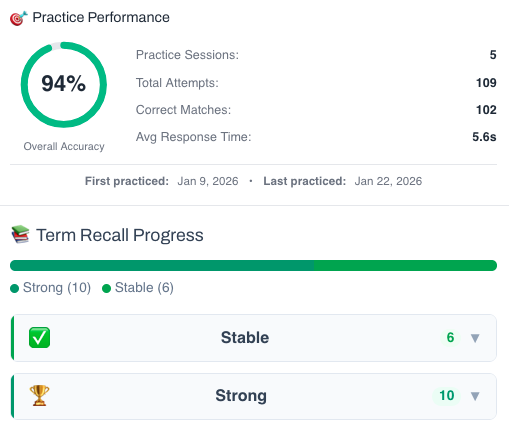
Vocabulary practice stats and progress dashboard preview

This isn’t a simple quiz β€” it’s a fully tracked learning system. You build knowledge through recognition, then recall, and your progress feeds directly into the Integrated Practice Bar (Writing tasks, AI Chat, and more).

  • Practice sessions, accuracy, and response-time tracking
  • Term strength levels (Learning β†’ Stable β†’ Strong)
  • Personal progress history for each unit

This feature is available to YSP members.

Explore Membership Benefits
← Previous Page 0 of 1 Next (Coming Soon) β†’