Present Simple vs Present Continuous: Understanding English Tenses
Core PathWay
1 Section 1. Why English Has Two Present Tenses
If you speak Italian, you know that ‘fumo’ can mean both ‘I smoke’ (as a habit) and ‘I’m smoking’ (right now). In Italian, one form works for both situations. You can say ‘fumo ora’ (I smoke now) and everyone understands you mean right now.
But English is different. English uses two separate tenses for the present time. This is very important! The Present Simple (I smoke) and the Present Continuous (I’m smoking) are NOT the same. They express different meanings.
Why does English do this? English wants to show the difference between a permanent situation and a temporary action. English wants to show if something is a habit or if it’s happening now. This is called the continuous aspect – it shows an action is in progress, continuing, not finished.
For Italian students, this is a big change. If you say ‘I smoke now’ in English, people will think you made a mistake. You must say ‘I’m smoking now’ because the action is happening at this moment.
By the end of this lesson, you will understand when to use each tense. You will know which verbs can use the continuous form and which cannot. You will speak more naturally and avoid common mistakes that Italian learners make.
Key Terms
💬 Daily Routine vs Current Actions
Two colleagues talking during a coffee break at work
2 Section 2. When to Use Each Tense
Let’s look at the rules. These are simple but very important.
Present Simple is for three main things:
Notice the time words we use with Present Simple: every day, always, usually, sometimes, never, on Mondays, in the morning.
Present Continuous is for three different things:
Notice the time words we use with Present Continuous: now, right now, at the moment, today, this week, these days, currently, tomorrow (for arrangements).
The big mistake Italian students make: Don’t say ‘I work now’ – say ‘I’m working now.’ Don’t say ‘What do you do?’ when you see someone busy – say ‘What are you doing?’
Key Terms
💬 Making Arrangements
Two friends meeting at a café
3 Section 3. State Verbs vs Action Verbs – A Critical Difference
Here’s something very important: not all verbs can use the continuous form. English divides verbs into two groups: action verbs and state verbs.
Action verbs describe things you DO – activities and movements. Examples: eat, drink, work, play, read, write, walk, run, talk, listen. These verbs CAN use the continuous form: ‘I’m eating,’ ‘She’s running,’ ‘They’re talking.’
State verbs describe situations, feelings, thoughts, and senses – NOT actions. Examples: like, love, hate, want, need, know, understand, believe, have (for possession), see, hear, smell. These verbs usually DON’T use the continuous form.
This is a big difference from Italian! In Italian, you can say ‘sto amando questo film’ but in English, we DON’T say ‘I’m loving this film’ – we say ‘I love this film.’
Common state verbs you need to remember:
– Feelings: like, love, hate, prefer, want, need
– Thinking: know, understand, believe, think (for opinions), remember, forget
– Senses: see, hear, smell, taste
– Possession: have (when it means ‘possess’), own, belong
– Being: be, seem, appear
Some useful sentence starters to practice:
– ‘I usually…’ (+ Present Simple)
– ‘Right now I’m…’ (+ Present Continuous)
– ‘Every morning I…’ (+ Present Simple)
– ‘At the moment I’m…’ (+ Present Continuous)
– ‘I always…’ (+ Present Simple)
– ‘These days I’m…’ (+ Present Continuous)
Here are two short conversations showing natural use:
Dialogue 1: At work
Marco: Hi Sara, what are you doing?
Sara: I’m writing a report. I write reports every week.
Marco: Do you like your job?
Sara: Yes, I love it! But this week I’m working on a difficult project.
Dialogue 2: At a café
Tom: Are you waiting for someone?
Lisa: Yes, I’m meeting a friend at 2pm. We meet here every Tuesday.
Tom: That’s nice. I usually work at home, but today I’m working here.
Lisa: I prefer cafés. I think they’re more interesting than offices!
Key Terms
4 Section 4. Recap – Remember These Key Points
Let’s review what you learned today.
The Big Difference: English uses Present Simple for habits, facts, and permanent situations. English uses Present Continuous for actions happening now, around now, and for future arrangements. This is different from Italian where one form can work for both.
The Big Mistake: Don’t say ‘I work now’ or ‘I smoke now’ – these are wrong! Say ‘I’m working now’ and ‘I’m smoking now.’
State Verbs: Remember that state verbs (like, love, know, want, understand, believe, have for possession) don’t usually use continuous forms. Say ‘I like pizza’ NOT ‘I’m liking pizza.’
Next time you speak or write in English:
Practice makes perfect! The more you use these tenses correctly, the more natural they will feel. You can do this!
Member-Exclusive Vocabulary Review & Acquisition System
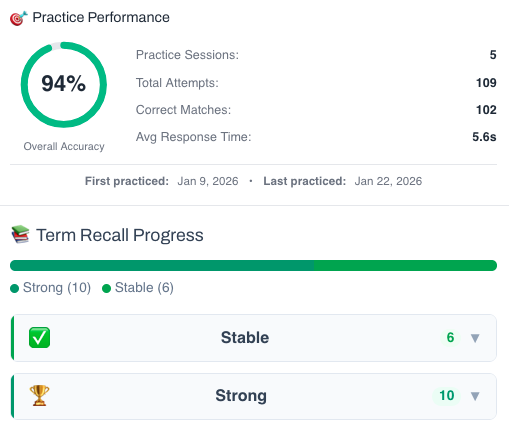
This isn’t a simple quiz — it’s a fully tracked learning system. You build knowledge through recognition, then recall, and your progress feeds directly into the Integrated Practice Bar (Writing tasks, AI Chat, and more).
- Practice sessions, accuracy, and response-time tracking
- Term strength levels (Learning → Stable → Strong)
- Personal progress history for each unit
This feature is available to YSP members.
Explore Membership Benefits🎮 Practice Games
Section 1 – Fill in the Gaps
The Basics of Present Simple and Present Continuous in English – Section 1
Member-Exclusive Cloze Test
Fill in the gaps to complete authentic passages and reinforce your vocabulary in context.
This feature is available to YSP members.
Explore Membership BenefitsSection 2 – Fill in the Gaps
The Basics of Present Simple and Present Continuous in English – Section 2
Member-Exclusive Cloze Test
Fill in the gaps to complete authentic passages and reinforce your vocabulary in context.
This feature is available to YSP members.
Explore Membership BenefitsSentence Scrambler
The Basics of Present Simple and Present Continuous in English – Sentence Scramble
Member-Exclusive Sentence Builder
Reconstruct scrambled sentences to practice word order and develop your grammar intuition.
This feature is available to YSP members.
Explore Membership Benefits