Present Simple in Detail: Timetables, Procedures, and Zero Conditionals
Core PathWay
1 Section 1. Why Present Simple Does More Than You Think
Welcome back! In the first lesson, you learned that Present Simple talks about habits and routines. You learned that ‘I smoke’ means a habit, and ‘I’m smoking’ means right now. That was the basic difference between the two tenses.
But here’s something interesting: English uses Present Simple in several special situations that have nothing to do with habits. This surprises Italian speakers because Italian uses different verb forms for these situations.
In this lesson, you will discover three important extra uses of Present Simple. First, you’ll learn about the timetabled future – when we talk about schedules and fixed plans. Second, you’ll see how procedures and instructions always use Present Simple. Third, you’ll understand zero conditionals – special ‘if’ sentences that talk about things that always happen.
These uses are very common in real English. You see them in train schedules, recipes, company documents, and everyday conversations. When you finish this lesson, you will recognize these patterns and use them correctly. This makes your English sound more natural and professional.
Why does this matter? Because Italian speakers often use future tenses or different structures in these situations. In English, we keep it simple – we use Present Simple. Understanding this helps you read instructions, follow procedures, and express general truths like a native speaker.
Key Terms
💬 Dialogue 1: At the Train Station
Two friends are checking train times at the station
2 Section 2. Timetables, Schedules, and Written Procedures
Let’s start with the timetabled future. In English, we use Present Simple to talk about fixed schedules – things that happen at specific times according to a timetable or schedule. This is very common with transport, classes, and official events.
Look at these examples: ‘The train departs at 9:15.’ ‘The meeting starts at 2 p.m.’ ‘The shop opens at 8 a.m. tomorrow.’ Notice we use Present Simple, not future tense! Italian speakers want to say ‘will depart’ or ‘will start’, but English keeps it simple. We use Present Simple because the schedule is fixed and official.
Now let’s look at procedures and written instructions. When you write steps to follow, you always use Present Simple. This happens in recipes, manuals, and work procedures.
Here’s a recipe example: ‘First, you heat the oil. Then you add the onions. You cook them for five minutes. Finally, you add the tomatoes.’ Each step uses Present Simple. We don’t say ‘you will heat’ or ‘you are heating’. We use Present Simple because these are general instructions for anyone who follows the recipe.
The same pattern appears in work procedures and mission statements. Companies write their values and goals using Present Simple: ‘We provide excellent service.’ ‘We respect our customers.’ ‘We deliver quality products.’ This makes the statements sound permanent and true all the time.
Key Terms
💬 Dialogue 2: Following a Recipe
A parent is teaching their child how to make pasta sauce
3 Section 3. Zero Conditionals – When Things Always Happen
Now we come to zero conditionals. This is a special sentence pattern that uses Present Simple twice. The structure is: if + Present Simple, Present Simple. We use this to talk about permanent truths, general facts, and things that always happen.
Let’s see the pattern clearly. The sentence has two parts: an if clause (the condition) and a result clause (what happens). Both parts use Present Simple.
Here are some examples:
– ‘If you heat water to 100 degrees, it boils.’ (This is a scientific fact.)
– ‘If I drink coffee at night, I don’t sleep well.’ (This always happens to me.)
– ‘If you press this button, the machine stops.’ (This is how the machine works.)
Italian speakers sometimes want to use future tense in the result clause, but don’t! Both parts stay in Present Simple. We’re not talking about the future – we’re talking about a general fact that is true any time.
Here are useful sentence starters for zero conditionals:
– ‘If you…, it…’
– ‘If people…, they…’
– ‘When you…, you…’ (you can use ‘when’ instead of ‘if’ for zero conditionals)
Let’s look at two mini-dialogues that show natural use:
Dialogue 1: Giving advice
A: I feel tired all the time.
B: If you don’t sleep enough, you feel tired.
A: That’s true. I only sleep five hours.
B: If you sleep more, you have more energy.
Dialogue 2: Explaining how something works
A: How does this coffee machine work?
B: It’s simple. If you press the green button, it starts.
A: And how do I stop it?
B: If you press the red button, it stops immediately.
Key Terms
💬 Dialogue 3: Explaining How Things Work
A colleague is showing a new employee how the office printer works
4 Section 4. Recap – Using Present Simple in Special Situations
You now know that Present Simple does much more than talk about habits. It has three special uses that appear in everyday English.
First, the timetabled future: use Present Simple for fixed schedules. Say ‘The train departs at 9:15’, not ‘will depart’. This works for transport, classes, and official events.
Second, procedures and instructions: use Present Simple for steps and instructions. Recipes, manuals, and work procedures all follow this pattern. You write ‘Heat the oil’ and ‘Add the onions’, not future forms.
Third, zero conditionals: use Present Simple in both parts of the sentence. The structure is ‘if + Present Simple, Present Simple’. This expresses permanent truths and things that always happen.
Remember these key points:
Next time you read a timetable, follow a recipe, or explain how something always works, you’ll recognize these Present Simple patterns. You’ll also use them correctly in your own English. These patterns make you sound natural and confident!
Member-Exclusive Vocabulary Review & Acquisition System
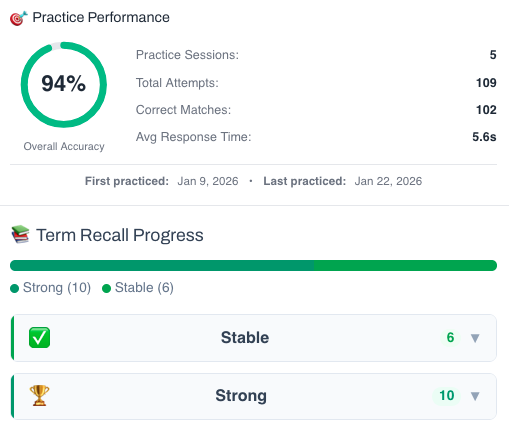
This isn’t a simple quiz — it’s a fully tracked learning system. You build knowledge through recognition, then recall, and your progress feeds directly into the Integrated Practice Bar (Writing tasks, AI Chat, and more).
- Practice sessions, accuracy, and response-time tracking
- Term strength levels (Learning → Stable → Strong)
- Personal progress history for each unit
This feature is available to YSP members.
Explore Membership Benefits🎮 Practice Games
Section 1 – Fill in the Gaps
Present Simple – Section 1
Member-Exclusive Cloze Test
Fill in the gaps to complete authentic passages and reinforce your vocabulary in context.
This feature is available to YSP members.
Explore Membership BenefitsSection 2 – Fill in the Gaps
Present Simple – Section 2
Member-Exclusive Cloze Test
Fill in the gaps to complete authentic passages and reinforce your vocabulary in context.
This feature is available to YSP members.
Explore Membership BenefitsSection 3 – Fill in the Gaps
Present Simple – Section 3
Member-Exclusive Cloze Test
Fill in the gaps to complete authentic passages and reinforce your vocabulary in context.
This feature is available to YSP members.
Explore Membership BenefitsSentence Scrambler
Present Simple – Sentence Scramble
Member-Exclusive Sentence Builder
Reconstruct scrambled sentences to practice word order and develop your grammar intuition.
This feature is available to YSP members.
Explore Membership Benefits