State Verbs Demystified: Using English Verb Types Correctly
Core PathWay
1 🌐 Introduction
Understanding state verbs is fundamental to English fluency because these verbs behave differently from action verbs. State verbs describe conditions, thoughts, feelings, and relationships that don’t involve physical action—like know, believe, own, or love. The challenge? Some verbs can function as both state and action verbs depending on context, and occasionally state verbs appear in continuous forms for specific purposes. Mastering this semantic field helps you avoid common errors and understand why ‘I’ve been living here for six months’ sounds temporary while ‘I’ve lived here all my life’ feels permanent, even though both use the same verb.
💬 Dialogue 1: Discussing Living Arrangements
Two colleagues talking during a coffee break about where they live
2 📋 Lexical Categories
Pure State Verbs (Mental States)
These verbs describe thoughts, beliefs, and knowledge. They rarely appear in continuous forms.
• know – to have information in your mind about something
Example: *I know the answer to that question.*
• believe – to think something is true
Example: *She believes in working hard for success.*
• understand – to know the meaning of something
Example: *Do you understand what I’m saying?*
• recognize – to know someone or something because you have seen them before
Example: *I didn’t recognize you with your new haircut!*
• realize – to suddenly understand or become aware of something
Example: *I didn’t realize how late it was.*
• suppose – to think that something is probably true
Example: *I suppose you’re right about that.*
• mean – to have a particular meaning or to want to express something
Example: *What does this word mean?*
• remember – to have something in your memory
Example: *I remember my first day at school clearly.*
• forget – to not remember something
Example: *I always forget people’s names.*
• doubt – to not feel sure about something
Example: *I doubt he’ll arrive on time.*
Pure State Verbs (Emotional States)
These verbs express feelings and preferences. Standard usage avoids continuous forms.
• love – to have very strong feelings of affection for someone or something
Example: *I love spending time with my family.*
• hate – to have very strong negative feelings about something
Example: *She hates getting up early in the morning.*
• like – to enjoy something or feel positive about it
Example: *Do you like Italian food?*
• prefer – to like one thing more than another
Example: *I prefer tea to coffee.*
• want – to have a desire for something
Example: *They want to buy a new car.*
• need – to require something because it is necessary
Example: *I need a new laptop for work.*
• wish – to want something that is difficult or impossible to have
Example: *I wish I could speak five languages.*
• desire – to want something very much (more formal than ‘want’)
Example: *Many people desire a better work-life balance.*
Pure State Verbs (Possession & Relationships)
These verbs describe ownership, belonging, and relationships between things.
• own – to have something that belongs to you
Example: *My parents own a small business.*
• possess – to have or own something (more formal)
Example: *She possesses excellent communication skills.*
• belong – to be in the right place or be owned by someone
Example: *This book belongs to the library.*
• have – to possess or own something
Example: *I have two brothers and one sister.*
• contain – to have something inside
Example: *This box contains old photographs.*
• owe – to need to pay money back to someone
Example: *I owe you £20 from last week.*
Pure State Verbs (Appearance & Existence)
These verbs describe how things seem or their basic existence.
• seem – to appear to be something or give a particular impression
Example: *You seem tired today.*
• appear – to seem or look like something
Example: *She appears confident, but she’s actually quite nervous.*
• be – to exist or to have a particular quality
Example: *He is very intelligent.*
• exist – to be real or present in the world
Example: *Do ghosts really exist?*
• resemble – to look like or be similar to someone or something
Example: *You resemble your mother.*
• consist – to be made of or formed from something
Example: *The team consists of twelve members.*
• matter – to be important
Example: *Your opinion really matters to me.*
• depend – to need someone or something for support
Example: *Success depends on hard work.*
Action-State Hybrids
These verbs can function as state verbs OR action verbs depending on their meaning in context.
• live – (state) to have your home in a place / (action) to experience life in a temporary way
Example (state): *I’ve lived in London all my life.*
Example (action): *I’ve been living in London for six months.* (temporary)
• think – (state) to have an opinion / (action) to use your mind actively
Example (state): *I think you’re right.*
Example (action): *I’m thinking about my next career move.* (active mental process)
• have – (state) to possess / (action) to experience or do something
Example (state): *She has three cats.*
Example (action): *We’re having dinner at 7pm.* (experiencing an activity)
• feel – (state) to have an opinion / (action) to touch or experience a physical sensation
Example (state): *I feel that’s a bad idea.*
Example (action): *The doctor is feeling my arm to check for broken bones.* (physical action)
Verbs of Perception
These verbs describe the five senses and can be state or action verbs.
• see – (state) to have the ability to use your eyes / (action) to meet someone or watch something deliberately
Example (state): *I see what you mean.*
Example (action): *I’m seeing my dentist tomorrow.* (meeting)
• hear – (state) to receive sound through your ears / (action) to listen to something officially
Example (state): *I hear music coming from next door.*
Example (action): *The court is hearing the case next week.* (official listening)
• taste – (state) to have a particular flavour / (action) to test food by eating a small amount
Example (state): *This soup tastes delicious.*
Example (action): *The chef is tasting the sauce.* (active testing)
• smell – (state) to have a particular odor / (action) to deliberately use your nose to detect odors
Example (state): *These flowers smell wonderful.*
Example (action): *Why are you smelling the milk?* (deliberate action)
Measurement Verbs
These state verbs describe measurements and typically don’t take continuous forms.
• weigh – to have a particular weight
Example: *The package weighs five kilograms.*
• measure – to have a particular size
Example: *The room measures four meters by five meters.*
• cost – to have a particular price
Example: *How much does this jacket cost?*
Key Terms
💬 Dialogue 2: Talking About Understanding
Two friends discussing a difficult concept one is learning
3 🔗 Common Collocations & Idioms
• I’ve been meaning to – used to say you have wanted to do something for a while but haven’t done it yet (acceptable continuous use of state verb for emphasis)
Example: *I’ve been meaning to call you for weeks!*
• I’ve been wanting to – used to express a desire that has existed for some time (acceptable continuous use for emphasis on duration)
Example: *I’ve been wanting to meet you for ages!*
• I’m loving it – advertising slogan that breaks standard grammar rules (not used in normal speech)
Example: *You might see ‘I’m loving it’ in advertisements, but in conversation, say ‘I love it.’*
• see what you mean – to understand someone’s point or opinion
Example: *Oh, I see what you mean now—that makes sense!*
• have in mind – to be thinking about a particular idea or plan
Example: *What kind of job do you have in mind?*
• know for a fact – to be completely certain that something is true
Example: *I know for a fact that she lives in Manchester.*
💬 Dialogue 3: Expressing Desires and Preferences
Two friends planning what to do over the weekend
4 👀 Grammar Spotlight
When discussing state verbs, several grammatical patterns emerge. The present perfect simple appears with permanent or long-term states: *’I’ve known her for twenty years’* or *’They’ve lived here all their lives.’* The present perfect continuous signals temporary situations or recent activities: *’I’ve been living here for six months’* (implying temporary) or *’I’ve been thinking about changing jobs’* (active mental process). Time expressions influence these choices—‘all my life’ and ‘always’ pair with simple forms, while ‘for six months’, ‘recently’, and ‘lately’ often appear with continuous forms. Certain state verbs accept continuous forms for special emphasis or to show changing feelings: *’I’ve been wanting to tell you something’* emphasizes the duration of desire. However, advertising language like *’I’m loving it’* breaks these rules for impact and shouldn’t be imitated in standard English.
Key Terms
5 😊 Expressive Range
Mastering the vocabulary and patterns in this lexical field transforms your English from basic to nuanced. When you understand the difference between ‘I’ve lived here all my life’ and ‘I’ve been living here for six months’, you communicate not just facts but subtle implications about permanence and temporariness. Recognizing that ‘I’ve been wanting to meet you’ is acceptable while ‘I’m loving it’ is advertising language helps you sound natural rather than mimicking commercial slogans. Using hybrid verbs like think, have, and feel correctly in both their state and action meanings demonstrates sophisticated understanding. The collocations and idiomatic phrases from Section 3 add authenticity to your speech, while awareness of the grammar patterns in Section 4 ensures you choose the right verb form for your intended meaning. This comprehensive knowledge empowers you to express complex ideas about thoughts, feelings, and situations with precision and confidence.
Member-Exclusive Vocabulary Review & Acquisition System
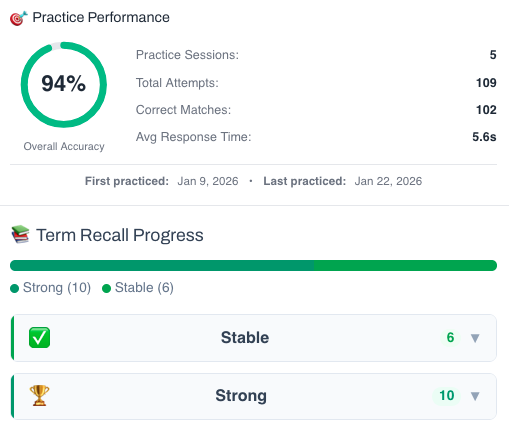
This isn’t a simple quiz — it’s a fully tracked learning system. You build knowledge through recognition, then recall, and your progress feeds directly into the Integrated Practice Bar (Writing tasks, AI Chat, and more).
- Practice sessions, accuracy, and response-time tracking
- Term strength levels (Learning → Stable → Strong)
- Personal progress history for each unit
This feature is available to YSP members.
Explore Membership Benefits🎮 Practice Games
Section 4 – Fill in the Gaps
State Verbs Demystified: Using English Verb Types Correctly – Section 4
Member-Exclusive Cloze Test
Fill in the gaps to complete authentic passages and reinforce your vocabulary in context.
This feature is available to YSP members.
Explore Membership BenefitsSentence Scrambler
State Verbs Demystified: Using English Verb Types Correctly – Sentence Scramble
Member-Exclusive Sentence Builder
Reconstruct scrambled sentences to practice word order and develop your grammar intuition.
This feature is available to YSP members.
Explore Membership Benefits