Talking About Yesterday at Work: Past Simple Review
Core PathWay
1 Past Simple vs Present Simple: The Basics
You already know Past Simple! This lesson helps you use it better at work.
We use Past Simple to talk about finished actions in the past. We use Present Simple to talk about habits and regular actions now. The important difference is the time signal word. Past Simple always needs a word or phrase that tells us WHEN something happened in the past.
Look at these two sentences: “I finished the report” and “I finished the report yesterday.” The first sentence is incomplete because we don’t know when. The second sentence is complete because yesterday tells us the time. Other time signal words are “5 minutes ago”, “last week”, and “on Monday”.
Past Simple is the same if the action was 1 second ago or 1 million years ago. English does not have different forms for near past and distant past. There are two types of verbs: regular verbs (they end in -ed) and irregular verbs (they change in different ways). The verb to be becomes was or were in Past Simple.
2 Regular Verbs: The -ED Ending
Most verbs in English are regular verbs. This means we add -ed to make Past Simple.
The spelling rules are simple. For most verbs, just add -ed: work → worked, listen → listened. If the verb ends in -e, just add -d: arrive → arrived. If the verb ends in consonant + y, change y to i and add -ed: study → studied. If the verb ends in one vowel + one consonant, double the consonant and add -ed: plan → planned.
The -ed ending has three different sounds. This is very important! If you always say “id” for every regular verb, it sounds wrong. Verbs ending in -s, -sh, -ch, -x, -ss sound like -t (faxed sounds like “fakst”). Verbs ending in -t, -te, -d, -de sound like -id (wanted sounds like “wontid”). All other verbs sound like -d (arrived sounds like “arrivd”).
Here are 10 common business verbs you need: worked, planned, finished, started, called, emailed, checked, presented, asked, and answered. These verbs help you talk about your work day.
Key Terms
3 Irregular Verbs in Business
Irregular verbs do not add -ed. They change in different ways. You need to learn these forms.
Some irregular verbs end in -ought or -aught in Past Simple. These look difficult but the pronunciation is easy: they all sound like -ort. For example, “thought” sounds like “thort” and “caught” sounds like “cort”. Remember this sound and these verbs become easier.
Here are 10 important irregular verbs for business: sent (from send), bought (from buy), wrote (from write), read (from read – same spelling but different sound – “red”), met (from meet), had (from have), made (from make), went (from go), took (from take), and got (from get). These verbs are very common at work.
You use these verbs every day in business. You sent an email. You met a client. You wrote a report. You had a meeting. Practice these forms because you need them often.
Key Terms
4 Time Signal Words: The ‘When’ of Past Simple
Time signal words tell us when something happened. Past Simple always uses these words.
We can talk about times close to now or far from now. 5 minutes ago is very recent. Yesterday is one day before today. Last week, last month, and last year are further in the past. The pattern X time ago is very common: “2 hours ago”, “3 days ago”, “6 months ago”.
We use different prepositions with different time words. We use at for clock times and some special times: at 8am, at noon, at the weekend, at Christmas. We use on for days and dates: on Monday, on 15th May, on my birthday. We use in for longer periods: in 2020, in January, in summer, in the morning.
Other common time signals are this morning (if it is now afternoon or evening), earlier, before, and then. These words help you build clear sentences about the past. Always include a time signal word when you use Past Simple.
Key Terms
5 My Day at Work Yesterday
Yesterday was a busy day at work. I started work at 8am. First, I checked my emails and answered three urgent messages. Then I called a client and we talked about a new project. At 10am, I had a meeting with my team. We planned the work for next week and I presented my ideas.
After the meeting, I wrote a report and sent it to my manager. I finished the report at 12:30pm. I took a lunch break and met a colleague. We talked about work and ate lunch together. In the afternoon, I worked on a presentation. I made ten slides and checked all the information. At 3pm, I got an email from a supplier. I read it and answered immediately.
Later, I went to another meeting. We talked about the budget and made some important decisions. I took notes and asked several questions. I dealt with some problems and spent time on planning. The meeting finished at 5pm. Then I went home. It was a long day but I finished all my tasks.
Key Terms
6 Lesson Recap
You reviewed Past Simple in this lesson. Now you know how to use it better in business situations.
Remember these important points: Past Simple needs a time signal word. Regular verbs add -ed but the pronunciation has three different sounds. Irregular verbs change in different ways and you need to learn them. Time signal words like “yesterday”, “last week”, and “X ago” tell us when something happened. We use at, on, and in with different time expressions.
You learned important business verbs: worked, planned, finished, sent, wrote, met, and many others. You can now talk about your work day yesterday. You can describe what you did, when you did it, and who you worked with. Practice using these verbs with time signal words and your Past Simple will become stronger.
Member-Exclusive Matching Game
Test your vocabulary knowledge by matching terms with their definitions in this fast-paced challenge.
This feature is available to YSP members.
Explore Membership BenefitsMember-Exclusive Vocabulary Review & Acquisition System
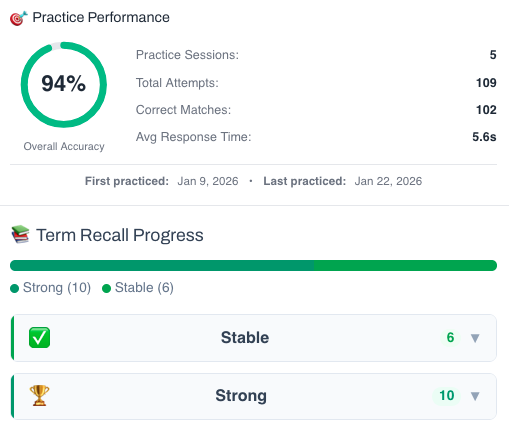
This isn’t a simple quiz — it’s a fully tracked learning system. You build knowledge through recognition, then recall, and your progress feeds directly into the Integrated Practice Bar (Writing tasks, AI Chat, and more).
- Practice sessions, accuracy, and response-time tracking
- Term strength levels (Learning → Stable → Strong)
- Personal progress history for each unit
This feature is available to YSP members.
Explore Membership BenefitsMember-Exclusive Practice Bar
Access a wide range of integrated practice for this unit — from Vocabulary and Grammar activities to AI-curated Writing tasks and Thematic Chat practice.
This feature is available to YSP members.
Explore Membership Benefits🎮 Practice Games: 2 x Cloze (Gap fill texts) 1 x Scrambler (rebuild sentences)
Member-Exclusive Cloze Test
Fill in the gaps to complete authentic passages and reinforce your vocabulary in context.
This feature is available to YSP members.
Explore Membership BenefitsMember-Exclusive Cloze Test
Fill in the gaps to complete authentic passages and reinforce your vocabulary in context.
This feature is available to YSP members.
Explore Membership BenefitsMember-Exclusive Sentence Builder
Reconstruct scrambled sentences to practice word order and develop your grammar intuition.
This feature is available to YSP members.
Explore Membership Benefits