Module code: 1083

๐Ÿ“š Past Simple at Work (A2)

ย 

Past Simple Negatives and Questions in Business

Core PathWay

1 Making Negatives and Asking Questions in Past Simple

Welcome back! In the last lesson, you learned how to talk about things you did at work using Past Simple. Now let’s learn how to say what you didn’t do and how to ask questions about past work activities.

Let’s start with negatives. When you want to say something didn’t happen in the past, you use didn’t (or did not in formal writing) with the base form of the verb. This works for ALL subjects – I, you, he, she, it, we, they. The formula is simple: subject + didn’t + base verb. For example: ‘I didn’t work yesterday’ or ‘She didn’t call the client.’ Notice that the main verb stays in its base form because didn’t already carries the time signal. You don’t say ‘I didn’t worked’ – that’s wrong!

Here’s an important rule: English doesn’t use double negatives. This means you can’t say ‘I didn’t never go to the meeting.’ Instead, you say ‘I never went to the meeting’ OR ‘I didn’t go to the meeting.’ Choose one negative word, not two!

Now let’s look at questions. For simple yes/no questions, we use this pattern: did + subject + base verb. Think of it as A.S.I.Auxiliary verb (did), Subject (you, he, we), Infinitive (base verb). For example: ‘Did you work yesterday?’ To give a short answer, use: ‘Yes, I did’ or ‘No, I didn’t.’ You don’t need to repeat the whole verb.

For more complex questions with question words like when, where, what, why, and who, use this pattern: Qu.A.S.I.Question word + Auxiliary verb (did) + Subject + Infinitive (base verb). Examples: ‘When did you finish the report?’ ‘Where did she meet the client?’ ‘What did they discuss?’

Be careful with the verb ‘be’! Questions with ‘be’ are different. Don’t use ‘did’. Instead, swap the subject and the verb: ‘Was the meeting long?’ ‘Were you at the office yesterday?’ The pattern is: was/were + subject. This is simpler than other verbs!

Key Terms

didn’tthe short form of ‘did not’, used to make Past Simple negative sentences
negativea sentence that says something is not true or did not happen
questiona sentence that asks for information
auxiliary verba helping verb like ‘did’ that we use to make questions and negatives
short answera quick reply using only the auxiliary verb, like ‘Yes, I did’ or ‘No, I didn’t’
double negativesusing two negative words in one sentence, which is wrong in English

๐Ÿ’ฌ Dialogue 1: Monday Morning Catch-up

Two colleagues meet at the office on Monday morning and talk about their weekend work

Sarah: “Hi Tom! Did you work on the weekend?”
Tom: “Yes, I did. I finished the budget report. Did you work?”
Sarah: “No, I didn’t. I needed a break! I was very tired last week. When did you finish the report?”
Tom: “I finished it on Sunday evening. But I didn’t send it yet. I want to check it today first.”
Sarah: “That’s smart. Was it difficult? The numbers were very complicated last month.”
Tom: “No, it wasn’t too bad. The new software helped me a lot. It was much faster than before.”
Sarah: “Great! Did you have a nice weekend too, or was it all work?”
Tom: “I worked on Sunday, but Saturday was nice. I went to the park with my family.”
2 Workplace Conversations: What Did You Do?

Let’s see how colleagues use these questions and negatives when they talk about their work week. Here are two natural conversations you might hear in an office.

Conversation 1: Monday Morning

Tom: Hi Sarah! Did you work on the weekend?

Sarah: No, I didn’t. I needed a break! Did you?

Tom: Yes, I did. I finished the budget report.

Sarah: Oh! When did you send it?

Tom: I didn’t send it. I want to check it today first.

Sarah: That’s smart. Was it difficult?

Tom: No, it wasn’t too bad.

Conversation 2: End of Week Review

Sarah: Did you call the new supplier last week?

Tom: Yes, I did. I called them on Wednesday.

Sarah: Great! What did they say about the prices?

Tom: They didn’t give me final prices. They need more time.

Sarah: Did they say when?

Tom: They promised an answer today. But it didn’t arrive yet.

Sarah: Were they friendly on the phone?

Tom: Yes, they were very professional.

Notice how these colleagues use did to ask about completed actions and didn’t to talk about things that didn’t happen. They also use was and were for questions about the past with ‘be’. The conversations feel natural because they mix different question types – yes/no questions and questions with when, what, and other question words.

Key Terms

suppliera company that sells products or materials to another company
breaka rest period when you stop working
budget reporta document that shows how much money a company plans to spend
finallast and complete, not going to change
promisedsaid they will definitely do something

๐Ÿ’ฌ Dialogue 2: Weekly Review Discussion

Two colleagues review tasks from last week

Sarah: “Did you call the new supplier last week?”
Tom: “Yes, I did. I called them on Wednesday morning.”
Sarah: “Good! What did they say about the prices? Were the prices lower than before?”
Tom: “They didn’t give me final prices. They said they need more time to check everything.”
Sarah: “Oh, that’s a problem. When did they promise an answer? We need the information soon.”
Tom: “They promised an answer today. But it didn’t arrive yet. I checked my email ten minutes ago.”
Sarah: “Maybe call them again this afternoon. Were they friendly on the phone last time?”
Tom: “Yes, they were very professional and helpful. The manager was very polite. I can call them at two o’clock.”

3 Andrea’s Business Trip to Milan

Last week, Andrea went on a business trip to Milan for three days. She didn’t travel alone – two colleagues went with her. On Monday morning, they arrived at the airport early. They checked in at the desk and got their boarding passes. Security didn’t take long, and they boarded the flight on time. The plane didn’t have any delays, and they landed in Milan at 11 a.m.

A taxi picked them up at the airport and dropped them off at the hotel. They didn’t go to their rooms immediately. First, they went to a client meeting in the city center. The meeting went well. Andrea presented a new proposal for a big project. The client asked many questions, but they didn’t sign the contract that day. They wanted more time to think.

On Tuesday, Andrea attended a big conference at the conference center. She didn’t miss any important sessions. The keynote speaker in the morning was excellent. In the afternoon, she went to three different networking sessions and met many interesting people. She didn’t have time for lunch!

Wednesday was trade show day. Andrea visited the exhibition and walked around many company booths. She collected information about new products. After the trade show, the client invited them to tour their factory. It was very interesting. That evening, they flew home. Andrea didn’t sleep on the plane because she was too excited. The trip was a big success!

When Andrea returned to the office on Thursday, her manager asked: ‘Did the client sign the contract?’ Andrea smiled and said: ‘Not yet, but they were very positive. They didn’t say no!’

Key Terms

business tripwhen you travel to another place for work
flighta journey in a plane
check into show your ticket and get your seat at the airport
boarding passthe paper or digital ticket that lets you get on the plane
boardto get on a plane, train, or bus
delaywhen something happens later than planned
landwhen a plane arrives on the ground at the airport
pick upto collect someone in a car and take them somewhere
drop offto take someone to a place in a car and leave them there
conferencea big meeting where many people discuss business topics
attendto go to an event or meeting
keynote speakerthe most important person who talks at a conference
networking sessiona time at a conference when people meet and talk to make business contacts
trade showa big event where companies show their products
exhibitiona place where companies display their products for people to see
bootha small space at a trade show where one company shows their products
client meetingwhen you meet with a customer to discuss business
proposala formal plan or suggestion for a business project
contracta formal written agreement between two companies
signto write your name on a document to make it official
tourto visit a place and look around it
factorya building where a company makes products

4 Recap: Your Past Simple Question and Negative Toolkit

Great work! You now know how to talk about what didn’t happen and how to ask about past work activities. Let’s remember the key points.

For negatives, use didn’t + base verb for all subjects. The main verb never changes. Remember: no double negatives in English – choose one negative word only!

For yes/no questions, use the A.S.I. pattern: did + subject + base verb. Answer with short answers: ‘Yes, I did’ or ‘No, I didn’t.’

For WH-questions, use Qu.A.S.I.: question word + did + subject + base verb. This helps you ask when, where, what, why, and who questions.

With the verb ‘be’, don’t use did. Just swap the subject and was/were: ‘Was it good?’ ‘Were you there?’

Next time you speak or write about work:

โœ“ Use didn’t + base verb to say what you didn’t do
โœ“ Start yes/no questions with ‘Did you…?’ or ‘Did he/she…?’
โœ“ Use question words (when, where, what) before ‘did’ for more specific questions
โœ“ Remember: was/were questions don’t need ‘did’
โœ“ Give short answers: ‘Yes, I did’ or ‘No, I wasn’t’

You’re building strong skills for workplace conversations! Keep practicing these patterns and they’ll become natural very quickly.

๐Ÿ”’

Member-Exclusive Vocabulary Review & Acquisition System

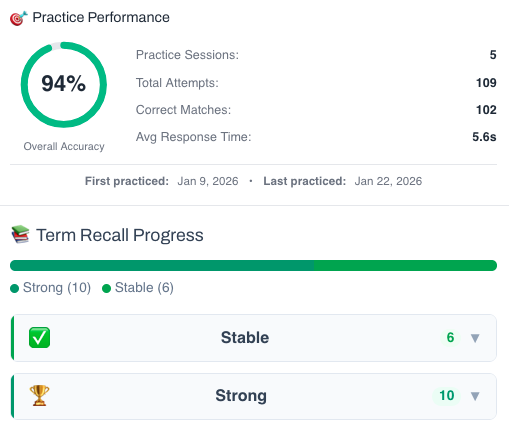
Vocabulary practice stats and progress dashboard preview

This isnโ€™t a simple quiz โ€” itโ€™s a fully tracked learning system. You build knowledge through recognition, then recall, and your progress feeds directly into the Integrated Practice Bar (Writing tasks, AI Chat, and more).

  • Practice sessions, accuracy, and response-time tracking
  • Term strength levels (Learning โ†’ Stable โ†’ Strong)
  • Personal progress history for each unit

This feature is available to YSP members.

Explore Membership Benefits

ย 

๐Ÿ”’

Member-Exclusive Practice Bar

Access a wide range of integrated practice for this unit โ€” from Vocabulary and Grammar activities to AI-curated Writing tasks and Thematic Chat practice.

This feature is available to YSP members.

Explore Membership Benefits

๐ŸŽฎ Practice Games – 2 x Gap Fill (Cloze), 2 x Scrambler (Sentence Building)

Gap Fills

๐Ÿ”’

Member-Exclusive Cloze Test

Fill in the gaps to complete authentic passages and reinforce your vocabulary in context.

This feature is available to YSP members.

Explore Membership Benefits
๐Ÿ”’

Member-Exclusive Cloze Test

Fill in the gaps to complete authentic passages and reinforce your vocabulary in context.

This feature is available to YSP members.

Explore Membership Benefits

Sentence Scramblers

๐Ÿ”’

Member-Exclusive Sentence Builder

Reconstruct scrambled sentences to practice word order and develop your grammar intuition.

This feature is available to YSP members.

Explore Membership Benefits
๐Ÿ”’

Member-Exclusive Sentence Builder

Reconstruct scrambled sentences to practice word order and develop your grammar intuition.

This feature is available to YSP members.

Explore Membership Benefits