Important Terms for What You Pay
Core PathWay1 Buying Things: Basic Payment Words
You have chosen to learn about important terms for what you pay, so let’s get started. When you buy something, you need to know the price. The price is the amount of money for goods or services. The cost is the total money needed to buy something. Sometimes the cost is more than the price because you pay extra things. A charge is an amount asked as payment. A rate is a standard cost per unit or time. For example, a hotel rate is the cost for one night.
2 Getting Bills and Paying for Services
After you use a service, you get a bill. A bill is a written statement of money owed. An invoice is a detailed bill for goods or services. Businesses often send invoices to customers. A fee is a payment for professional services. For example, you pay a fee to a lawyer or doctor. A tariff is a list of fixed prices or charges. Some companies show their tariffs on their websites.
3 Regular Payments and Special Costs
A subscription is a regular payment for an ongoing service. Many people have subscriptions for music or TV. Rent is a regular payment for using property. You pay rent every month for your apartment. A premium is a payment for insurance coverage. You pay a premium to protect your car or health. Tuition is a payment for teaching or instruction. Students pay tuition to go to university.
4 Work, Transport, and Different Ways to Pay
A wage is payment for work done. Workers often get wages every week. A salary is a fixed regular payment for employment. Office workers usually get a salary every month. A fare is the cost of a public transport journey. You pay a fare on the bus or train. A deposit is an advance payment or security money. You pay a deposit when you rent an apartment. A retainer is an upfront fee paid to secure a professional’s availability and priority access, typically billed against future work.
5 Penalties, Extras, and Free Things
A fine is money paid as a penalty. You pay a fine if you park your car in the wrong place. A tip is extra money for good service. People give tips to waiters in restaurants. Interest is a fee paid for borrowing money, typically calculated as a percentage of the principal amount. Banks charge interest on loans. You can pay in installments, which is a series of smaller, scheduled payments made over time until the total amount is paid in full. Or you can pay a lump sum, which is a single payment made at one time for the total amount due. Sometimes things are free, which means no payment required. Complimentary means given free as courtesy, like complimentary breakfast at a hotel.
Member-Exclusive Practice Bar
Access a wide range of integrated practice for this unit — from Vocabulary and Grammar activities to AI-curated Writing tasks and Thematic Chat practice.
This feature is available to YSP members.
Explore Membership BenefitsMember-Exclusive Vocabulary Review & Acquisition System
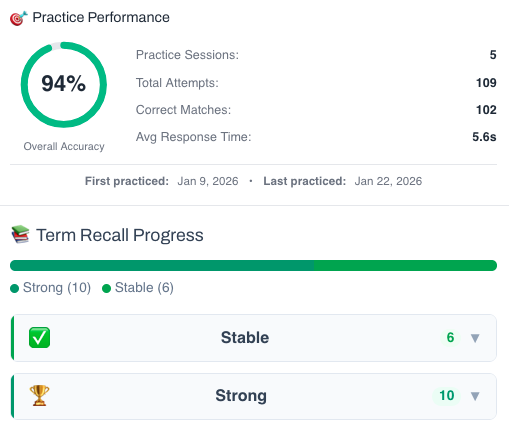
This isn’t a simple quiz — it’s a fully tracked learning system. You build knowledge through recognition, then recall, and your progress feeds directly into the Integrated Practice Bar (Writing tasks, AI Chat, and more).
- Practice sessions, accuracy, and response-time tracking
- Term strength levels (Learning → Stable → Strong)
- Personal progress history for each unit
This feature is available to YSP members.
Explore Membership BenefitsUse the VAS to build solid recognition and recall of the terms below.
✔ Every correct Match = +1 point
✔ Every correct Recall = +2 points
🎓 Reach 5 points with good accuracy and the term is automatically promoted to your Personal Dictionary.
Incorrect answers lower accuracy, meaning more correct Matches or Recalls may be needed to reach promotion.
Member-Exclusive Sentence Builder
Reconstruct scrambled sentences to practice word order and develop your grammar intuition.
This feature is available to YSP members.
Explore Membership Benefits