At the Hairdressers: Getting the Style You Want
Core PathWay1 Getting Your Hair Done: More Than Just 'Short Back and Sides'
Walking into a hairdresser’s salon can feel easy or intimidating, depending on how confident you are with the vocabulary!
Many people think men have it easier – just ask for ‘short back and sides’ and you’re done. However, modern hairstyles are much more varied for everyone. Men might want a tapered cut, where the hair gradually gets shorter, or a blunt cut with all the hair cut to exactly the same length. Women have even more choices: a classic bob that sits around jaw level, a short pixie cut, or a layered cut where different sections are cut to different lengths to create volume and movement. You also need to know about texture – whether your hair is naturally straight, wavy, or curly – because this affects what styles work best.
Colouring techniques have their own vocabulary too. Highlights are lighter sections of hair, while lowlights are darker sections. Balayage is a popular technique where colour is painted onto the hair by hand to create a natural, sun-kissed look. Your roots are the part of your hair closest to your scalp, and they often need touching up when your natural colour starts to show. If you want your hair to look fuller, you might ask for a volumizing treatment. If you have split ends – damaged tips where the hair has broken apart – you’ll need a trim to cut them off.
The key to getting what you want is knowing these terms and being able to describe your hair and your desired style clearly. It’s not about making the appointment – it’s about communicating during the appointment so the hairdresser understands exactly what you want.
Key Terms
⚖️ I cut my hair vs I had my hair cut
2 Describing Your Hair and What You Want
When you describe your hair or explain what style you want, you need to use adjectives in the correct order. This makes you sound natural and helps the hairdresser understand you clearly.
The typical order is: length → texture → style → colour. For example, you might say ‘I have long, straight, thick, dark brown hair’ or ‘I want a short, layered, blonde bob’. You don’t always need all four types of adjective, but when you use more than one, follow this pattern. If you want a perm – a chemical treatment that makes straight hair curly – you’d say ‘I’d like a perm to make my long, straight hair curly’. If you want straightening – the opposite process – you might say ‘Can you do straightening on my shoulder-length, curly hair?’
Here are useful adjectives for each category:
Length: short, medium-length, long, shoulder-length, chin-length, cropped (very short)
Texture: straight, wavy, curly, coarse (thick and rough), fine (thin and soft), thick, thin
Style: layered, blunt, tapered, choppy (deliberately uneven), sleek (very smooth), messy, neat, side-parted, centre-parted
Colour: blonde, brunette (brown), red, ginger, grey, white, dyed, natural, highlighted
You also need to know about bangs (American English) or fringe (British English) – the hair that hangs over your forehead. You might ask for ‘a full fringe’ (covering your whole forehead) or ‘side-swept bangs’ (brushed to one side). A razor cut uses a razor blade instead of scissors to create a softer, more textured edge. A blow-dry is when the hairdresser dries and styles your hair using a hairdryer and a brush – this is often included in the price of a cut, or you can book just a blow-dry to style your hair for a special occasion.
Key Terms
3 During the Appointment: Communicating and Making Adjustments
Once the hairdresser starts working on your hair, you need to know how to communicate naturally and make sure you’re getting what you want.
Hairdressers usually make small talk while they work. Common topics include holidays, work, the weather, or weekend plans. You don’t have to talk if you don’t want to – many people prefer to relax quietly – but knowing some standard responses helps. For example, if they ask ‘Got any plans for the weekend?’, you can say ‘Nothing special, just relaxing’ or ‘Yes, I’m going out with friends’. If they ask ‘Been anywhere nice recently?’, you might say ‘Not recently, no’ or ‘Yes, I went to the coast last month’.
More importantly, you need ‘adjustment language’ to check progress and request changes. Here are essential fixed phrases:
Checking progress: ‘How’s it looking?’ / ‘What do you think?’ / ‘Is it taking shape?’
Asking to see: ‘Could I see the back, please?’ / ‘Can you show me the length?’ / ‘May I have a mirror?’
Requesting adjustments: ‘Could you take a bit more off the sides?’ / ‘That’s a bit too short – can you leave it longer at the back?’ / ‘Could you make the layers more obvious?’ / ‘I think the fringe needs to be a bit shorter.’
Expressing satisfaction: ‘That’s perfect, thank you.’ / ‘Yes, that’s exactly what I wanted.’ / ‘That length looks great.’
Expressing concern politely: ‘I’m a bit worried it’s too short.’ / ‘I’m not sure about the colour – is it supposed to be this light?’ / ‘Could we adjust it slightly?’
Remember that it’s much easier to cut more hair off than to put it back on! If you’re unsure, say ‘Could you cut just a little bit first, and then I’ll see if I want more off?’ Most hairdressers prefer clients who communicate clearly rather than sitting silently and then being unhappy with the result. Don’t be afraid to speak up – politely – if something doesn’t look right. The phrase ‘Could you…?’ is perfect because it’s polite but direct.
Key Terms
4 Practice Task: Booking Your Appointment
Now practise describing what you want done at the hairdressers.
Start your request like this:
"I'd like to make an appointment for tomorrow. What I want you to do is…"
5 Review: Essential Hairdressing Language
Let’s review the most important vocabulary and phrases you’ve learned for communicating at the hairdressers.
Key cuts and styles: You now know the difference between a layered cut (different lengths for volume), a blunt cut (all one length), and a tapered cut (gradually shorter). You can ask for specific styles like a bob, a pixie cut, or just a trim to remove split ends. You understand that texture refers to whether hair is straight, wavy, or curly, and you can request a perm to add curl or straightening to remove it.
Colouring techniques: You can now explain the difference between highlights (lighter sections), lowlights (darker sections), and balayage (hand-painted, natural colour). You know that roots are where your hair grows from your scalp and often need touching up. You can ask for volumizing treatments to make thin hair look fuller.
Describing your hair: Remember the adjective order – length, texture, style, colour. You can describe your fringe or bangs and specify whether you want them full, side-swept, or removed completely. You know terms like shoulder-length, razor cut, and blow-dry.
Communication during the appointment: Use phrases like ‘Could you take a bit more off?’ or ‘Could you leave it longer?’ to make adjustments. Ask ‘How’s it looking?’ or ‘Could I see the back?’ to check progress. Remember to speak up politely if you’re concerned about something – it’s much better than staying silent and being unhappy with the result.
With this vocabulary, you can now walk into any English-speaking hairdresser with confidence and get exactly the style you want!
Use the VAS to build solid recognition and recall of the terms below.
✔ Every correct Match = +1 point
✔ Every correct Recall = +2 points
🎓 Reach 5 points with good accuracy and the term is automatically promoted to your Personal Dictionary.
Incorrect answers lower accuracy, meaning more correct Matches or Recalls may be needed to reach promotion.
Member-Exclusive Vocabulary Review & Acquisition System
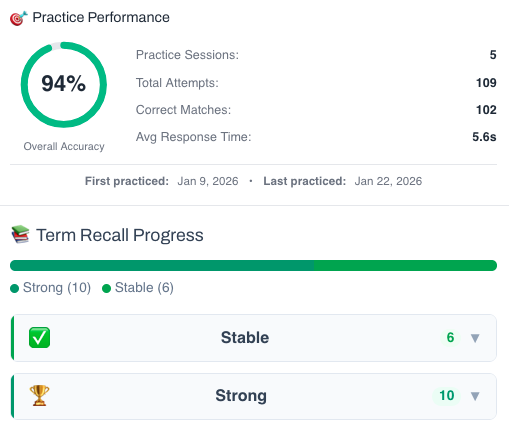
This isn’t a simple quiz — it’s a fully tracked learning system. You build knowledge through recognition, then recall, and your progress feeds directly into the Integrated Practice Bar (Writing tasks, AI Chat, and more).
- Practice sessions, accuracy, and response-time tracking
- Term strength levels (Learning → Stable → Strong)
- Personal progress history for each unit
This feature is available to YSP members.
Explore Membership BenefitsMember-Exclusive Practice Bar
Access a wide range of integrated practice for this unit — from Vocabulary and Grammar activities to AI-curated Writing tasks and Thematic Chat practice.
This feature is available to YSP members.
Explore Membership Benefits🎮 Practice Games
Sentence Scrambler
At the Hair Dressers – Sentence Scramble
Member-Exclusive Sentence Builder
Reconstruct scrambled sentences to practice word order and develop your grammar intuition.
This feature is available to YSP members.
Explore Membership Benefits