Get 101: Mastering One of English’s Most Versatile Verbs
Core PathWay
1 Why ‘Get’ Matters: Your Gateway to Natural English
If you want to sound natural in English, you need to make friends with get. Native speakers use this versatile verb constantly – in fact, it’s one of the top 20 most frequent words in spoken English. Why? Because get can replace dozens of more formal verbs, making your speech flow more smoothly and sound less like a textbook.
By the end of this lesson, you’ll understand why native speakers say ‘I need to get going’ instead of ‘I need to depart,’ and ‘Can you get me that file?’ instead of ‘Could you obtain that file for me?’ You’ll learn the core patterns that unlock hundreds of natural expressions, from making requests to describing changes and experiences.
The beauty of get is its flexibility. In informal register – the everyday language you use with colleagues, friends, and in casual professional settings – get does the heavy lifting. Instead of memorizing separate verbs like ‘receive,’ ‘become,’ ‘understand,’ and ‘persuade,’ you can use get in different patterns to express all these meanings. This isn’t lazy English; it’s how the language actually works in real communication. Understanding get patterns will help you follow conversations more easily, respond more naturally, and express yourself with the fluency of a confident speaker.
Key Terms
💬 Dialogue 1: Office Project Planning
Two colleagues discussing how to start a new project
2 Core Patterns: How ‘Get’ Actually Works
Let’s explore the patterns that make get so powerful. First, the causative structure – this is when you cause something to happen or persuade someone to do something. The pattern get something done means you arrange for someone else to do a task: ‘I need to get my laptop repaired’ (someone else will repair it). The pattern get someone to do something means you persuade or ask them: ‘Can you get Tom to call me?’ Notice how natural this sounds compared to ‘Can you persuade Tom to telephone me?’
Second, get + adjective describes changes in state or condition. When you say ‘It’s getting cold,’ you’re describing a change in progress. ‘I got lost’ means you became lost. This pattern is everywhere: get tired, get excited, get frustrated, get married. It’s more dynamic than using ‘become’ and feels more immediate.
Third, get often means obtaining an opportunity or permission. ‘I finally got a chance to meet her’ means you obtained the opportunity. ‘Did you get permission to leave early?’ is much more natural than ‘Did you obtain authorization?’
Here’s a key tip: ✓ In professional settings, get is perfectly acceptable in speech and internal emails, but for formal reports or external communication, consider alternatives like ‘receive,’ ‘obtain,’ or ‘arrange.’ However, certain get expressions like ‘get in touch’ or ‘get back to you’ are standard even in business writing because they’re established professional phrases.
Finally, get + past participle creates a passive meaning: ‘The project got delayed’ (someone or something delayed it). This is slightly less formal than ‘was delayed’ but very common in spoken English and perfectly professional in most contexts.
Key Terms
💬 Dialogue 2: Team Meeting Discussion
Colleagues organizing a project meeting and delegating tasks
3 Your ‘Get’ Toolkit: Phrases and Patterns to Use Today
Here are the most useful get expressions you can start using immediately. For starting actions, try these sentence starters: ‘Let’s get started with…’, ‘I should get going soon because…’, ‘We need to get moving on this project,’ ‘Can we get down to business?’ These are perfect for meetings, calls, or any situation where you want to begin something.
For communication and contact: ‘I’ll get in touch with you tomorrow,’ ‘Let me get back to you on that,’ ‘Did you manage to get hold of Sarah?’ (meaning contact or reach someone), ‘I couldn’t get through to the office’ (meaning connect by phone).
For understanding and learning: ‘Get the point‘ (understand the main idea), ‘Get the hang of‘ something (learn how to do it), ‘I don’t get what you mean’ (don’t understand). These are incredibly common in workplace conversations.
For actions and solutions: ‘Get rid of‘ (remove or throw away), ‘Let’s get this sorted‘ (resolve a problem), ‘Get a move on‘ (hurry up – casual but used even in professional settings when you know people well).
Mini-Dialogue 1: Office Conversation
Alex: Did you get a chance to look at the proposal?
Jordan: Not yet, but I’ll get to it this afternoon.
Alex: Great. Can you get back to me before 5?
Jordan: Sure, I’ll get in touch as soon as I’ve finished.
Mini-Dialogue 2: Project Discussion
Sam: We really need to get started on the Miller project.
Casey: I know. Should we get everyone together for a meeting?
Sam: Yes, can you get Tom to send out a calendar invite?
Casey: No problem. I’ll get that done right away.
Notice how natural and efficient these conversations sound. The speakers aren’t reaching for fancy vocabulary – they’re using get patterns to communicate clearly and professionally.
Key Terms
4 Recap: Making ‘Get’ Work for You
You’ve discovered why get is essential for natural English. Remember these key patterns: get something done for arranging services, get someone to do something for requests and persuasion, and get + adjective for describing changes. These three patterns alone will transform how you express yourself.
The phrases you’ve learned – get started, get in touch, get back to someone, get the hang of something – are professional standards. You’ll hear them in meetings, emails, and everyday workplace conversations. They’re not too casual; they’re exactly right for most business communication.
Next time you speak or write, try this quick checklist:
You’re not simplifying your English by using get – you’re making it more natural, fluent, and professional. That’s the real skill.
Member-Exclusive Practice Bar
Access a wide range of integrated practice for this unit — from Vocabulary and Grammar activities to AI-curated Writing tasks and Thematic Chat practice.
This feature is available to YSP members.
Explore Membership BenefitsMember-Exclusive Vocabulary Review & Acquisition System
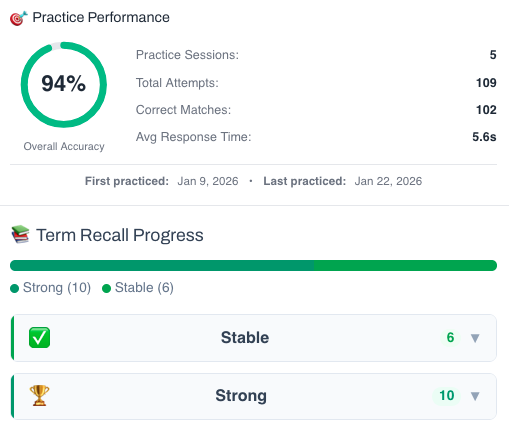
This isn’t a simple quiz — it’s a fully tracked learning system. You build knowledge through recognition, then recall, and your progress feeds directly into the Integrated Practice Bar (Writing tasks, AI Chat, and more).
- Practice sessions, accuracy, and response-time tracking
- Term strength levels (Learning → Stable → Strong)
- Personal progress history for each unit
This feature is available to YSP members.
Explore Membership Benefits🎮 Practice Games
Sentence Scrambler
Get 101 – Sentence Scramble
Member-Exclusive Sentence Builder
Reconstruct scrambled sentences to practice word order and develop your grammar intuition.
This feature is available to YSP members.
Explore Membership Benefits