My Unusual Summer Holidays — Talking About Memorable and Out-of-the-Ordinary Experiences
Core PathWay
1 What Makes a Holiday Unusual?
Think about your last summer holiday. Was it normal — beach, hotel, sunshine? Or was it something different?
Some people love holidays that are out of the ordinary. They don’t want a typical trip. They want something they will remember forever.
In this section, we look at words and phrases for talking about unusual holiday experiences. These are words that English speakers use a lot in informal conversation.
Here are some key ideas:
• A holiday can be unusual because of WHERE you go. Maybe you went somewhere very far from cities and people — somewhere remote, or in the middle of nowhere.
• A holiday can be unusual because of WHAT HAPPENED. Maybe something went wrong, or you stumbled upon something amazing by accident.
• A holiday can be unusual because of HOW you travelled. Maybe you went backpacking with just a small bag, or you decided to go somewhere without planning — a spontaneous trip.
• A holiday can be unusual because of HOW IT FELT. Maybe it was breathtaking — so beautiful it surprised you. Or maybe it was bizarre — very strange and hard to explain.
All of these ideas use the vocabulary in this lesson. Let’s explore them through a story and some conversations.
2 Story: Maya's Unusual Summer
Read the story. The bold words are the key vocabulary. Don’t worry about every word — just enjoy the story first.
—
—
Key Terms
3 Key Vocabulary: How These Words Work Together
Now let’s look more closely at the words. This section shows you how to USE them — not just what they mean.
—
WORD PARTNERSHIPS (Collocations)
Some words always travel together. Here are the most important ones from the story:
• make the most of + a situation / an opportunity / your time
→ ‘We made the most of the bad weather and visited a museum.’
→ You use this when something is not perfect, but you try to enjoy it anyway.
• run out of + money / time / food / energy
→ ‘We ran out of food on the second day.’
→ This means you had something and now you have none left.
• end up + -ing verb / in + place
→ ‘We ended up sleeping on the beach.’ / ‘I ended up in a tiny village.’
→ This means the final result was not what you planned.
• come across + a place / a person / something interesting
→ ‘We came across a beautiful waterfall.’
→ This means you found it by accident.
• go wrong — this verb has no object. You say ‘things went wrong’ or ‘something went wrong.’
→ ‘Everything went wrong on the first day, but it was actually fun.’
—
ADJECTIVES THAT DESCRIBE UNUSUAL HOLIDAYS
These adjectives are very useful for telling stories:
• remote — describes a place: ‘a remote village’, ‘a remote island’
• spontaneous — describes a decision or a person: ‘a spontaneous trip’, ‘a spontaneous person’
• breathtaking — describes a view or an experience: ‘a breathtaking view’, ‘a breathtaking moment’
• bizarre — describes a situation or an experience: ‘a bizarre experience’, ‘a bizarre situation’
• adventurous — describes a person or a choice: ‘an adventurous traveller’, ‘an adventurous decision’
—
FIXED PHRASES
Some phrases are fixed — they don’t change. Learn them as a whole unit:
• off the beaten track — always this word order
• in the middle of nowhere — always this word order
• once-in-a-lifetime — usually before a noun: ‘a once-in-a-lifetime experience’
• get away from it all — ‘all’ is always at the end
• out of the ordinary — always this order
Key Terms
4 Dialogues: Talking About Unusual Holidays
Here are two conversations. These are the kind of conversations you might have with friends. Read them and notice how the vocabulary is used in a natural, informal way.
💬 Dialogue 1 — Back from the Holiday: What Happened?
Maya meets her friend Jake at a café. Jake wants to know about Maya's unusual summer trip. This is an informal conversation between two friends.
💬 back_from_the_holiday
Jake: “Maya! I feel like I haven't seen you in ages. So, how was your summer? Did you end up going somewhere, or did you just stay home?”
Maya: “Yeah, I did end up going somewhere, but it was completely out of the ordinary — nothing like my usual holidays. I went backpacking, totally spontaneous. No hotels booked, no itinerary, nothing.”
Jake: “Wait, seriously? That doesn't sound like you at all! Where did you actually go? Did you have any idea where you were heading?”
Maya: “Honestly, not really. I got on a bus heading south and just… went. I ended up in this tiny village, completely in the middle of nowhere. No tourist shops, no Wi-Fi — just mountains and fields. And the only reason I stopped there was because the bus broke down on the road outside the village”
Jake: “The bus broke down? That sounds like a nightmare! Were you scared? What did you do — just sit there and wait?”
Maya: “I was a bit scared at first, yeah. But then I thought — okay, I'm here, this is happening, so I might as well make the most of it. And I'm so glad I did. Jake, the views were absolutely breathtaking. The mountains behind the village, the light in the evening — I just stood there with my mouth open. The people were so warm too. A local family invited me for dinner on my first night.”
Jake: “That actually sounds amazing. Did anything else go wrong while you were there, or was it smooth sailing after that?”
Maya: “Well, one more thing went wrong, actually. I ran out of money on the very last day — I hadn't planned for the extra nights, obviously. So I had to rough it in an old barn. No bed, no shower, just a sleeping bag and some very confused chickens. But honestly? I'd do it all again. It was a once-in-a-lifetime experience. You can't plan something like that — it just happens.”
💬 Dialogue 2 — Sofia's Story: A Remote Island
Jake asks Sofia about her summer. Sofia went to a remote island and had her own unusual experience. This is a casual three-way conversation at the same café.
💬 sofias_story
Jake: “So Sofia, what about you? Did you manage to get away from it all this summer, or were you stuck in the city like last year?”
Sofia: “I did, actually — and properly this time. I went to this really remote island. I mean truly remote — no big hotels, no tourist buses, barely any roads. Most people have never even heard of it. It's completely off the beaten track.”
Maya: “Oh, that sounds incredible. But how did you even come across a place like that? I wouldn't know where to start looking.””
Sofia: “A friend told me about it — she'd been there years ago and always talked about it. I wasn't sure at first, to be honest. It sounded quite adventurous for me. I'm usually more of a hotel-and-beach person. But something about it just felt right, so I booked a ticket and went.”
Jake: “And was it as good as you hoped? Or did the reality not quite match the idea in your head?”
Sofia: “Even better, honestly. The views were absolutely breathtaking — I kept stopping just to look at the sea. And the local people were so welcoming. Nothing like the usual tourist places where everyone's trying to sell you something. It felt real, you know? Like I was actually living there for a week, not just visiting.”
Maya: “Did anything go wrong though? It sounds almost too perfect. Was there a moment where things didn't go to plan?”
Sofia: “Ha — yes, actually. The ferry broke down on the day we were supposed to leave, so we were stuck on the island for an extra day. At first everyone was a bit stressed about it. But then we just decided to make the most of it. We found this little beach that wasn't on any map, had a picnic, watched the sunset. It ended up being the best day of the whole trip. Sometimes things going wrong is actually the best thing that can happen.”
5 Vocabulary in Context: Useful Patterns to Remember
Here are some extra patterns that will help you use this vocabulary more naturally.
—
TELLING A STORY — USEFUL OPENERS
When you start a holiday story in English, you can use these phrases:
• ‘So, last summer I decided to…’
• ‘You won’t believe what happened when I…’
• ‘It was completely out of the ordinary, but…’
• ‘I never planned to end up there, but…’
• ‘It was a totally spontaneous decision — I just…’
—
EXPRESSING SURPRISE
When something unexpected happens, English speakers often say:
• ‘I couldn’t believe it!’
• ‘It was absolutely breathtaking.’
• ‘The whole thing was so bizarre.’
• ‘I had no idea I would come across something like that.’
—
TALKING ABOUT PROBLEMS
Problems are a normal part of unusual holidays! Here is how to talk about them:
• ‘Things went wrong from the start, but…’
• ‘We ran out of money / food / time.’
• ‘The car broke down and we had to…’
• ‘We had to rough it for a few nights.’
—
COMMON MISTAKE — Watch out!
Many learners say: ✗ ‘I ended up to sleep on the beach.’
The correct form is: ✓ ‘I ended up sleeping on the beach.’ — use end up + -ing
Also watch out for: ✗ ‘I came across a beautiful waterfall accidentally.’ — You don’t need ‘accidentally’ because come across already means ‘by accident’.
—
HOW TO SAY IT IN A CONVERSATION
Here is a short, natural exchange using the vocabulary:
A: ‘So how was your summer?’
B: ‘Honestly, it was completely out of the ordinary. I ended up in this tiny remote village — totally off the beaten track. It was bizarre but also kind of breathtaking.’
A: ‘No way! How did you come across it?’
B: ‘My bus broke down! But I made the most of it and it turned into a once-in-a-lifetime experience.’
Member-Exclusive Practice Bar
Access a wide range of integrated practice for this unit — from Vocabulary and Grammar activities to AI-curated Writing tasks and Thematic Chat practice.
This feature is available to YSP members.
Explore Membership BenefitsMember-Exclusive Vocabulary Review & Acquisition System
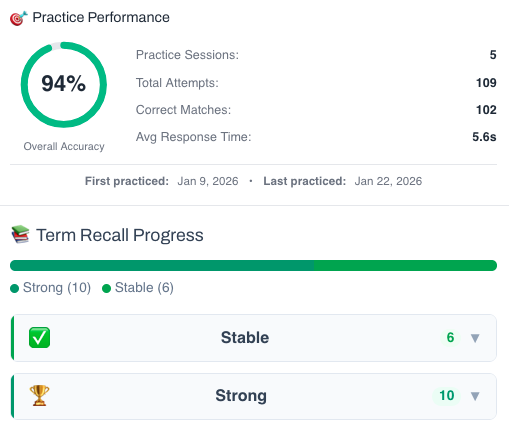
This isn’t a simple quiz — it’s a fully tracked learning system. You build knowledge through recognition, then recall, and your progress feeds directly into the Integrated Practice Bar (Writing tasks, AI Chat, and more).
- Practice sessions, accuracy, and response-time tracking
- Term strength levels (Learning → Stable → Strong)
- Personal progress history for each unit
This feature is available to YSP members.
Explore Membership Benefits🎮 Practice Games
Sentence Scrambler
my unusual summer holidays – Sentence Scramble
Member-Exclusive Sentence Builder
Reconstruct scrambled sentences to practice word order and develop your grammar intuition.
This feature is available to YSP members.
Explore Membership Benefits