Present Perfect for Life Experience: Have You Ever…?
Core PathWay
1 Section 1. Your Life List
Think of your life as a list. On this list, you write every experience you have had — every country you have visited, every film you have seen, every food you have tried. The Present Perfect lets you talk about this list.
In this section, you will listen to a conversation between a student called Paolo and his teacher, Jim. Paolo wants to understand one of the most common uses of the Present Perfect: talking about life experience. Jim explains clearly, with examples. Get ready to listen.
Key Terms
2 Section 2. Jim Explains It All
Paolo has a question about the Present Perfect. Jim is his teacher. Listen to how Jim explains the idea of ‘life experience’ — and notice the examples he uses.
💬 Dialogue 1: Have You Ever Seen Star Wars?
A classroom. Paolo asks Jim about the Present Perfect for life experience.
Paolo: “Jim, I still don't really understand when to use the Present Perfect. Can you explain it again — the part about life experience?”
Jim: “Of course. It is one of the most common uses. Here is a simple way to think about it. Imagine your life is a CV — a list of everything you have ever done. The Present Perfect covers your whole life. It goes from the day you were born up to right now, today.”
Paolo: “So it is like… my whole life, from the beginning until now?”
Jim: “Exactly right. So when I ask you, 'Have you ever seen Star Wars?' — I am not asking about last Tuesday. I am asking about your whole life. Has that experience appeared on your list? For example, I can say: 'I have seen Star Wars three times.' That is on my list. Or I can say: 'I have never read War and Peace.' That is not on my list — not once, in my whole life.”
Paolo: “OK! And what about 'I haven't ever'? Is that the same as 'never'?”
Jim: “Good question. 'I have never seen it' and 'I haven't ever seen it' mean the same thing. But be careful — do not use both together. Do not say 'I haven't never seen it.' That is a double negative. In English, two negatives in one sentence is wrong. Use one or the other, not both.”
Paolo: “Got it. So I can say 'I have never seen it' or 'I haven't ever seen it' — but not both together. And can I say how many times I have done something?”
Jim: “Yes! We count experiences all the time. You can say: 'I have been to London once,' or 'I have visited Japan twice,' or 'I have watched that film three times.' After three, you just say the number: four times, five times, and so on. Once and twice are the only special words.”
Paolo: “That is useful. But what if someone asks me when I went to London? Can I say 'I have been to London in 2019'?”
Jim: “No — and this is very important. With the Present Perfect, you cannot say when. You just say the experience happened. So you say: 'I have been to London.' That is enough. But if someone asks for details — 'When did you go?' — then you switch to the Past Simple. You say: 'I went in 2019' or 'I stayed for a week.' The Present Perfect says the experience is on your list. The Past Simple gives the details.”
Paolo: “That is really clear now. So Present Perfect means the experience is on my list. Past Simple gives the details — when and how.”
Jim: “Perfect summary, Paolo. You have got it. From born to now — that is your list. The Present Perfect checks what is on it. The Past Simple fills in the story.”
Key Terms
3 Section 3. Grammar Guide: Present Perfect for Life Experience
Now let’s look at the grammar clearly. The Present Perfect for life experience uses a simple pattern. You use it to say what is — or is not — on your life list. Here is everything you need to know.
Focus
- Use have/has + past participle to talk about life experiences
- Use ever in questions: Have you ever…?
- Use never in negative statements: I have never…
- Use haven't ever as an alternative negative: I haven't ever…
- Do NOT use both never and haven't together — that is a double negative
- Count experiences with once, twice, three times, etc.
- Do NOT say when the experience happened — use Present Perfect only for the fact that it happened
- Switch to Past Simple to give details about when, where, or how
Rules
- FORM: have/has + past participle | I have seen / She has visited / They have eaten
- QUESTION: Have you ever + past participle? | Have you ever tried sushi?
- POSITIVE: Subject + have/has + past participle | I have been to Paris twice.
- NEGATIVE (never): Subject + have/has + never + past participle | I have never seen Star Wars.
- NEGATIVE (haven't ever): Subject + haven't/hasn't + ever + past participle | I haven't ever read War and Peace.
- COUNTING: once / twice / three times / four times | I have visited Tokyo three times.
- NO TIME EXPRESSIONS: Do NOT add last year, in 2019, yesterday — these go with Past Simple only.
- FOLLOW-UP: Use Past Simple for details | 'I have been to Rome.' → 'When did you go?' → 'I went in 2022.'
Examples
- Have you ever seen Star Wars? — Yes, I have. / No, I haven't.
- I have never eaten octopus. / I haven't ever eaten octopus.
- She has visited New York twice. — When did she go? — She went last summer.
Common mistake
4 Section 4. Drilling with Jim
Jim is going to ask Paolo a series of ‘Have you ever…?’ questions. Watch how Paolo answers — and notice what happens when Jim asks for more details. Also notice when Jim gently corrects a mistake.
💬 Dialogue 2: Have You Ever…? — A Drilling Conversation
The same classroom. Jim drills Paolo with experience questions and follows up with Past Simple detail questions.
Jim: “OK Paolo, let's practise. I will ask you questions about your life. Answer with the Present Perfect first. Then I will ask for details, and you switch to Past Simple. Ready? Here we go. Have you ever seen Star Wars?”
Paolo: “No, I haven't. I have never seen it.”
Jim: “Good — two correct negative forms. Now a new question. Have you ever travelled outside your country?”
Paolo: “Yes, I have. I have been to France and Spain.”
Jim: “Great! Now I want the details. When did you go to France?”
Paolo: “I went in 2021. I stayed in Paris for five days.”
Jim: “Perfect — you switched to Past Simple for the details. Exactly right. Now — have you ever eaten Japanese food?”
Paolo: “Yes, I have eaten sushi last month. It was really good!”
Jim: “Careful! You said 'last month' — that is a finished time. Last month is over. You cannot use a finished time with the Present Perfect. Just say: 'I have eaten sushi.' No time word. Then, if I ask when, you switch to Past Simple. Try again.”
Paolo: “OK — I have eaten sushi. It was delicious!”
Jim: “Much better. Now — when did you eat it?”
Paolo: “I ate it last month at a restaurant near my house.”
Jim: “Excellent. Do you see the pattern? Present Perfect for the experience — no time word. Past Simple for the details — time word is fine there. One more. Have you ever read a book in English?”
Paolo: “Yes, I have. I have read two books in English. I read the first one at school, and I read the second one last year.”
Jim: “Brilliant. That is exactly the pattern. Present Perfect — 'I have read two books.' Past Simple — 'I read the first one at school.' You moved between the two tenses naturally. That is the goal. Well done, Paolo.”
Key Terms
5 Section 5. Superlative Experiences
There is a very natural connection between the Present Perfect and superlative adjectives. A superlative adjective describes the best, the worst, the most exciting, the longest — the extreme point of something.
When you want to describe an experience as the top of your life list, you use the Present Perfect with a superlative. Look at these examples:
— ‘It is the best film I have ever seen.’
— ‘That was the most delicious food I have ever eaten.’
— ‘She is the kindest person I have ever met.’
Notice the pattern: superlative adjective + I have ever + past participle. The word ever here means ‘at any point in my whole life.’ You are saying this experience is number one on your life list.
You can also use this pattern to talk about negative extremes:
— ‘It was the worst journey I have ever made.’
— ‘That is the most boring book I have ever read.’
This is a very useful pattern for real conversation. You can find a full lesson on superlative adjectives in a dedicated module.
Key Terms
6 Section 6. Write About Your Life List
Now it’s your turn. Write about your own life experiences — the things you have done, and the things you have never done. Use the Present Perfect for your experiences, and the Past Simple when you give details.
7 Recap: What You Have Learned
Well done. Let’s look at what you have covered on this page.
The Present Perfect for life experience covers the time from your birth to today. Use it to say what is — or is not — on your life list. Use ever in questions and never in negative statements. Count your experiences with once, twice, three times.
Remember: do not say when with the Present Perfect. Use the Past Simple for details about time, place, and how it was.
And when an experience is the best — or worst — of your life, combine the Present Perfect with a superlative adjective: ‘It is the best film I have ever seen.’
You now have a powerful tool for talking about yourself and asking about other people’s experiences. Use it.
Member-Exclusive Practice Bar
Access a wide range of integrated practice for this unit — from Vocabulary and Grammar activities to AI-curated Writing tasks and Thematic Chat practice.
This feature is available to YSP members.
Explore Membership BenefitsMember-Exclusive Vocabulary Review & Acquisition System
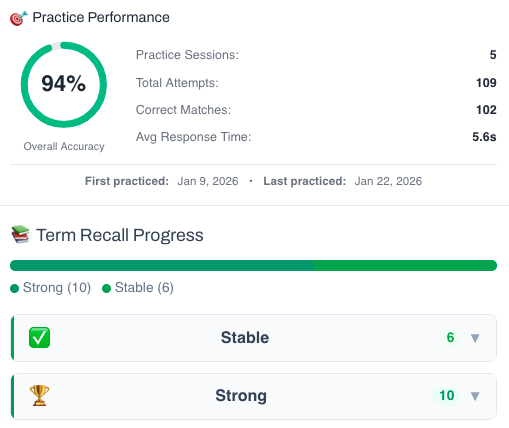
This isn’t a simple quiz — it’s a fully tracked learning system. You build knowledge through recognition, then recall, and your progress feeds directly into the Integrated Practice Bar (Writing tasks, AI Chat, and more).
- Practice sessions, accuracy, and response-time tracking
- Term strength levels (Learning → Stable → Strong)
- Personal progress history for each unit
This feature is available to YSP members.
Explore Membership Benefits🎮 Practice Games
Sentence Scrambler
I’ve never seen Star Wars – Sentence Scramble
Member-Exclusive Sentence Builder
Reconstruct scrambled sentences to practice word order and develop your grammar intuition.
This feature is available to YSP members.
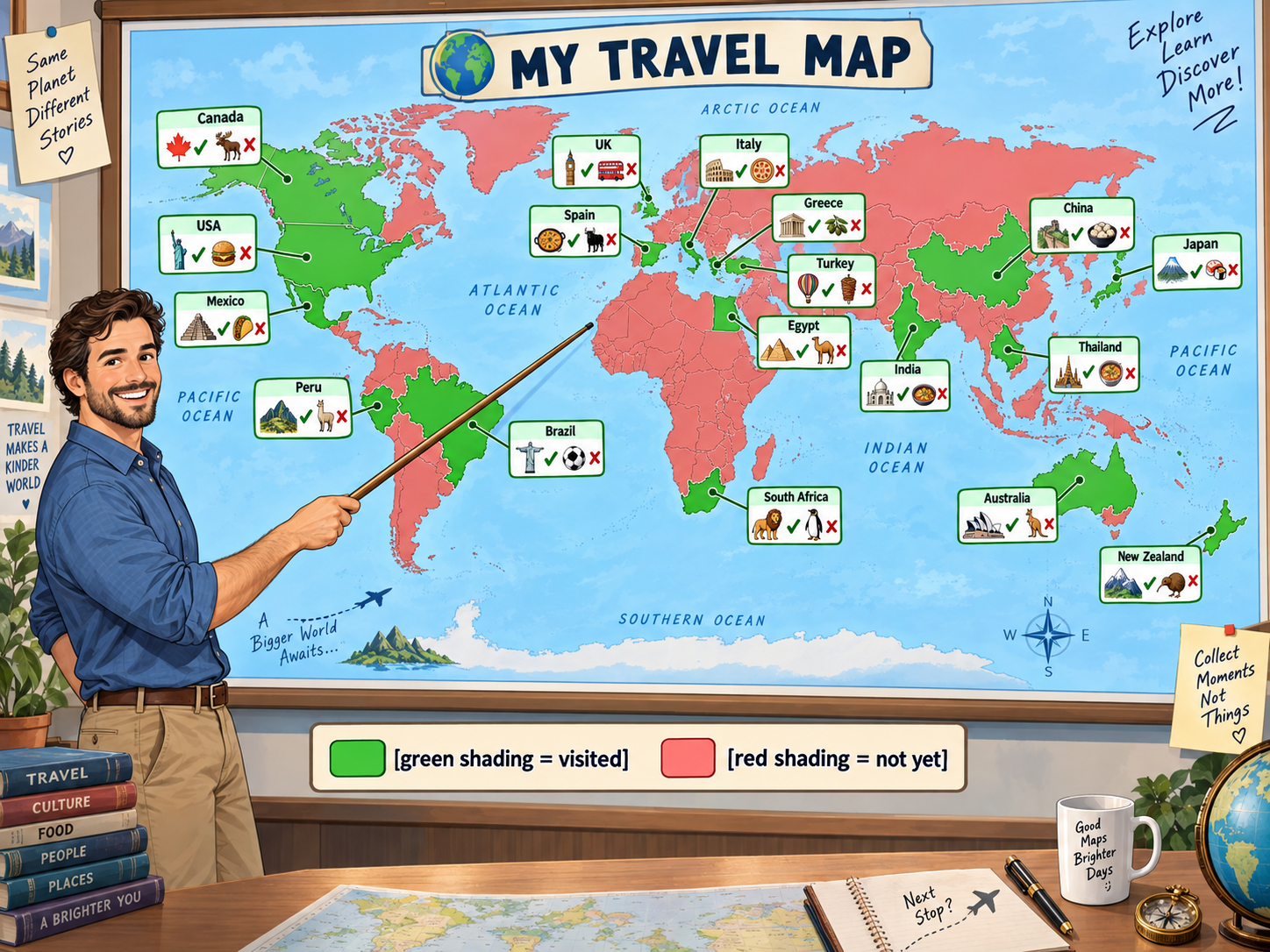
Explore Membership BenefitsSpeaking Task Extension: Your trainer will ask you about this image
🔗 Explore Linked Content
Dialogues
Extra listening practice on the Hub's grammar or vocabulary points