Just, Already, Yet & Still — Powerful Signals
Core PathWay
1 Section 1. Four Words That Do a Lot of Work
Welcome to Part 5. So far in this series, you have learned what the Present Perfect means — the idea that a finished action is still relevant now. You have seen how it works for life experience and for sharing news. You have also studied open time signals like recently and so far.
Now we go deeper. Four small words — just, already, yet, and still — are used constantly with the Present Perfect. Each one sends a different signal about timing and completion. Here is what each one means.
Just means a very short time ago — the action is extremely recent. Think of it as the freshest possible news.
> I’ve just received the report. (It arrived moments ago.)
Already means before now or sooner than expected — the action is done, and perhaps the listener is surprised.
> She’s already submitted the proposal. (We didn’t expect it this soon.)
Yet is used in two situations. In questions, it asks has something happened by now? In negatives, it says the action hasn’t happened, but we expect it will.
> Have you booked the hotel yet? (I’m asking if it’s done.)
> We haven’t confirmed the budget yet. (We will, but not so far.)
Still (with the Present Perfect) is the most emphatic of the four. It means the same as not yet, but it carries extra weight — it suggests that time has passed, and the speaker expected the action to be done by now. It signals mild frustration or surprise that something remains incomplete.
> She still hasn’t replied to my email. (I sent it days ago. I expected a reply. Nothing.)
Keep these four signals in mind. The dialogues and exercises ahead will show you exactly how they work in real conversation.
Key Terms
2 Section 2. Project Status Meeting — Airport Terminal Redevelopment
Listen to how a project manager uses these four signal words to check progress with her team. Notice how just, already, yet, and still tell you instantly whether a task is done, new, or overdue.
💬 Dialogue 1: Terminal 4 Redevelopment — Weekly Status Check
A weekly project meeting. The project manager, Dana, is checking progress with three team members: Marcus (construction lead), Priya (procurement), and Joel (stakeholder liaison). The project is the redevelopment of an airport terminal.
Dana: “Right, let's get started. Marcus, have the contractors finished the structural survey yet?”
Marcus: “Yes — they've just completed it, actually. We only got the final report about an hour ago.”
Dana: “Good. Priya, what about the equipment orders? Have those gone through yet?”
Priya: “Most of them, yes. We've already placed orders for the check-in desks and the security equipment. But we still haven't received confirmation from the gate furniture supplier — I've chased them twice this week.”
Dana: “Still no confirmation? That's a concern. Joel, has the airport authority approved the revised floor plan yet?”
Joel: “I've just heard back from them, actually — they've already signed off on Phase One. Phase Two is still under review, but they've promised a decision by Friday.”
Dana: “All right. So Phase One approval is done, the structural survey is done, and most orders are placed. Priya, I need that supplier confirmation before the end of the day — we still haven't locked in the full equipment schedule, and we can't move forward without it.”
Priya: “Understood. I'll escalate it to their account manager now. I haven't tried that contact yet.”
Dana: “Good. Marcus, have the site safety inspectors been booked yet?”
Marcus: “Yes — I've already arranged that. They're scheduled for next Tuesday.”
Dana: “Perfect. Priya, once you have that supplier confirmation, send it straight to me. Has anything else come up this week that we haven't dealt with yet?”
Priya: “Nothing major. I've already sent the updated budget summary to the finance team, and I've just scheduled a call with the logistics coordinator for tomorrow morning. I think we're on track.”
Key Terms
3 Section 3. Grammar Guide — Placement and Meaning
The four signal words are easy to understand. The tricky part is knowing where to put them in a sentence. Each word has a fixed position. Put it in the wrong place and the sentence sounds wrong — even if the meaning is clear.
Here is a simple guide to each word: what it means, where it goes, and what to watch out for.
Focus
- JUST — position: between 'have/has' and the past participle. Meaning: the action happened a very short time ago.
- ALREADY — position: between 'have/has' and the past participle in statements. Meaning: the action is done, often sooner than expected. In questions, 'already' can move to the end to express surprise: 'Have you finished already?'
- YET — position: always at the END of the sentence. Used in QUESTIONS and NEGATIVES only. Never in affirmative statements. Meaning: asking if something has happened by now (question) or saying it hasn't happened but is expected (negative).
- STILL — position: BEFORE 'have/has' in negative sentences: 'She still hasn't replied.' Never use 'still' with a positive Present Perfect. Meaning: stronger version of 'not yet' — time has passed and the action is still incomplete.
Rules
- JUST: Subject + have/has + JUST + past participle. Example pattern: 'I have just finished.' Do NOT place 'just' at the end: ✗ 'I have finished just.'
- ALREADY: Subject + have/has + ALREADY + past participle. Example pattern: 'They have already left.' Do NOT use 'already' in negative sentences: ✗ 'I haven't already done it.' Use 'yet' instead.
- YET: Used in questions — Subject + have/has + past participle + YET? Example: 'Have you eaten yet?' Used in negatives — Subject + haven't/hasn't + past participle + YET. Example: 'I haven't eaten yet.' Do NOT use 'yet' in affirmative sentences: ✗ 'I have yet finished.'
- STILL (negative): Subject + STILL + haven't/hasn't + past participle. Example: 'He still hasn't called.' Do NOT use the pattern 'He doesn't still finish' — this is wrong. The correct negative pattern is always: still + haven't/hasn't.
Examples
- ✅ JUST: 'The plane has just landed.' / 'She's just sent the email.' — The action is very recent. 'Just' sits between 'has' and the past participle.
- ✅ ALREADY / YET: 'We've already checked in.' / 'Have you collected your boarding pass yet?' / 'I haven't gone through security yet.' — 'Already' is in the middle; 'yet' is always at the end.
- ✅ STILL: 'They still haven't announced the gate.' — 'Still' comes before 'haven't'. This is stronger than 'They haven't announced the gate yet' — it adds the feeling that the wait is too long.
Common mistake
4 Section 4. Planning a Holiday — Have We Sorted Everything Yet?
Three friends — Sam, Jordan, and Alex — are planning a group holiday. Each person has different tasks to complete. Some tasks are done. Some are not. Listen to how they use the four signal words to update each other.
💬 Dialogue 2: Holiday Planning Chat
An evening video call between three friends planning a two-week holiday together. Sam is researching flights, Jordan is looking into hotels, and Alex is handling car hire. They are comparing progress and chasing up suppliers who have not replied.
Sam: “Right, so I've just found some really good flight deals — there are two airlines with direct routes and the prices are much better than last week.”
Jordan: “Oh, that's quick! Have you already sent them to the group chat?”
Sam: “Not yet — I wanted to check with you both first. Alex, have you heard back from the car hire companies yet?”
Alex: “Two of them have already replied. One has a great deal for the full two weeks. But the third company still hasn't responded — and I contacted them four days ago.”
Jordan: “Four days? I'd chase them again. Anyway, I've already shortlisted three hotels. One looks perfect — it's right in the city centre and it's already got great reviews for this time of year.”
Sam: “Have you contacted any of them yet to check availability?”
Jordan: “I've just sent enquiry emails to all three — literally ten minutes ago. I haven't had any replies yet, obviously.”
Alex: “No problem. So we've already got flight options and two car hire quotes. We still haven't got hotel confirmation or the third car hire quote. Are we on track?”
Sam: “I think so. Let's set a deadline — if we still haven't made a decision by Sunday, we book whatever's available.”
Jordan: “Agreed. I've already checked — prices go up after the weekend, so we need to move fast.”
Sam: “Alex, have you already ruled out the third car hire company, or are you still waiting for them?”
Alex: “I'm still waiting, but I'll give them until tomorrow morning. If they still haven't replied by then, I'll just go with the company that already sent us the good deal. That seems like the safest option.”
Key Terms
5 Section 5. Writing Task — Project Progress Report
Now practise using the four signal words yourself. Read the project status information below, then write a short progress report using just, already, yet, and still.
PROJECT STATUS — City Library Construction:
• Architect's plans — APPROVED this morning ✅
• Building permits — APPROVED two weeks ago ✅
• Construction team — HIRED last week ✅
• Equipment delivery — NOT ARRIVED (expected last Friday) ❌
• Site safety inspection — NOT BOOKED yet ❌
• Community consultation meeting — HELD yesterday ✅
• Final budget sign-off — WAITING for finance director (sent request 10 days ago) ❌
Start your report with this sentence: 'I'm pleased to report that we have made good progress on the City Library project this week.'
6 Section 6. Deep Dive — The Full Story on 'Still'
Of the four signal words, still is the one that learners find most difficult. This is because it does more than just describe a situation — it carries a feeling. It tells the listener: this was already a problem before, and it is STILL a problem now. Nothing has changed, and that is the point.
Understanding this extra layer of meaning will help you use still precisely — and notice when other speakers use it to signal frustration, urgency, or disbelief.
still (with Present Perfect negative)
- Context — Day 1: 'Have you heard from the supplier yet?' / 'No, not yet — I'll follow up.' | Context — Day 5, same topic: 'She still hasn't replied to my email. I've sent three messages now.' The word 'still' signals that this is not a new problem — it is a continuing one.
- In a meeting: 'We discussed the budget issue last week. I'm sorry to say we still haven't reached a decision. The finance team still hasn't provided the figures we need.' Here, 'still' tells everyone in the room that this problem was known before and remains unresolved.
7 Recap — What You Have Covered
In this section, you have studied four signal words that work with the Present Perfect: just, already, yet, and still. Here is a quick summary to take away.
Just = very recently. It goes between have/has and the past participle. Use it for fresh news or actions completed moments ago.
Already = done, possibly sooner than expected. It also goes between have/has and the past participle. Use it in affirmative sentences.
Yet = by now? / not by now. It always goes at the END of questions and negative sentences. Never use it in affirmative statements.
Still = the strongest of the four. Use it in negative sentences with the pattern still + haven’t/hasn’t. It says: this was a problem before, and it remains a problem now. It carries more weight than not yet.
You have seen all four words in a professional project meeting, a casual holiday planning conversation, and a writing task. The key to using them well is placement and polarity — knowing which sentence type each word belongs in. Keep practising, and these four signals will become a natural part of how you communicate in English.
Member-Exclusive Practice Bar
Access a wide range of integrated practice for this unit — from Vocabulary and Grammar activities to AI-curated Writing tasks and Thematic Chat practice.
This feature is available to YSP members.
Explore Membership BenefitsMember-Exclusive Vocabulary Review & Acquisition System
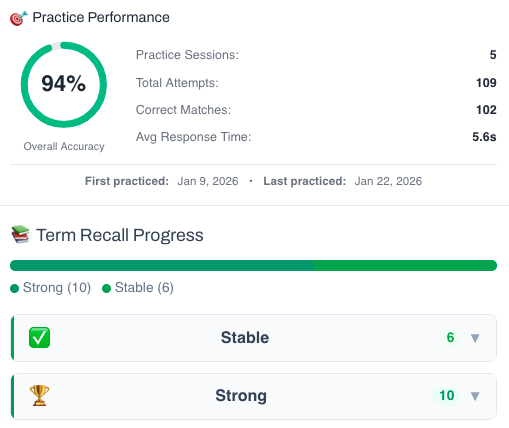
This isn’t a simple quiz — it’s a fully tracked learning system. You build knowledge through recognition, then recall, and your progress feeds directly into the Integrated Practice Bar (Writing tasks, AI Chat, and more).
- Practice sessions, accuracy, and response-time tracking
- Term strength levels (Learning → Stable → Strong)
- Personal progress history for each unit
This feature is available to YSP members.
Explore Membership Benefits🎮 Practice Games
Sentence Scrambler
Just, Already, Yet & Still – Powerful Signals – Sentence Scramble
Member-Exclusive Sentence Builder
Reconstruct scrambled sentences to practice word order and develop your grammar intuition.
This feature is available to YSP members.
Explore Membership BenefitsWhich sentence uses “just” with the present perfect correctly?
Complete the sentence: “She _____ already _____ three cups of coffee this morning.”
Which sentence correctly uses “yet” with the present perfect?
What does “still” express in this sentence: “They still haven’t replied to my email”?
Which sentence contains an error with “already”?
Choose the correct position for “just” in this sentence: “The train _____ left _____.”
Why is the present perfect used in “I haven’t finished yet” instead of past simple?
What is wrong with this sentence: “He has still not arrived yet”?
Which sentence best completes this conversation? A: “Would you like some lunch?” B: “_____”
Where does “yet” go in a present perfect negative sentence?
Which sentence uses “still” correctly with the present perfect?
In this sentence, what does “just” indicate: “I’ve just heard the news”?
Choose the corrected version of this sentence: “Have you yet finished your homework?”
Which situation would you use “I’ve already done it” as a response?
What is the difference between “He hasn’t arrived yet” and “He still hasn’t arrived”?
🔗 Explore Linked Content
Practice
Extra tasks to practice what you learned