What Do You Do? — The Verb DO and Present Simple
Core PathWay
1 Section 1. DO — One Word, Two Jobs
The word DO is very important. It has two jobs.
Job 1: DO is a main verb. It means ‘activity’ or ‘role’. Look at these examples.
What do birds do? They fly. They sing. They build nests.
What do firefighters do? They fight fires. They save people.
What do teachers do? They explain. They help students. They give lessons.
In these sentences, DO asks about the role or activity of someone or something. The answer tells you what that person or thing does — in general, every day, usually, always.
This is important: present simple is not about one moment. It is not happening right now. It is about what is true in general. Birds fly — not just today. Firefighters fight fires — this is their job, every day.
Job 2: DO is also an auxiliary verb. This means it helps to build a question. You will see this in Section 2.
But first — think about you.
So, what do you do?
2 Section 2. Grammar Overview — What Do You Do?
The question ‘What do you do?’ is very common. You hear it every day. It asks about a person’s job or role. It asks about an object’s function.
Notice something interesting: DO appears twice in this question. The first DO is the auxiliary — it builds the question. The second DO is the main verb — it asks about the activity. In the answer, the main verb DO often disappears. You answer with a different verb.
Focus
- Use DO with I / you / we / they to build questions.
- Use DOES with he / she / it to build questions.
- The main verb in the answer does NOT need -s or -es — it is a base form.
- In the answer, the verb DO (activity) is often replaced by a more specific verb.
- The question word WHAT comes first, before do / does.
Rules
- QUESTION FORM: What + do/does + subject + do?
- Use DO for: I, you, we, they — What do you do? What do nurses do?
- Use DOES for: he, she, it — What does she do? What does it do?
- After does, the main verb has NO -s: What does he do? (NOT: What does he does?)
- ANSWER FORM: subject + verb (present simple). The answer does not always use DO.
Examples
- What do you do? — I work in an office. I manage projects.
- What does she do? — She teaches English. She works at a school.
- What does a printer do? — It prints documents. It copies pages.
Common mistake
3 Section 3. What Do They Do? — Jobs and Objects
Look at these questions and answers. Five questions are about jobs. Five questions are about objects.
JOBS — What do they do?
1. What do nurses do?
They care for patients. They give medicine. They work in hospitals.
2. What do teachers do?
They explain new ideas. They give homework. They help students learn.
3. What do engineers do?
They design buildings and machines. They solve problems.
4. What do chefs do?
They cook food. They plan menus. They work in restaurants.
5. What do accountants do?
They manage money. They check numbers. They prepare reports.
OBJECTS — What does it do?
6. What does a printer do?
It prints documents. It makes copies of pages.
7. What does a calculator do?
It calculates numbers. It helps people with maths.
8. What does a projector do?
It shows images on a screen. It is useful in meetings.
9. What does a scanner do?
It scans documents. It makes a digital copy of a paper.
10. What does a router do?
It connects devices to the internet. It sends data between computers.
Key Terms
4 Section 4. A Day in the Life — The Office Worker
Here is a model description. Read it. Notice the verbs and the adverbs of frequency.
—
An office worker works in an office. This is their role. What do they do?
They always start work in the morning. They usually check their emails first. They read messages and write emails to colleagues and clients.
They often attend meetings. In a meeting, they listen, take notes, and share ideas. They sometimes give a presentation — they use a projector to show their work.
During the day, they often make phone calls. They sometimes prepare reports — they write information about their work or their team. They usually check deadlines — they look at dates and plans.
They also sometimes update a spreadsheet. They enter numbers and data. They occasionally organise files — they sort papers and digital documents.
At the end of the day, they usually send a summary email. They sometimes schedule a meeting for the next day.
—
Key office tasks in this description:
| Task | Verb + noun collocation |
|—|—|
| Emails | write emails / check emails / send emails |
| Meetings | attend a meeting / schedule a meeting |
| Reports | prepare a report / write a report |
| Phone | make a phone call |
| Presentations | give a presentation |
| Deadlines | check deadlines |
| Data | update a spreadsheet / enter data |
| Files | organise files |
| Notes | take notes |
| Plans | check a plan / share ideas |
5 Section 5. Writing Task — What Do You Do?
Now it is your turn. Write about your job or your daily activities. Use present simple. Use adverbs of frequency: always, usually, often, sometimes, occasionally.
6 Section 6. Recap — What You Know Now
Well done. You have studied something very useful.
Here is what you know now.
DO has two jobs.
Job 1 — Main verb: DO describes activities and roles. What do nurses do? They care for patients. What does a printer do? It prints documents.
Job 2 — Auxiliary verb: DO builds questions. What do you do? What does she do? What does it do?
Present simple is the right tense for roles and activities. It is not about one moment. It is about what is true in general — every day, usually, always.
Remember the question form:
– What + do + I / you / we / they + do?
– What + does + he / she / it + do?
Remember: after DOES, the main verb has NO -s.
And remember the key office collocations: write emails, attend meetings, prepare reports, make phone calls, check deadlines.
You can now talk about what people do, what objects do, and what YOU do. That is real, useful English.
Member-Exclusive Practice Bar
Access a wide range of integrated practice for this unit — from Vocabulary and Grammar activities to AI-curated Writing tasks and Thematic Chat practice.
This feature is available to YSP members.
Explore Membership BenefitsMember-Exclusive Vocabulary Review & Acquisition System
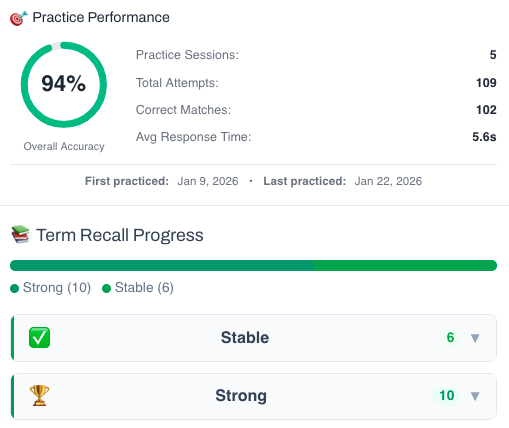
This isn’t a simple quiz — it’s a fully tracked learning system. You build knowledge through recognition, then recall, and your progress feeds directly into the Integrated Practice Bar (Writing tasks, AI Chat, and more).
- Practice sessions, accuracy, and response-time tracking
- Term strength levels (Learning → Stable → Strong)
- Personal progress history for each unit
This feature is available to YSP members.
Explore Membership Benefits🎮 Practice Games
Sentence Scrambler
DO | Present Simple – The ‘ROLE’ and ‘ACTIVITY’ of People & Things – Sentence Scramble
Member-Exclusive Sentence Builder
Reconstruct scrambled sentences to practice word order and develop your grammar intuition.
This feature is available to YSP members.
Explore Membership Benefits