Making Your Introduction Memorable: Two Approaches
Core PathWay
1 The Challenge: Standing Out in a Crowd
Imagine you’re at a networking event with fifty other professionals. Everyone takes turns introducing themselves. Most people say their name, job title, and company name, then sit down. After fifteen minutes, can you remember anyone specifically?
This is the challenge we all face when we introduce ourselves. The traditional approach—listing facts about our background—rarely creates a memorable impression. People forget our names within seconds because facts don’t engage our emotions or imagination.
However, when someone shares a brief story about why they do what they do, or describes a turning point that led them to their current role, something different happens. We lean in. We remember them. We want to continue the conversation.
In this lesson, you’ll see two versions of the same introduction. Marco, a software developer, introduces himself at a professional conference. The first version uses the traditional fact-based approach. The second version uses storytelling techniques to create connection. Pay attention to how small changes in language and structure can transform a forgettable introduction into a compelling one that builds rapport and opens doors to meaningful conversations.
💬 Dialogue 1: Identifying Your Hook
Trainer helps learner develop an attention-grabbing opening
2 Version A: The Forgettable Introduction
“Hello everyone. My name is Marco Benedetti and I work for TechSolutions Italia as a senior software developer. I have been in this position for approximately three years. Before that, I was employed by another technology company where I gained experience in various programming languages including Java, Python, and JavaScript.
My educational background includes a degree in Computer Science from the University of Milan, which I completed in 2015. During my studies, I focused on software engineering principles and database management systems.
Currently, my responsibilities at TechSolutions involve developing enterprise-level applications for clients in the financial sector. I specialize in backend development and API integration. I also participate in code reviews and occasionally mentor junior developers.
In my free time, I try to stay updated with the latest industry trends by reading technical blogs and attending webinars. I’m particularly interested in artificial intelligence and machine learning, though I haven’t had much opportunity to work with these technologies professionally yet.
I’m here today because my manager suggested it would be beneficial for my professional development. I’m looking forward to learning about new approaches in software development and possibly making some useful professional contacts. Thank you for listening.”
💬 Dialogue 2: Converting Facts to Stories
Practicing transformation of resume-style facts into narrative
3 Version B: The Memorable Introduction
“Hi, I’m Marco. Five years ago, I nearly quit programming completely. I was working on a project that felt meaningless—fixing bugs in software that nobody seemed to care about. Then something changed.
One day, a client called to say that the payment system we’d built had helped a small business owner process her first international order. She was actually crying with happiness on the phone. That moment reminded me why I’d fallen in love with coding in the first place—it’s not about the languages or the frameworks, it’s about solving real problems for real people.
These days, I work at TechSolutions, where I build financial applications. But I don’t think of myself as just a developer anymore. I see myself as someone who creates tools that help people achieve their dreams, whether that’s growing a business or managing their money better.
The reason I’m here today is actually quite personal. I want to learn how other developers stay connected to the ‘why’ behind their work, especially when you’re deep in technical challenges. I’m also exploring how AI might help us build more intuitive financial tools, and I’d love to hear if anyone’s working on something similar.
So if you’re someone who believes technology should serve people, not the other way around, I’d really enjoy continuing this conversation with you.”
💬 Dialogue 3: Tailoring Your Message
Learner practices adapting introduction for different audiences
4 Why Version B Works: A Detailed Analysis
Language Choices:
Version A uses passive constructions (“I was employed,” “which I completed”) and abstract language (“professional development,” “beneficial”). Version B uses active voice (“I nearly quit,” “I build,” “I see myself”) and concrete examples (“a small business owner,” “crying with happiness”). Active voice creates energy and directness, while concrete details help listeners visualize the story.
Version A includes jargon (“API integration,” “backend development”) without context. Version B translates technical work into human terms (“tools that help people achieve their dreams”). This makes the introduction accessible to everyone, not just fellow developers.
Structure and Flow:
Version A follows a chronological resume format: education → previous job → current job → interests → reason for attending. This structure is predictable and creates no suspense or curiosity.
Version B opens with a hook—”I nearly quit programming completely”—that immediately raises questions. Why? What happened? The narrative then follows an emotional journey: struggle (meaningless work) → turning point (the grateful client) → transformation (new perspective) → current mission. This structure keeps listeners engaged because they want to know what happens next.
Emotional Appeal:
Version A presents only facts and credentials. It answers “What do you do?” but never addresses “Why do you do it?” or “What drives you?” Without emotional content, there’s nothing for listeners to connect with on a personal level.
Version B reveals Marco’s values (“technology should serve people”), his passion (solving real problems), and his vulnerability (nearly quitting). When we share authentic emotions, we give others permission to connect with us as humans, not just professionals.
Audience Perspective:
Version A focuses entirely on Marco’s credentials and background. It’s a list of achievements that answers the question “Who am I?” but never considers “Why should you care?”
Version B is tailored to create connection. It identifies a specific type of person Marco wants to meet (“if you’re someone who believes technology should serve people”) and offers a clear reason to continue the conversation (“I’d really enjoy continuing this conversation with you”). This approach respects the audience’s perspective and makes them feel invited, not lectured to.
Key Terms
💬 Dialogue 4: Building Authentic Connection
Discussing how vulnerability and values create rapport
5 Skeleton Dialogues: Exploring Key Techniques
Dialogue 1: The Power of the Hook
*Trainer:* “What did you notice about how Marco started Version B?”
*Learner:* “He said he nearly quit programming. It made me want to know why.”
*Trainer:* “Exactly. That’s called a hook—something surprising or intriguing that captures attention immediately. What would happen if he’d started with ‘Hi, I’m Marco, I’m a software developer’?”
—
Dialogue 2: Active vs Passive Voice
*Trainer:* “Listen to these two sentences: ‘I was employed by a company’ versus ‘I worked at a company.’ Which one sounds more direct and energetic?”
*Learner:* “The second one. It’s shorter and clearer.”
*Trainer:* “Right. Active voice puts you in control of the action. In introductions, this makes you sound more confident and engaging. Can you change this sentence to active voice: ‘My degree was completed in 2015’?”
—
Dialogue 3: Facts vs Stories
*Trainer:* “Marco could have said ‘I build financial applications.’ Instead, he said ‘I create tools that help people achieve their dreams.’ What’s the difference?”
*Learner:* “The second one shows why his work matters, not just what he does.”
*Trainer:* “Exactly. Facts tell, but stories show. When you reveal the human impact of your work, people remember you. Think about your own job—what’s one specific moment when your work made a real difference to someone?”
—
Dialogue 4: Tailoring to Your Audience
*Trainer:* “At the end of Version B, Marco says ‘if you’re someone who believes technology should serve people, I’d love to continue this conversation.’ Why is this effective?”
*Learner:* “He’s not trying to connect with everyone, just people who share his values.”
*Trainer:* “Precisely. When you tailor your introduction to attract the right people, you create quality connections rather than just collecting business cards. Who do you want to attract when you introduce yourself?”
Member-Exclusive Vocabulary Review & Acquisition System
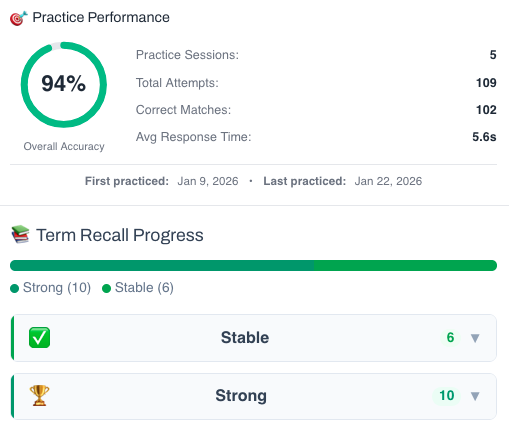
This isn’t a simple quiz — it’s a fully tracked learning system. You build knowledge through recognition, then recall, and your progress feeds directly into the Integrated Practice Bar (Writing tasks, AI Chat, and more).
- Practice sessions, accuracy, and response-time tracking
- Term strength levels (Learning → Stable → Strong)
- Personal progress history for each unit
This feature is available to YSP members.
Explore Membership Benefits🎮 Practice Games
Section 1 – Fill in the Gaps
Effective Personal Introductions – Vocabulary Practice 1
Member-Exclusive Cloze Test
Fill in the gaps to complete authentic passages and reinforce your vocabulary in context.
This feature is available to YSP members.
Explore Membership BenefitsSection 2 – Fill in the Gaps
Effective Personal Introductions – Vocabulary Practice 2
Member-Exclusive Cloze Test
Fill in the gaps to complete authentic passages and reinforce your vocabulary in context.
This feature is available to YSP members.
Explore Membership BenefitsSentence Scrambler
Effective Personal Introductions – Sentence Scramble
Member-Exclusive Sentence Builder
Reconstruct scrambled sentences to practice word order and develop your grammar intuition.
This feature is available to YSP members.
Explore Membership Benefits