Making Memorable Personal Introductions
Core PathWay
1 Beyond ‘Hello, My Name Is…’
When you meet someone at a conference or business event, do you say ‘Hello, my name is Sarah and I work for ABC Company’? This type of introduction is forgettable because everyone uses the same pattern.
Effective introductions tell a short personal story that helps people remember you. Instead of listing your job title, you share why you do what you do or how you got there. This means your introduction has three parts: an engaging opening that creates interest, a middle section that develops your story, and a memorable close that invites conversation.
Think about introductions as mini-stories, not data lists. When you craft your introduction as a narrative, you give people something to connect with. For example, instead of ‘I’m a marketing manager,’ you might say ‘I help small businesses find their voice online.’ This approach makes you stand out and leads to better conversations.
Key Terms
2 Creating Strong Openings
Your opening should grab attention in the first few seconds. However, you don’t need to be dramatic or funny. A simple, authentic statement works better than trying too hard.
One effective technique is to start with your motivation rather than your job title. For example, ‘I’ve always been fascinated by how buildings affect people’s moods’ is more interesting than ‘I’m an architect.’ Another approach is to use a relatable challenge: ‘Like many people, I struggled to manage my time until I discovered productivity systems.’
You can also set the scene by mentioning a turning point: ‘Three years ago, I decided to leave corporate law and start my own practice.’ This type of opening creates curiosity because people want to know what happened next. The key is to make your opening authentic and connected to what you actually do. Avoid generic phrases like ‘I’m passionate about…’ unless you can follow them with specific details that prove it.
Key Terms
3 Developing the Middle
The middle of your introduction should build on your opening by adding one or two key details. This is where you show what you actually do, but in a way that tells a story rather than lists facts.
Use concrete examples instead of abstract descriptions. Rather than saying ‘I help companies with digital transformation,’ you might say ‘I work with family businesses that want to sell online but don’t know where to start.’ This paints a clearer picture. You can also mention a specific achievement that demonstrates your expertise: ‘Last year, I helped a local restaurant increase their delivery orders by 200%.’
Keep this section brief because you want to leave room for questions. Think of it as giving people enough information to understand what you do, while making them curious to learn more. The middle should flow naturally from your opening. If you started with a challenge, explain how you solved it. If you mentioned a turning point, describe where it led you. This creates a coherent narrative that people can follow easily.
Key Terms
4 Closing With Impact
Your close should invite dialogue rather than simply end your introduction. The goal is to create an opening for conversation that feels natural and makes the other person want to respond.
One effective technique is to pose a question related to your story: ‘What about you – have you faced similar challenges with remote teams?’ This immediately shifts the focus to the other person while keeping the conversation relevant. Another approach is to mention what you’re currently working on: ‘Right now, I’m exploring how AI can help small businesses compete with larger companies.’
You can also use a forward-looking statement that suggests future possibilities: ‘I’m always interested in meeting people who are thinking about sustainability in retail.’ This type of close signals your interests without being too direct. The key is to avoid ending with a dead-end statement like ‘So that’s what I do.’ Instead, your close should open doors for the other person to share their own story or ask questions. Remember that the best introductions create genuine connections, not just information exchanges.
Key Terms
5 Putting It All Together
Now you understand how to create introductions that people remember. Instead of the standard ‘Hello, my name is…’ formula, you can craft a personal story with three clear parts.
Your opening grabs attention by sharing your motivation or a turning point. The middle builds on this with concrete examples that show what you do. Your close invites dialogue and creates openings for conversation. This storytelling approach helps you stand out in professional settings because it gives people something meaningful to connect with. When you meet new business contacts, think about which personal story fits the situation. You might have different versions for different contexts, but they should all feel authentic and flow naturally. The goal is always the same: to create genuine connections that lead to interesting conversations, not just to list your job title and company name.
Member-Exclusive Vocabulary Review & Acquisition System
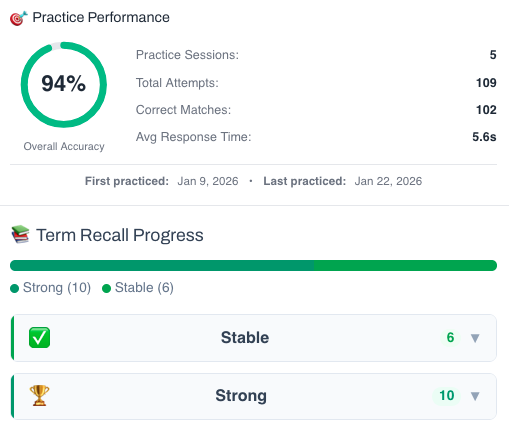
This isn’t a simple quiz — it’s a fully tracked learning system. You build knowledge through recognition, then recall, and your progress feeds directly into the Integrated Practice Bar (Writing tasks, AI Chat, and more).
- Practice sessions, accuracy, and response-time tracking
- Term strength levels (Learning → Stable → Strong)
- Personal progress history for each unit
This feature is available to YSP members.
Explore Membership Benefits🎮 Practice Games
Section 1 – Fill in the Gaps
Effective Personal Introductions – Vocabulary Practice 1
Member-Exclusive Cloze Test
Fill in the gaps to complete authentic passages and reinforce your vocabulary in context.
This feature is available to YSP members.
Explore Membership BenefitsSection 2 – Fill in the Gaps
Effective Personal Introductions – Vocabulary Practice 2
Member-Exclusive Cloze Test
Fill in the gaps to complete authentic passages and reinforce your vocabulary in context.
This feature is available to YSP members.
Explore Membership BenefitsSentence Scrambler
Effective Personal Introductions – Sentence Scramble
Member-Exclusive Sentence Builder
Reconstruct scrambled sentences to practice word order and develop your grammar intuition.
This feature is available to YSP members.
Explore Membership Benefits