Talking About Your Job: Involves and Spend Time Doing
Core PathWay
1 Describing Your Job
When people ask about your job, you need good ways to explain your work.
Two very useful phrases help you describe your responsibilities. First, you can say what your job involves. This means you explain the main activities in your work. For example, a teacher’s job involves teaching students. A driver’s job involves driving a van. Second, you can say how you spend time doing different activities. This tells people how much time you use for each task. For example, a manager spends a lot of time in meetings. A shop assistant spends time helping customers.
These two phrases work very well together. You can use both in the same conversation. They help you give a complete picture of your work. People often use these phrases in job interviews and when they meet new colleagues.
Here is a conversation between Tom and Jack:
Tom: So, what does your job involve?
Jack: Well, it involves speaking to clients. I spend a lot of time speaking to them.
Tom: That sounds interesting. What else does it involve?
Jack: It involves writing reports. I spend about two hours every day writing reports.
Tom: Do you spend time in meetings too?
Jack: Yes, I do. My job involves going to meetings. I spend three or four hours in meetings every week.
Key Terms
2 Understanding ‘Involves + -ing’
involves + -ing
- involves working with
- involves talking to
- involves managing
- involves checking
- involves writing
- involves meeting
- My job involves answering phone calls every day.
- The role involves training new staff members.
The phrase involves + -ing is very useful for describing jobs. You use it to explain the main activities in a role. The word after ‘involves’ always ends in -ing. This -ing word works like a noun in the sentence.
You can also use ‘involves’ with a regular noun. For example, you can say ‘My job involves paperwork’ or ‘My job involves doing paperwork.’ Both are correct. The first uses a noun, and the second uses the -ing form.
3 Understanding ‘Spend Time Doing’
spend time doing
- spend time working on
- spend time dealing with
- spend time preparing
- spend time organizing
- spend time checking
- spend time on emails
- spend time on calls
- spend time on projects
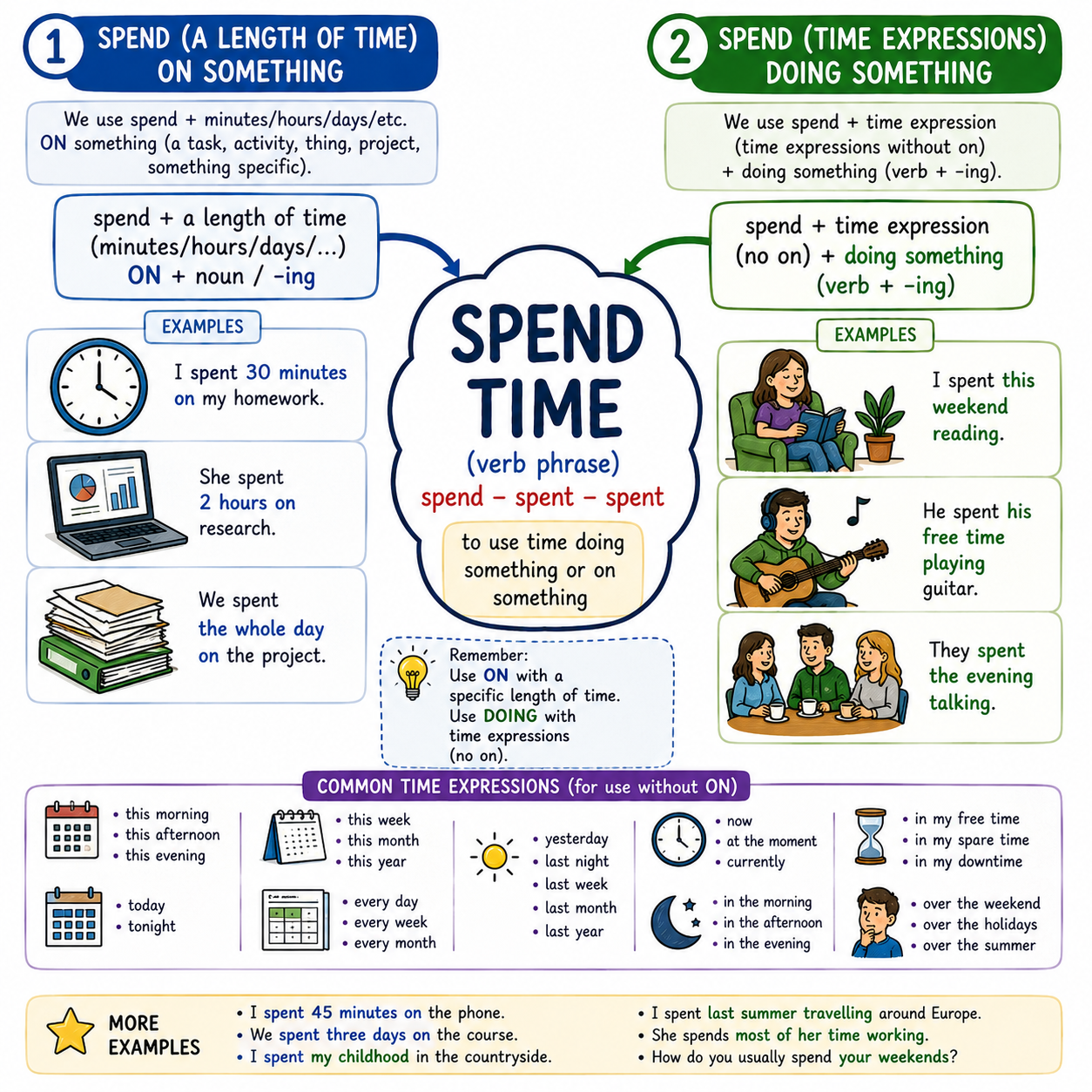
- I spend three hours doing admin work every day.
- She spends a long time preparing presentations.
The phrase spend time doing tells people how you use your time. After ‘spend time’, you always use a verb with -ing. You can also say ‘spend time on’ and then use a noun.
You can use different time words with this phrase. You can say ‘I spend hours’, ‘I spend ages’, ‘I spend a long time’, or ‘I spend all day’. These show how much time you use.
4 Recap: Talking About Your Job
Now you know two important ways to describe your job and responsibilities.
First, use involves + -ing to explain the main activities in your work. Remember, the verb after ‘involves’ always ends in -ing. You can say ‘My job involves writing emails’ or ‘The role involves meeting clients.’ You can also use ‘involves’ with a noun, like ‘My job involves paperwork.’
Second, use spend time doing to show how you use your time at work. After ‘spend time’, always use a verb with -ing. You can say ‘I spend three hours doing admin’ or ‘I spend a lot of time in meetings.’ You can also say ‘spend time on’ with a noun, like ‘I spend time on projects.’
These two phrases work very well together. Use them in job interviews, when you meet new colleagues, or when people ask about your work. They help you give clear and complete descriptions of your responsibilities. Practice using both phrases to talk about your own job or a job you want in the future.
Member-Exclusive Vocabulary Review & Acquisition System
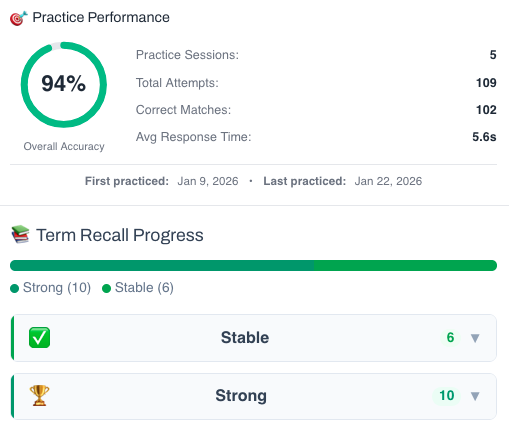
This isn’t a simple quiz — it’s a fully tracked learning system. You build knowledge through recognition, then recall, and your progress feeds directly into the Integrated Practice Bar (Writing tasks, AI Chat, and more).
- Practice sessions, accuracy, and response-time tracking
- Term strength levels (Learning → Stable → Strong)
- Personal progress history for each unit
This feature is available to YSP members.
Explore Membership Benefits🎮 Practice Games
Section 1 – Fill in the Gaps
Involves & Spend time – Gap Fill 1
Member-Exclusive Cloze Test
Fill in the gaps to complete authentic passages and reinforce your vocabulary in context.
This feature is available to YSP members.
Explore Membership BenefitsInvolves & Spend time – Gap Fill 2
Member-Exclusive Cloze Test
Fill in the gaps to complete authentic passages and reinforce your vocabulary in context.
This feature is available to YSP members.
Explore Membership BenefitsSentence Scrambler
Involves & Spend time – Sentence Scramble
Member-Exclusive Sentence Builder
Reconstruct scrambled sentences to practice word order and develop your grammar intuition.
This feature is available to YSP members.
Explore Membership Benefits