Talking About Time: Using ‘It Takes’
Core PathWay
1 Introduction: A New Way to Talk About Time
You already know how to say ‘I spend time doing something’. Now you will learn a new way to talk about time.
When we say ‘it takes time’, we talk about how long a task needs. This means we describe the time necessary for an action. For example: ‘It takes two hours to finish the report.’ This is different from ‘I spend two hours finishing the report.’
With ‘I spend time’, you are the subject. You do the action. With ‘it takes time’, the subject is ‘it’. The focus is on the task, not on you. Both sentences talk about time, but the grammar is different.
You can also make it personal. You say ‘it takes me’ plus the time. For example: ‘It takes me 30 minutes to write an email.’ This shows how long YOU need for the task.
Key Terms
2 Deep Dive: Understanding ‘It Takes’
it takes
- it takes time
- it takes ages
- it takes a few minutes
- it doesn’t take long
- it takes me
- it takes two hours
- It takes 15 minutes to walk to the office.
- It doesn’t take long to send a quick message.
it took
- it took ages
- it took a long time
- it didn’t take long
- it took me
- it took us
- It took three days to finish the project.
- It didn’t take long to solve the problem.
it will take
- it will take time
- it will take a while
- it will take hours
- it won’t take long
- it will take me
- It will take two weeks to prepare the presentation.
- It won’t take long to check the numbers.
how long does it take
- how long does it take to
- how long did it take
- how long will it take
- how long does it take you
- How long does it take to learn this system?
- How long will it take you to write the report?
Let’s look closely at how to use ‘it takes’ correctly. Remember, we use ‘it’ as the subject, not ‘I’. You can add ‘me’, ‘him’, ‘her’, ‘us’, or ‘them’ after ‘takes’ to show who does the action.
You can use this form in different times: present, past, and future. The verb ‘take’ changes: ‘takes’, ‘took’, ‘will take’. You can also make questions with this form.
3 See It in Action: Business Examples
Using ‘Spend Time’
Using ‘It Takes’
Noticing
- Text 1 uses ‘I spend’ with the -ing form (spending time doing something).
- Text 2 uses ‘it takes’ with ‘to’ and the infinitive (it takes time to do something).
- Text 2 adds ‘me’ after ‘takes’ to show who does the action.
- Both texts talk about the same amounts of time.
- Text 1 focuses on the person. Text 2 focuses on the task.
- The time expressions are the same in both texts.
Useful language
Key Terms
4 Key Points Summary
Now you know how to use ‘it takes’ to talk about time and tasks. Remember these important points.
Use ‘it takes’ when you want to describe how long a task needs. The subject is always ‘it’, not ‘I’. Add ‘me’, ‘you’, ‘him’, ‘her’, ‘us’, or ‘them’ after ‘takes’ to make it personal. For example: ‘It takes me 20 minutes to drive to work.’
Change the verb for different times. Present: ‘it takes’. Past: ‘it took’. Future: ‘it will take’. You can make questions too: ‘How long does it take?’, ‘How long did it take?’, ‘How long will it take?’
Common time words to use: a few minutes, ages, not long, a long time, hours, days, weeks. Practice using these forms when you talk about your work tasks.
5 Page Recap
This page taught you a new way to talk about time in business English. You learned the difference between ‘I spend time doing’ and ‘it takes time to do’. Both are useful, but they have different grammar.
The key form is ‘it takes’ with ‘it’ as the subject. You can make it personal by adding ‘me’ or other pronouns. You learned three time forms: ‘it takes’ (present), ‘it took’ (past), and ‘it will take’ (future). You also learned how to ask questions: ‘How long does it take?’
You saw many examples of these forms in business situations. You can now describe how long tasks need at work. Practice using ‘it takes’ when you talk about your daily work activities.
Member-Exclusive Vocabulary Review & Acquisition System
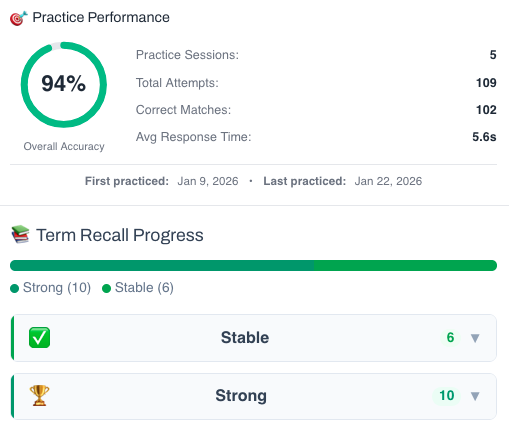
This isn’t a simple quiz — it’s a fully tracked learning system. You build knowledge through recognition, then recall, and your progress feeds directly into the Integrated Practice Bar (Writing tasks, AI Chat, and more).
- Practice sessions, accuracy, and response-time tracking
- Term strength levels (Learning → Stable → Strong)
- Personal progress history for each unit
This feature is available to YSP members.
Explore Membership Benefits🎮 Practice Games
Sentence Scrambler
It takes time – Sentence Scramble
Member-Exclusive Sentence Builder
Reconstruct scrambled sentences to practice word order and develop your grammar intuition.
This feature is available to YSP members.
Explore Membership Benefits