Clothes 101: What We Wear Every Day
Core PathWay
1 Section 1. Why Learning Clothes Vocabulary Matters
Every morning, you make choices about clothes. What will you wear today? A t-shirt and jeans? A dress? A suit for work? Talking about clothes is part of everyday life in English. You need these words when you go shopping, when you describe what someone looks like, and when you talk about the weather and what to wear.
By the end of this lesson, you’ll know the basic English words for common clothing items like shirts, trousers, jackets, and shoes. You’ll also understand the important differences between verbs we use with clothes. For example, ‘to wear‘ is different from ‘to put something on‘. ‘To get dressed‘ means something different from ‘to be dressed‘. These small differences are very important!
We use clothes vocabulary everywhere. When you meet someone new, you might notice their trainers or their hat. When the weather is cold, you put on a coat and a scarf. When you go to bed, you take off your day clothes and put on your pyjamas. At work, some people wear formal clothes like a blouse and skirt, or a shirt and tie. Understanding these words helps you describe your daily routine, go shopping with confidence, and talk about style and fashion. Let’s start building your clothes vocabulary today!
Key Terms
💬 Dialogue 1: Getting Ready for Work
A couple talking in the bedroom on a busy morning
2 Section 2. Organizing Clothes by Body Parts
The easiest way to learn clothes vocabulary is to think about which part of your body each item goes on. Let’s organize our clothing items from head to toe!
On your head, you can wear a hat or a cap. A hat usually has a wide edge all around, and a cap has an edge only at the front. In winter, many people wear warm hats. In summer, people wear caps to protect their eyes from the sun.
On your upper body (chest, arms, and shoulders), you wear items like a shirt, t-shirt, blouse, sweater, jumper, hoodie, or vest. A shirt usually has buttons and a collar. A t-shirt is more casual with no buttons. A blouse is like a shirt but for women. A sweater and jumper are the same thing – warm tops made from wool. A hoodie is a casual top with a hood. A vest is a piece of clothing with no arms, worn over a shirt. Over all these, you can put on a jacket or coat when it’s cold, or a raincoat when it rains.
On your lower body (legs and hips), you wear trousers, jeans, shorts, a skirt, or a dress. Trousers and jeans both cover your whole legs – jeans are usually blue and made from strong material. Shorts are like trousers but short, ending above your knees. A skirt covers your legs but is open at the bottom. A dress is special because it covers both your upper body and your lower body in one piece.
Around your waist, you might wear a belt to hold up your trousers. Around your neck, you can wear a scarf (for warmth) or a tie (formal, usually for work).
On your feet, you wear socks first, then shoes, boots, trainers, or high heels. Boots are tall shoes that cover your ankles. Trainers are comfortable sports shoes. High heels are formal shoes for women that make you taller.
And finally, underwear goes under all your other clothes, next to your skin. At night, you take off your day clothes and put on your pyjamas to sleep. ✓ Tip: When you learn a new clothing word, always think: ‘Which part of my body does this go on?’ This helps you remember!
Key Terms
💬 Dialogue 2: Shopping for Clothes
Two friends shopping in a clothing store
3 Section 3. Using Clothes Verbs Correctly – Your Language Toolkit
Now let’s learn how to use the verbs that go with clothes. English has several different verbs, and each one has a special meaning. Here’s your toolkit!
TO WEAR = to have clothes on your body right now. This describes a state, not an action. We use it in simple and continuous tenses:
– I wear jeans every day. (habit)
– She wears a suit to work. (habit)
– He is wearing a blue shirt today. (right now)
– Yesterday, they wore trainers. (past)
– We were wearing coats because it was cold. (past continuous)
TO PUT SOMETHING ON = the action of placing one piece of clothing on your body. You do this action:
– Put on your jacket – it’s cold! (command)
– I put on my shoes and left the house. (past)
– She is putting on her gloves. (happening now)
– Every morning, I put on my socks first. (routine)
TO TAKE SOMETHING OFF = the action of removing one piece of clothing from your body:
– Take off your wet coat! (command)
– He took off his tie after work. (past)
– I’m taking off my boots – they’re dirty. (happening now)
TO GET DRESSED = the action of putting all your clothes on your body (the complete process):
– I’m getting dressed now. I’ll be ready in five minutes! (happening now)
– She got dressed quickly and ran to catch the bus. (past)
– Every morning, I get dressed after breakfast. (routine)
TO BE DRESSED = the state of having clothes on your body (you’re not naked):
– Are you dressed? Can I come in? (state – right now)
– He was already dressed when I woke up. (state – past)
– Get dressed quickly! (command – telling someone to put clothes on)
TO DRESS = this verb has two special uses. First, to put clothes on another person (usually a child):
– She dresses her baby every morning. (she puts clothes on the baby)
– I dressed my son in warm clothes. (past)
Second, to describe the style or color of how someone wears clothes:
– He dresses well. (he has good style)
– She always dresses in black. (she wears black clothes)
– They dress smartly for work. (they wear nice, professional clothes)
– We dressed casually for the party. (we wore informal clothes)
Sentence starters you can use:
– I usually wear…
– Today I’m wearing…
– I need to put on…
– Can you take off your…?
– I’m getting dressed for…
– Are you dressed yet?
– She always dresses…
– He was wearing…
Useful phrases:
– Put on your coat!
– Take off your shoes, please.
– I wear jeans every day.
– What are you wearing to the party?
– I’m not dressed yet.
– Get dressed quickly!
– She dresses very well.
– He’s wearing a nice suit.
– I need to get dressed.
– She was wearing a red dress.
Mini-dialogue 1: Getting Ready
Mum: Are you dressed yet? We need to leave soon!
Tom: I’m getting dressed now! I’m putting on my jeans.
Mum: Don’t forget to put on a sweater. It’s cold today.
Tom: OK. Can I wear my blue hoodie?
Mum: Yes, and put on your trainers too.
Mini-dialogue 2: After School
Sara: I’m home! I’m taking off my school uniform.
Dad: OK. What are you wearing to the party tonight?
Sara: I want to wear my black dress and high heels.
Dad: That sounds nice. What time are you getting dressed?
Sara: At six o’clock. I need one hour to get dressed!
Key Terms
4 Section 4. Recap – What to Remember and How to Use It
Great work! You now know the essential English vocabulary for talking about clothes. You learned words for different clothing items organized by body parts: hats and caps on your head, shirts and jackets on your upper body, trousers and skirts on your lower body, and shoes and boots on your feet.
More importantly, you now understand the key differences between clothes verbs. Remember: ‘to wear‘ describes the state of having clothes on your body. ‘To put something on‘ is the action of placing one item on your body. ‘To take something off‘ is removing one item. ‘To get dressed‘ means putting on all your clothes (the complete process). ‘To be dressed‘ means you have clothes on (you’re ready). And ‘to dress‘ means either putting clothes on someone else, or describing your clothing style.
Next time you speak or write about clothes, remember to:
You’re building a strong foundation in everyday English vocabulary. These words and verbs will help you every single day – when you describe your routine, go shopping, talk about the weather, or simply tell someone what you’re wearing. Keep practicing, and soon using these words will feel completely natural!
Member-Exclusive Vocabulary Review & Acquisition System
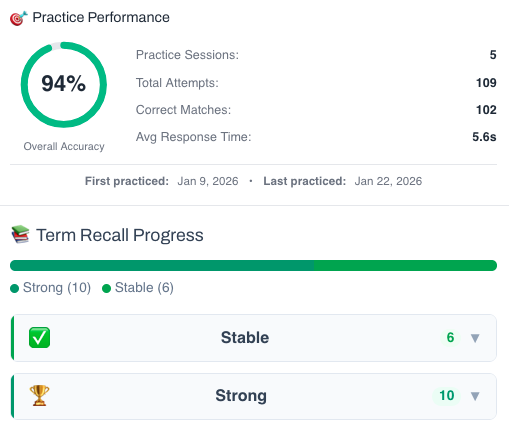
This isn’t a simple quiz — it’s a fully tracked learning system. You build knowledge through recognition, then recall, and your progress feeds directly into the Integrated Practice Bar (Writing tasks, AI Chat, and more).
- Practice sessions, accuracy, and response-time tracking
- Term strength levels (Learning → Stable → Strong)
- Personal progress history for each unit
This feature is available to YSP members.
Explore Membership Benefits
Member-Exclusive Practice Bar
Access a wide range of integrated practice for this unit — from Vocabulary and Grammar activities to AI-curated Writing tasks and Thematic Chat practice.
This feature is available to YSP members.
Explore Membership Benefits🎮 Practice Games Section: 2x Gap Fill & 2x Scrambled Sentences. Complete all the other practice tasks before these
Section 1 – Fill in the Gaps
Clothes 101 (A2) – Vocabulary Practice 1
Member-Exclusive Cloze Test
Fill in the gaps to complete authentic passages and reinforce your vocabulary in context.
This feature is available to YSP members.
Explore Membership BenefitsSection 2 – Fill in the Gaps
Clothes 101 (A2) – Vocabulary Practice 2
Member-Exclusive Cloze Test
Fill in the gaps to complete authentic passages and reinforce your vocabulary in context.
This feature is available to YSP members.
Explore Membership BenefitsSentence Scrambler
Clothes 101 (A2) – Sentence Scramble
Member-Exclusive Sentence Builder
Reconstruct scrambled sentences to practice word order and develop your grammar intuition.
This feature is available to YSP members.
Explore Membership BenefitsSentence Scrambler
Clothes 101 (A2) – Lexical Practice – Sentence Scramble
Member-Exclusive Sentence Builder
Reconstruct scrambled sentences to practice word order and develop your grammar intuition.
This feature is available to YSP members.
Explore Membership Benefits