Extra Listening Practice: Open & Closed Time Signal Words
Core PathWay
1 Section 1. Talking About Holidays
Three friends talk about their holidays. Listen for the time signal words. Notice which tense the speakers use with each one.
💬 Dialogue 1: Holidays: Past and Present
Three friends — Alex, Sam, and Jordan — are having coffee and talking about their holidays and travel plans.
📝 Comprehension Check: Holiday Talk
Answer the questions based on what you heard in the audio.
Which speaker went to a country in southern Europe last month?
Which speaker fell down many times on their first day on the snow?
Which speaker has never tried a winter sport?
Which speaker said their best holiday was in a Mediterranean country last summer?
Which speaker has done a winter sport five times and really likes it?
Which speaker did not go on a holiday this year yet?
Alex: “I've been to so many great places this year. I can't believe how much we've travelled so far this year.”
Sam: “Really? Where have you been so far this year? Tell me everything!”
Alex: “Well, we went to Portugal last month. It was absolutely beautiful — the beaches were amazing.”
Jordan: “Oh, I love Portugal! I went there three years ago with my family. We stayed in Lisbon for a week. It was wonderful.”
Sam: “I've never been to Portugal. I've always wanted to go, though. Is it expensive?”
Alex: “Not really. We found a great hotel last minute. It was very good value. You should definitely try it.”
Jordan: “Have you booked anything else this year, Alex? Any more trips planned?”
Alex: “Yes! We've just booked a skiing trip for December. I'm really excited about it.”
Sam: “Oh, amazing! I went skiing last winter for the first time. I fell over about twenty times on the first day!”
Jordan: “Ha! I've never tried skiing. It looks really difficult. Where did you go, Sam?”
Sam: “We went to the Alps. It was last February. The snow was perfect but I was absolutely terrible at it.”
Alex: “You get better quickly, honestly. I've been skiing five times now and I love it. It's such a great feeling.”
Jordan: “I had a beach holiday last summer. We went to Greece. It was honestly the best holiday of my life.”
Sam: “Greece is wonderful! Have you been there before, Jordan? Was this your first time?”
Jordan: “Yes, I went once when I was younger — when I was about twelve. But this time was much better.”
Alex: “I've always wanted to visit Greece. We haven't been there yet. It's still on our list!”
Sam: “You should go! Have you looked at prices this year? Flights are quite cheap right now.”
Jordan: “We booked our flights six months ago and got a great deal. Book early — it's really worth it.”
Alex: “Good advice. I've looked at a few options this week, actually. Nothing decided yet, but I'm getting closer.”
Sam: “Well, wherever you go — enjoy it! I haven't had a proper holiday yet this year and I really need one. Maybe next month!”
2 Section 2. Work Tasks and Home Tasks
Three colleagues talk about what they have done recently and what they did before. Listen carefully to the time signal words and the tenses.
💬 Dialogue 2: What Have You Done? What Did You Do?
Three colleagues — Chris, Sam, and Jordan — are chatting at the end of a busy week, talking about work tasks and things they have done at home.
📝 Comprehension Check: A Busy Week at Work and Home
Answer the questions based on what you heard in the audio.
Which speaker sent a long document to their manager the day before?
Which speaker talked to the finance team two times today?
Which speaker spent four hours cleaning their home at the weekend?
Which speaker made a large meal on Sunday?
Which speaker went to a shop to buy food last Thursday?
Which speaker started going to the gym this month?
Chris: “I've had such a busy week. I've already sent twelve emails today and it's only lunchtime!”
Sam: “I know the feeling! I sent a huge report to the manager yesterday. It took me all morning to finish it.”
Jordan: “Have you finished the budget plan yet, Chris? The deadline is this Friday, isn't it?”
Chris: “Not yet. I've worked on it every day this week but there's still a lot to do. It's really complex.”
Sam: “I finished my part of the budget last Monday. It was really complicated this time — much harder than before.”
Jordan: “I've spoken to the finance team twice today about it. They need the numbers by tomorrow morning.”
Chris: “I called them last week too. They gave me some useful information then. It really helped.”
Sam: “Have you updated the spreadsheet this month, Jordan? I need to check the figures before the meeting.”
Jordan: “Yes, I updated it yesterday afternoon. All the new data is in there now. You can check it anytime.”
Chris: “Great. I've checked it twice this morning and it looks good so far. Nice work, Jordan.”
Sam: “What about home stuff? I cleaned the whole house last weekend. It took four hours — I was exhausted!”
Jordan: “Ha! I haven't had time to clean this week at all. I've been so busy with work. The flat is a disaster.”
Chris: “I did a big food shop last Thursday. I bought enough food for two weeks. My fridge is completely full.”
Sam: “I've done three food shops this month already. My family eats so much! It never stops.”
Jordan: “I cooked a big meal last Sunday — a proper roast dinner. It was delicious. Everyone loved it.”
Chris: “I haven't cooked anything this week. I've ordered takeaway food every night. It's getting expensive!”
Sam: “I fixed the bathroom shelf last night. It fell off the wall two weeks ago and I finally got around to it.”
Jordan: “I've started a new exercise routine this month. I've been to the gym four times so far. I feel much better.”
Chris: “I went to the gym a lot last year. Then I stopped in January. I really need to start again.”
Sam: “Well, I've done enough for one week! I'm going home early today. See you all tomorrow — have a good evening!”
3 Section 3. Going Out
Three friends talk about restaurants, cinema, theatre, and nights out. Listen for the time signal words and notice which tense goes with each one.
💬 Dialogue 3: Nights Out: Past and Present
Three friends — Alex, Chris, and Jordan — are talking about going out — restaurants, cinema, theatre, and more.
📝 Comprehension Check: Eating Out and Going Out
Answer the questions based on what you heard in the audio.
Which speaker had a meal with their partner at a restaurant last Saturday?
Which speaker ate at a new place on the high street and liked the food very much?
Which speaker tried a new type of food for the first time two weeks ago?
Which speaker has never been to see a live music show in a club before?
Which speaker saw the same film at the cinema more than one time this week?
Which speaker visited a place with a beautiful view of the city last Thursday?
Alex: “Have you been anywhere nice this week? I've been looking for a good restaurant to try.”
Chris: “Yes! I went to that new Italian place on the high street last night. It was fantastic — really good pasta.”
Jordan: “Oh, I've heard great things about that place. I haven't been there yet — I really want to try it.”
Alex: “I went to a Thai restaurant last Saturday with my partner. The food was incredible — so fresh and spicy.”
Chris: “I've been to three different restaurants this month. I know — I'm eating out way too much!”
Jordan: “Ha! I went to a sushi bar two weeks ago. It was the first time I tried sushi. I absolutely loved it.”
Alex: “Have you ever been to the theatre? I've seen two shows this year already — it's been a great year for it.”
Chris: “I went to the theatre last year. We saw a brilliant musical. I absolutely loved it — I'd go again tomorrow.”
Jordan: “I've never been to the theatre. I always think the tickets are too expensive. Is it worth it?”
Alex: “We got cheap tickets last time. We booked them three weeks ago and saved a lot. It was totally worth it.”
Chris: “What about the cinema? Have you seen anything good this month?”
Jordan: “Yes! I saw the new action film last Friday. It was brilliant — really exciting from start to finish.”
Alex: “I've seen that film twice this week! I thought it was amazing the first time and went back for more.”
Chris: “I haven't been to the cinema this month yet. I've been too busy with work. Maybe this weekend.”
Jordan: “We went to a jazz club last weekend. It was a really relaxed and fun evening. Great music, great people.”
Alex: “I've never been to a jazz club. Is it the kind of place you can go without booking in advance?”
Chris: “We booked a table online five minutes before we arrived last time. It was completely fine — no problem at all.”
Jordan: “I've been to that club a few times this year. The music is always great. You should definitely try it.”
Alex: “Have you tried the new rooftop bar in town? I've heard it's amazing. It opened last month.”
Chris: “Yes, I went there last Thursday with some friends. The view was absolutely stunning. You have to go — seriously!”
4 Section 4. What Did You Notice?
You have now heard three conversations. Each one used two tenses: past simple and present perfect.
Listen again. Each time you hear a closed time word — like yesterday, last week, or ago — the speaker uses the past simple. The time is finished. It is in the past.
Each time you hear an open time word — like today, this week, or this year — the speaker uses the present perfect. The time period is still open. It is not finished yet.
Sometimes there is no time word at all. The speaker still uses the present perfect. This happens when the speaker talks about something that connects to now — for example, I’ve never been there or I haven’t finished yet.
This is the key pattern. Notice it every time you listen to English.
Member-Exclusive Practice Bar
Access a wide range of integrated practice for this unit — from Vocabulary and Grammar activities to AI-curated Writing tasks and Thematic Chat practice.
This feature is available to YSP members.
Explore Membership BenefitsMember-Exclusive Vocabulary Review & Acquisition System
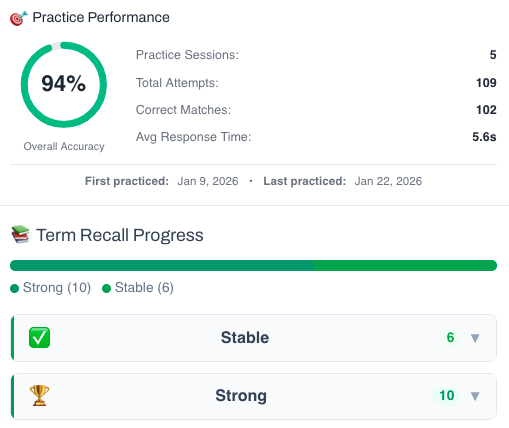
This isn’t a simple quiz — it’s a fully tracked learning system. You build knowledge through recognition, then recall, and your progress feeds directly into the Integrated Practice Bar (Writing tasks, AI Chat, and more).
- Practice sessions, accuracy, and response-time tracking
- Term strength levels (Learning → Stable → Strong)
- Personal progress history for each unit
This feature is available to YSP members.
Explore Membership Benefits🎮 Practice Games
Sentence Scrambler
When Past is Present & Past is Past (A2) – Sentence Scramble
Member-Exclusive Sentence Builder
Reconstruct scrambled sentences to practice word order and develop your grammar intuition.
This feature is available to YSP members.
Explore Membership Benefits