At the Veterinary Clinic: Essential English for Pet Healthcare
Core PathWay
1 Making Your First Vet Appointment
When your pet is ill, you need to contact a veterinary clinic quickly.
The first step is to call the clinic and book a consultation. This means an appointment where the vet examines your pet. You should explain that your dog is unwell and you need to see the vet soon. The receptionist will ask for your pet’s name, your contact details, and basic information about the problem. If your dog is very sick, you might need an emergency appointment. This is an urgent visit that happens on the same day.
When you arrive at the clinic, the receptionist will ask about your dog’s medical history. This means information about past illnesses, injuries, and treatments. If this is your first visit to this clinic, they will create a new file for your pet. In other words, they will record all the important health information. You should bring any documents from your previous vet if you have them.
The receptionist might also ask if your dog’s vaccinations are up to date. Vaccinations are injections that protect animals from serious diseases. In the UK, dogs typically need vaccinations against distemper, parvovirus, and other illnesses. If you’re not sure about your dog’s vaccination status, tell the receptionist honestly.
Key Terms
2 Describing Your Dog’s Symptoms
The vet needs to know exactly what is wrong with your dog, so you must describe the symptoms clearly.
Symptoms are signs that show your pet is ill. For example, if your dog is vomiting, this means bringing up food from the stomach. You should tell the vet when the vomiting started and how often it happens. Other common symptoms include diarrhoea (very liquid waste from the bowels), lethargy (being very tired and inactive), and loss of appetite (not wanting to eat). If your dog is limping, this means walking with difficulty because one leg hurts. You might also notice discharge from the eyes or nose, which means liquid coming out.
When you describe symptoms, try to be specific about timing. You could say “She started vomiting yesterday evening” or “He hasn’t eaten for two days”. The vet might ask if your dog has been coughing, sneezing, or scratching more than usual. These details help the vet understand what is causing the problem. If you notice any swelling (when a part of the body becomes bigger than normal), show the vet exactly where it is.
It’s also important to mention any changes in behaviour. If your normally friendly dog becomes aggressive or your active dog seems depressed, these are significant symptoms. Don’t worry if you don’t know all the medical words in English. You can point to the problem area or use simple descriptions like “His stomach is hard” or “She’s breathing very fast”.
Key Terms
3 Understanding Key Veterinary Terms
During your consultation, the vet will use specific medical terms that you need to understand.
These terms help the vet explain the diagnosis, treatment, and care your dog needs. Don’t be afraid to ask the vet to repeat something or explain it in simpler words. Most vets are happy to help pet owners understand their pet’s condition clearly.
prescription
- write a prescription
- fill a prescription
- prescription medication
- need a prescription for
- The vet wrote a prescription for antibiotics to treat the infection.
- You need to take this prescription to a pharmacy to get the medicine.
diagnosis
- make a diagnosis
- confirm the diagnosis
- accurate diagnosis
- reach a diagnosis
- After examining your dog, the vet will make a diagnosis and explain the treatment.
- The diagnosis was an ear infection, which is common in dogs with long ears.
follow-up appointment
- book a follow-up appointment
- schedule a follow-up
- come back for a follow-up
- need a follow-up in
- The vet asked me to book a follow-up appointment in two weeks to check the wound.
- If your dog doesn’t improve, you should come back for a follow-up appointment sooner.
Key Terms
4 Practical Dialogue and Communication Tips
Here are some useful phrases and strategies for your vet visit that will help you communicate clearly even when you’re worried.
When you arrive, you might say: “Hello, I have an appointment for my dog at 3 o’clock” or “I called earlier about my sick dog”. If you’re nervous about your English, you could explain: “I’m sorry, English is not my first language. Could you speak slowly, please?” Most vets will be very understanding and helpful.
During the consultation, these phrases are useful: “When did this start?” means the vet wants to know what day or time the symptoms began. You could answer: “It started yesterday morning” or “I first noticed it three days ago”. If the vet asks “Has this happened before?”, they want to know if your dog had the same problem in the past. You can say “Yes, last year” or “No, this is the first time”.
When the vet explains the treatment, you might need to ask questions. Try: “How often should I give this medicine?” or “Can I give him food with the tablets?” or “When should I come back?” Don’t worry about asking the vet to repeat information. You can say: “I’m sorry, I didn’t understand. Could you explain that again?” or “Could you write that down for me, please?”
If you need to discuss costs, you could ask: “How much will this cost?” or “Do you accept payment by card?” At the end of the visit, make sure you understand everything. You might say: “So I should give him one tablet twice a day, is that correct?” or “I need to come back in one week, right?” This way, you can check you understood the instructions correctly. Remember, the vet wants to help your dog, so don’t be afraid to ask questions until everything is clear.
Use the VAS to build solid recognition and recall of the terms below.
✔ Every correct Match = +1 point
✔ Every correct Recall = +2 points
🎓 Reach 5 points with good accuracy and the term is automatically promoted to your Personal Dictionary.
Incorrect answers lower accuracy, meaning more correct Matches or Recalls may be needed to reach promotion.
Member-Exclusive Vocabulary Review & Acquisition System
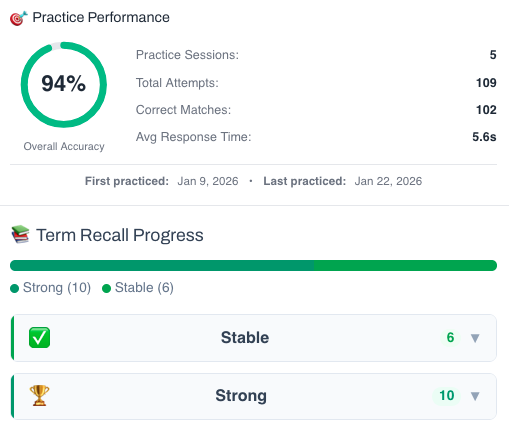
This isn’t a simple quiz — it’s a fully tracked learning system. You build knowledge through recognition, then recall, and your progress feeds directly into the Integrated Practice Bar (Writing tasks, AI Chat, and more).
- Practice sessions, accuracy, and response-time tracking
- Term strength levels (Learning → Stable → Strong)
- Personal progress history for each unit
This feature is available to YSP members.
Explore Membership BenefitsMember-Exclusive Practice Bar
Access a wide range of integrated practice for this unit — from Vocabulary and Grammar activities to AI-curated Writing tasks and Thematic Chat practice.
This feature is available to YSP members.
Explore Membership BenefitsMember-Exclusive Sentence Builder
Reconstruct scrambled sentences to practice word order and develop your grammar intuition.
This feature is available to YSP members.
Explore Membership Benefits