Crisis Management for Managers: Essential Terminology and Strategic Response
Core PathWay
1 The Crisis Landscape: Why Terminology Matters
When chaos erupts, the language you use can mean the difference between recovery and disaster.
Managers today face an increasingly complex array of crises, both internal and external. Internal crises might include data breaches exposing customer information, workplace accidents resulting in serious injuries, allegations of harassment creating legal liability, or sudden leadership departures destabilizing organizational structure. External crises, by contrast, originate beyond organizational boundaries: natural disasters disrupting supply chains, regulatory investigations threatening operations, social media campaigns damaging brand reputation, or economic downturns forcing rapid restructuring. Significantly, many crises blur these boundaries—a cybersecurity breach (internal vulnerability) can trigger regulatory scrutiny and media attention (external pressures), creating cascading challenges that demand coordinated responses.
Effective crisis management training equips managers with more than procedural knowledge; it develops linguistic precision under pressure. When communicating with board members, employees, media representatives, or regulatory bodies, the terminology you employ signals competence and control. Distinguishing between ‘mitigating risk’ and ‘averting disaster,’ or knowing when to ‘escalate’ versus ‘contain’ a situation, demonstrates strategic thinking. Moreover, imprecise language during crises can have serious repercussions—vague statements may be misinterpreted, creating legal exposure or eroding stakeholder confidence. Conversely, mastering crisis terminology enables managers to articulate clear action plans, set appropriate expectations, and maintain credibility when circumstances are deteriorating rapidly.
The vocabulary of crisis management also facilitates rapid decision-making within teams. When everyone understands what it means to deploy resources, implement triage protocols, or activate a contingency plan, response times improve dramatically. This shared linguistic framework becomes particularly crucial in unprecedented situations where standard operating procedures may not apply, requiring managers to improvise while maintaining organizational coherence and stakeholder trust.
2 Core Crisis Management Terminology: Definitions and Distinctions
Understanding the nuances between related crisis management terms prevents miscommunication when stakes are highest. This section clarifies twenty essential terms through precise definitions, practical examples, and common collocations that reflect authentic professional usage.
Pay particular attention to how seemingly similar terms actually describe distinct phases or aspects of crisis response—for instance, the difference between preventing a crisis (to avert), reducing its severity once it occurs (to mitigate), and managing the aftermath (damage control). These distinctions matter enormously when coordinating multi-stakeholder responses under time pressure.
to mitigate
- mitigate risks
- mitigate the impact
- mitigate consequences
- measures to mitigate
- efforts to mitigate
- We implemented remote work protocols to mitigate the health risks to our workforce during the outbreak.
- The legal team is working to mitigate potential financial penalties by demonstrating our compliance efforts.
contingency plan
- activate the contingency plan
- develop contingency plans
- contingency planning
- robust contingency plan
- contingency plan in place
- Our contingency plan includes alternative suppliers in three different regions to ensure business continuity.
- When the venue cancelled unexpectedly, we activated our contingency plan and moved the conference online within 48 hours.
to escalate
- escalate rapidly
- escalate the issue
- escalate to senior management
- situation escalated
- escalating tensions
- What began as a customer complaint escalated into a social media crisis affecting our brand reputation across multiple markets.
- I’ve decided to escalate this security concern to the board level given the potential regulatory implications.
damage control
- damage control mode
- damage control efforts
- engage in damage control
- effective damage control
- immediate damage control
- Following the product recall announcement, our communications team went into damage control mode, reaching out to affected customers directly.
- The CEO’s damage control interview attempted to reassure investors that the accounting irregularities were isolated incidents.
to defuse
- defuse the situation
- defuse tensions
- attempt to defuse
- successfully defused
- defuse the crisis
- The mediator managed to defuse tensions between the striking workers and management by proposing a temporary compromise.
- Her calm, transparent communication defused what could have become a major public relations disaster.
crisis management
- crisis management team
- crisis management strategy
- effective crisis management
- crisis management protocol
- crisis management training
- Our crisis management framework includes clear decision-making hierarchies and communication protocols for various emergency scenarios.
- The company’s reputation for excellent crisis management helped maintain investor confidence during the cybersecurity incident.
to contain
- contain the damage
- contain the situation
- efforts to contain
- successfully contained
- contain the spread
- We isolated the affected servers immediately to contain the data breach before it could spread to other systems.
- The communications blackout was designed to contain rumors until we had verified information to share with stakeholders.
repercussions
- serious repercussions
- legal repercussions
- negative repercussions
- repercussions for
- face repercussions
- The hasty decision to terminate the whistleblower had serious legal repercussions that cost the company millions in settlements.
- We’re still assessing the full repercussions of the supply chain disruption on our quarterly projections.
to avert
- avert disaster
- avert a crisis
- avert the threat
- narrowly averted
- measures to avert
- The early warning system averted what could have been a catastrophic failure by alerting engineers to the structural weakness.
- By negotiating directly with the regulatory body, we averted formal sanctions that would have damaged our operating license.
triage
- triage process
- triage system
- conduct triage
- triage priorities
- triage the issues
- During the system outage, IT conducted triage to identify which services needed immediate restoration versus which could wait.
- Our crisis triage protocol ranks issues by potential financial impact, legal exposure, and reputational risk.
fallout
- political fallout
- economic fallout
- deal with the fallout
- fallout from
- minimize fallout
- The fallout from the CEO’s controversial remarks included boycotts, shareholder lawsuits, and the resignation of three board members.
- We’re still managing the fallout from the data breach six months later, with ongoing credit monitoring costs and customer trust issues.
to deploy
- deploy resources
- deploy personnel
- deploy emergency measures
- rapidly deploy
- deploy the team
- We deployed our crisis communications team to the affected region within hours of the incident.
- The company deployed additional customer service representatives to handle the surge in complaint calls.
protocol
- follow protocol
- established protocol
- protocol for
- breach of protocol
- safety protocol
- According to our crisis protocol, any data breach must be reported to the security team within one hour of discovery.
- The evacuation protocol requires all employees to assemble at designated meeting points for headcount verification.
stakeholder
- key stakeholders
- stakeholder engagement
- stakeholder interests
- communicate with stakeholders
- stakeholder concerns
- We identified employees, customers, suppliers, regulators, and local community members as key stakeholders requiring different communication strategies.
- The stakeholder analysis revealed that investor confidence was our most vulnerable area during the leadership transition.
resilience
- organizational resilience
- build resilience
- demonstrate resilience
- resilience planning
- resilience strategy
- The company’s resilience was evident when operations returned to 90% capacity within a week of the cyberattack.
- We’re investing in resilience training to help managers maintain performance under sustained pressure.
to deteriorate
- rapidly deteriorate
- situation deteriorated
- deteriorating conditions
- deteriorate further
- allowed to deteriorate
- Labor relations deteriorated steadily over three months as management failed to address workplace safety concerns.
- Without immediate intervention, the client relationship will deteriorate beyond repair.
unprecedented
- unprecedented situation
- unprecedented challenge
- unprecedented scale
- unprecedented response
- unprecedented circumstances
- The pandemic presented unprecedented challenges that our existing crisis management frameworks hadn’t anticipated.
- We’re facing unprecedented regulatory scrutiny that requires legal expertise beyond our in-house capabilities.
to mobilize
- mobilize resources
- mobilize quickly
- mobilize support
- mobilize the team
- mobilize efforts
- We mobilized cross-functional teams from three departments to address the supply chain disruption within 24 hours.
- The company mobilized its global network of partners to source alternative materials when the primary supplier failed.
collateral damage
- minimize collateral damage
- collateral damage to
- avoid collateral damage
- assess collateral damage
- collateral damage from
- The restructuring eliminated the problematic division but caused collateral damage to employee morale across the organization.
- We’re trying to minimize collateral damage to our retail partners while addressing the pricing issues with our direct-to-consumer channel.
salvage
- salvage the situation
- salvage operations
- salvage what we can
- attempt to salvage
- salvage the relationship
- Although the product launch failed, we managed to salvage valuable customer insights that informed our next development cycle.
- The account manager made a final attempt to salvage the client relationship by offering significant service improvements and pricing concessions.
3 Crisis in Action: The TechNova Data Breach
Understanding terminology becomes meaningful only when applied to realistic scenarios. Consider how the following crisis unfolds and notice how precise language shapes the response.
At 3:47 AM on a Tuesday morning, TechNova’s security systems detected unprecedented network activity suggesting a major data breach. The situation escalated rapidly when analysts confirmed that customer payment information had been accessed. Within the hour, the crisis management team was mobilized, pulling together IT security, legal counsel, communications specialists, and senior leadership. Their immediate priority was triage—determining which systems were compromised, which customer segments were affected, and what data had been exposed.
The team worked to contain the breach by isolating affected servers and shutting down external access points, preventing the intrusion from spreading to other databases. Simultaneously, they needed to mitigate potential harm to affected customers by preparing to offer credit monitoring services and enhanced security measures. The legal team warned of serious repercussions if they failed to notify regulators and customers within the statutory timeframe, potentially including substantial fines and class-action lawsuits.
By midday, the communications director was deployed to handle media inquiries that were beginning to surface on social media. Her damage control strategy involved transparent acknowledgment of the breach, clear explanation of containment measures already implemented, and concrete commitments to affected stakeholders. The company activated its contingency plan for business continuity, which included backup payment processing systems that allowed e-commerce operations to continue while the compromised systems underwent forensic analysis.
Throughout the week, the leadership team demonstrated considerable resilience, maintaining operational focus despite intense pressure from media coverage, regulatory investigations, and customer complaints. They implemented their crisis protocol meticulously, documenting every decision and communication for potential legal scrutiny. The CEO personally reached out to major corporate clients to defuse concerns about future business relationships, emphasizing the company’s substantial investments in enhanced security infrastructure.
By Friday, the immediate crisis had been contained, but the fallout was only beginning. The breach had caused significant collateral damage—several planned partnerships were now on hold, the company’s stock price had dropped 18%, and employee morale had deteriorated as staff faced angry customer interactions daily. Nevertheless, the crisis management team had successfully averted the worst-case scenario: a complete loss of customer trust and regulatory shutdown of operations. Now their focus shifted to salvaging the company’s reputation through transparent reporting of security improvements and proactive customer outreach. The experience, while costly, would ultimately strengthen TechNova’s crisis management capabilities and organizational resilience for future challenges.
4 Your Crisis Response: Reflection and Language Practice
Effective crisis management requires not only strategic thinking but also the linguistic flexibility to communicate appropriately across diverse situations and stakeholder groups. This reflection exercise invites you to consider how you would respond to various crisis scenarios, paying particular attention to the terminology and register you would employ. There are no single ‘correct’ answers—crisis communication often involves balancing competing priorities and stakeholder needs. However, certain linguistic choices signal competence, transparency, and control more effectively than others.
Reflection prompts
- Your company has just discovered that a senior executive has been falsifying expense reports for two years. The media has gotten wind of the story. How would you communicate this to your board of directors? What terminology would you use to frame the situation, and what action steps would you propose?
- During a product launch event, a demonstration goes catastrophically wrong, injuring three attendees. You’re the event manager. What would you say to the injured parties, to other attendees, to your CEO who is present, and later to the media? Consider how your language might differ across these audiences.
- A disgruntled former employee has posted detailed allegations of workplace discrimination on social media, and the post is being widely shared. You’re the HR director. How would you address this with current employees? What would you say in a public statement? What terminology helps you maintain credibility while the situation is still being investigated?
- Your company’s main supplier has suddenly declared bankruptcy, threatening to halt your production line within days. You need to brief your executive team on the situation. How would you structure this communication? What crisis management terminology would help you present both the severity of the situation and your proposed response plan?
Sentence stems
- Given the severity of this situation, our immediate priority must be to…
- To mitigate the potential impact on…, I recommend we…
- We need to mobilize resources quickly in order to…
- The key stakeholders we must consider include…, and each requires…
- Our contingency plan involves…, which should enable us to…
- To contain this situation and prevent further escalation, we should…
- While we work to salvage…, we must also acknowledge that…
- The potential repercussions of… mean that we cannot afford to…
- In terms of triage, I would prioritize… over… because…
- To defuse tensions with…, I propose we…
- Our crisis protocol requires that we…, and I’ve already…
- Notwithstanding the challenges we face, our organizational resilience should enable us to…
Try to use these terms
5 Lesson Synthesis: Building Your Crisis Communication Capability
Mastery of crisis management terminology represents far more than vocabulary acquisition—it constitutes a fundamental professional capability that enables you to think clearly and communicate effectively when circumstances are most challenging.
Throughout this lesson, you’ve encountered twenty essential terms that form the linguistic foundation of professional crisis response. You’ve seen how precise terminology prevents miscommunication (distinguishing between ‘averting’ a crisis and ‘mitigating’ its impact), enables rapid coordination (shared understanding of ‘triage’ protocols and ‘deployment’ strategies), and projects competence to stakeholders (appropriate use of terms like ‘resilience,’ ‘fallout,’ and ‘collateral damage’). These terms aren’t merely labels—they represent distinct concepts and strategic choices that shape how crises unfold and how organizations recover.
The TechNova scenario demonstrated how multiple crisis management concepts interact in realistic situations. Rarely does a crisis require just one response; instead, managers must simultaneously contain immediate threats, mitigate ongoing damage, deploy resources strategically, communicate with diverse stakeholders, and position the organization for recovery. The terminology you’ve learned provides the conceptual framework for managing this complexity without becoming overwhelmed.
Your reflections on hypothetical crisis scenarios have, ideally, revealed something important: the language you choose shapes not only how others perceive the crisis but how you conceptualize it yourself. Framing a situation as ‘deteriorating’ versus ‘escalating,’ or deciding whether to emphasize ‘damage control’ or ‘salvage operations,’ reflects underlying strategic assumptions about what’s possible and what matters most. Developing this linguistic sophistication takes practice, but it begins with the foundational vocabulary you’ve explored here.
As you continue developing your crisis management capabilities, remember that terminology serves communication, not the reverse. The goal isn’t to pepper your speech with impressive-sounding jargon, but rather to achieve the precision, clarity, and credibility that effective crisis leadership demands. In high-pressure situations where stakes are substantial and time is limited, the right word at the right moment can make all the difference.
Use the VAS to build solid recognition and recall of the terms below.
✔ Every correct Match = +1 point
✔ Every correct Recall = +2 points
🎓 Reach 5 points with good accuracy and the term is automatically promoted to your Personal Dictionary.
Incorrect answers lower accuracy, meaning more correct Matches or Recalls may be needed to reach promotion.
Member-Exclusive Vocabulary Review & Acquisition System
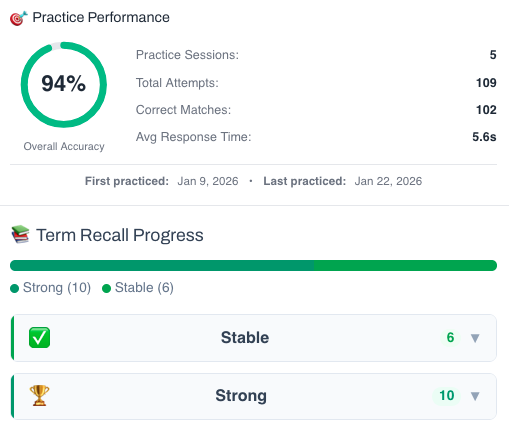
This isn’t a simple quiz — it’s a fully tracked learning system. You build knowledge through recognition, then recall, and your progress feeds directly into the Integrated Practice Bar (Writing tasks, AI Chat, and more).
- Practice sessions, accuracy, and response-time tracking
- Term strength levels (Learning → Stable → Strong)
- Personal progress history for each unit
This feature is available to YSP members.
Explore Membership BenefitsMember-Exclusive Practice Bar
Access a wide range of integrated practice for this unit — from Vocabulary and Grammar activities to AI-curated Writing tasks and Thematic Chat practice.
This feature is available to YSP members.
Explore Membership BenefitsMember-Exclusive Sentence Builder
Reconstruct scrambled sentences to practice word order and develop your grammar intuition.
This feature is available to YSP members.
Explore Membership BenefitsMember-Exclusive Sentence Builder
Reconstruct scrambled sentences to practice word order and develop your grammar intuition.
This feature is available to YSP members.
Explore Membership Benefits