Basic Food Vocabulary: Planning Your Shopping List
Core PathWay
1 Planning Your Week’s Meals
When you live in an English-speaking country, knowing food vocabulary is essential for daily life.
Every week, you need to plan meals and make a shopping list. You visit the supermarket and look for ingredients – the foods you need to make your dishes. You might ask yourself: Do I need some vegetables? Do we have any milk at home? Is there a lot of rice left? These questions help you decide what to buy.
Food vocabulary is not just about naming items. It is also about understanding how English speakers talk about food. Some foods are countable – you can say one apple, two apples. Other foods are uncountable – you cannot say “one rice” or “two milks” in the same way. This difference affects the words you use when shopping and cooking.
In this lesson, you will learn the names of common fresh ingredients from different food groups: vegetables, fruits, proteins, carbohydrates, and dairy products. You will also learn how to use the right words when you talk about quantities.
2 Three Essential Vegetables
Let’s start with three vegetables you will see in almost every supermarket and use in many recipes.
These three vegetables – carrot, potato, and tomato – are basic ingredients in kitchens around the world. Understanding how to talk about them, including their plural forms and common phrases, will help you shop and cook with confidence.
carrot
- I need to buy some carrots for the salad.
- She cut the carrots into small pieces for the soup.
potato
- We had chicken with boiled potatoes for dinner.
- Can you peel the potatoes, please?
tomato
- I bought some fresh tomatoes for the pasta sauce.
- Add a tin of chopped tomatoes to the pan.
Key Terms
3 Shopping for the Week: A Learner’s Journey
Meet Alex, a student who moved to the UK three months ago. Every Saturday, Alex goes to the supermarket to buy food for the week.
Today, Alex is planning to cook pasta dishes, prepare breakfast, and make packed lunches. First, Alex thinks about pasta. “I need some onion and lettuce for a salad. Do I have any cheese? Yes, there is some in the fridge, but I should buy more. And I need butter for garlic bread.” Alex writes these items on the shopping list.
Next, breakfast. “I want to make scrambled eggs tomorrow morning. I also need milk for my coffee and cereal. And I should get some bread – maybe a fresh loaf.” Alex adds these to the list. Then Alex thinks about fruit: “I love apples because they are easy to carry. Bananas are good too – they give me energy. And maybe some oranges for juice.”
Now, packed lunches. “I need protein. Chicken is good – I can cook it and use it in sandwiches. Or maybe fish? No, I will cook fish for dinner one evening. I will get chicken. And beef – I can make a beef stir-fry with rice.”
Alex looks at the list and feels happy. “I have vegetables, fruit, protein, carbohydrates, and dairy. I am ready!” At the supermarket, Alex picks up fresh ingredients carefully. The tomatoes look good today – bright red and firm. The carrots are in a big bag, which is cheaper. Alex chooses a packet of pasta and a box of rice.
Shopping in English felt difficult at first, but now Alex knows the names of all these ingredients. It makes cooking and eating well much easier. Alex smiles and heads to the checkout, ready to cook some delicious meals this week.
4 Grammar Focus: Countable and Uncountable Food Nouns
When you talk about food in English, you need to know if a noun is countable or uncountable. This affects the words you use before the noun.
Countable nouns are things you can count: one apple, two eggs, three potatoes. Uncountable nouns are substances or things you cannot count in the same way: milk, rice, butter. You cannot say “one milk” or “two rices” in English. Instead, you talk about quantities: a bottle of milk, a bag of rice, some butter.
Focus
- Countable nouns: use a/an with singular, use plural forms
- Uncountable nouns: no a/an, no plural -s, use quantity words
- Quantifiers: some, any, a lot of work with both types
Rules
- Countable singular: a carrot, an apple, an egg. Use a or an before the noun.
- Countable plural: carrots, apples, eggs. Add -s or -es. Use some, any, a lot of before plural countable nouns.
- Uncountable: rice, milk, bread, butter, cheese, pasta, fish (when referring to the meat), chicken (when referring to the meat), beef, lettuce (usually). No a/an, no plural. Use some, any, a lot of before uncountable nouns.
- Some: used in positive sentences and offers. ‘I need some milk.’ ‘Would you like some rice?’
- Any: used in questions and negatives. ‘Do we have any eggs?’ ‘There isn’t any butter.’
- A lot of: used in positive sentences to mean a large quantity. Works with both countable and uncountable. ‘We have a lot of apples.’ ‘There is a lot of pasta.’
Examples
- I bought an orange and some bananas. (countable: an + singular, some + plural)
- We need some rice and some chicken for dinner. (uncountable: some + uncountable nouns)
- Do you have any fresh tomatoes? Is there any milk left? (any in questions)
Common mistake
5 Your Complete Shopping List
Now you know the vocabulary and the grammar rules. Let’s put it all together in a complete shopping list organised by food groups.
Vegetables:
– some carrots
– some potatoes
– some tomatoes
– an onion (or: some onions if you need more than one)
– some lettuce
Fruit:
– some apples
– some bananas
– some oranges
Protein:
– some chicken
– some beef
– some fish
– some eggs (note: eggs are countable, but we often say ‘some eggs’ meaning an unspecified number)
Carbohydrates:
– some rice
– some pasta
– some bread (or: a loaf of bread)
Dairy:
– some milk (or: a bottle of milk)
– some cheese
– some butter
Notice how the list uses some with both countable plurals (apples, eggs) and uncountable nouns (rice, milk). This is correct! When you make your own shopping list, remember to think about whether each food is countable or uncountable. This will help you use the right quantifiers.
Now it is your turn. Think about the meals you want to cook this week. Write down the fresh ingredients you need. Organise them by food group if it helps you. And remember: shopping for food is not just about buying things – it is also a great way to practise your English every day!
Key Terms
6 Recap: Your Food Vocabulary Toolkit
You have now learned the essential vocabulary for shopping and meal planning in English.
You can name common foods from five groups: vegetables (carrot, potato, tomato, onion, lettuce), fruits (apple, banana, orange), proteins (chicken, beef, fish, eggs), carbohydrates (rice, pasta, bread), and dairy (milk, cheese, butter). You understand that some of these nouns are countable and some are uncountable, and this affects the words you use with them.
You know how to use some, any, and a lot of correctly when you talk about food. You can make a shopping list, ask questions in a supermarket, and plan your meals for the week. These skills will help you every day in an English-speaking environment. Practise by writing your own shopping lists and thinking about the fresh ingredients you need. The more you use this vocabulary, the more natural it will become!
🎮 Practice
Use the VAS to build solid recognition and recall of the terms below.
✔ Every correct Match = +1 point
✔ Every correct Recall = +2 points
🎓 Reach 5 points with good accuracy and the term is automatically promoted to your Personal Dictionary.
Incorrect answers lower accuracy, meaning more correct Matches or Recalls may be needed to reach promotion.
Member-Exclusive Vocabulary Review & Acquisition System
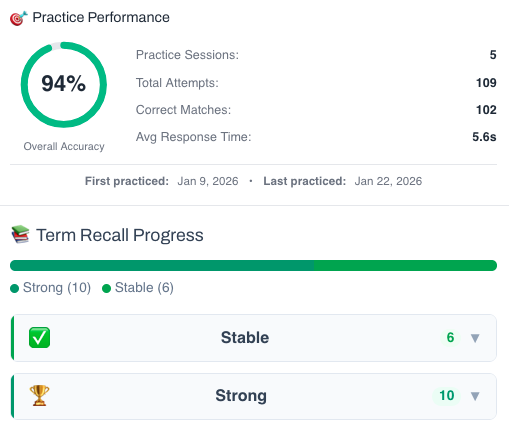
This isn’t a simple quiz — it’s a fully tracked learning system. You build knowledge through recognition, then recall, and your progress feeds directly into the Integrated Practice Bar (Writing tasks, AI Chat, and more).
- Practice sessions, accuracy, and response-time tracking
- Term strength levels (Learning → Stable → Strong)
- Personal progress history for each unit
This feature is available to YSP members.
Explore Membership BenefitsMember-Exclusive Practice Bar
Access a wide range of integrated practice for this unit — from Vocabulary and Grammar activities to AI-curated Writing tasks and Thematic Chat practice.
This feature is available to YSP members.
Explore Membership BenefitsMember-Exclusive Sentence Builder
Reconstruct scrambled sentences to practice word order and develop your grammar intuition.
This feature is available to YSP members.
Explore Membership Benefits