Kitchen Tools and Utensils
Core PathWay1 Your First Kitchen Tools
You want to start cooking at home. What tools do you need?
Today you open a box of basic kitchen tools. Inside the box you find knives, spoons, bowls, and other useful things. Some tools are big. Some are small. Each tool has a special job in the kitchen. You use a chef’s knife to cut vegetables. You use a peeler to remove the skin from potatoes. You use a whisk to mix eggs. Every tool helps you cook better food.
Don’t worry if you don’t know all the names yet. In this lesson you will learn the most important kitchen tools. You will learn what each tool is called. You will also learn what you use each tool for. Soon you will feel comfortable in any kitchen. Let’s start with the most important tools first.
2 Essential Cutting Tools
Every cook needs good cutting tools. These three tools are the most important. You will use them every day when you cook.
A good knife, a small knife, and a safe surface to cut on are essential. Let’s look at each one carefully.
chef’s knife
- You use a chef’s knife to chop onions and carrots.
- I bought a new chef’s knife because my old one was not sharp.
paring knife
- You use a paring knife to remove the seeds from a pepper.
- She used a paring knife to cut the apple into small pieces.
chopping board
- You use a chopping board to protect your kitchen table.
- Always put a chopping board under your knife when you cut vegetables.
Key Terms
3 Maria’s First Soup
Maria wants to make vegetable soup. She has vegetables, water, and a recipe. But she doesn’t know which tools to use.
First, Maria needs to prepare the vegetables. She picks up a peeler. ‘Oh, this is for removing the skin!’ she says. She uses the peeler to peel three carrots and two potatoes. Next, she finds a grater in the drawer. She uses the grater to grate some cheese. The cheese becomes small pieces. ‘This is much faster than cutting with a knife,’ she thinks.
Now Maria is ready to cook. She puts water in a pot. The recipe says ‘Add two cups of water.’ Maria looks for the measuring cups. She finds them and measures the water carefully. Then she adds vegetables to the pot. She uses a wooden spoon to stir everything together. The wooden spoon is perfect because it doesn’t scratch her pot.
While the soup cooks, Maria makes a simple salad dressing. She breaks two eggs into a mixing bowl. She picks up a whisk. ‘You use this to mix eggs, right?’ she asks herself. Yes! She uses the whisk to beat the eggs. The whisk makes the eggs smooth and light.
After thirty minutes, the soup is ready. Maria needs to drain the pasta she cooked separately. She puts a colander in the sink. She pours the pasta into the colander. The water goes down the drain. The pasta stays in the colander. Finally, Maria uses a ladle to serve the hot soup into bowls. The ladle has a long handle so her hand stays away from the hot soup.
Maria smiles. ‘Now I know what all these tools are for!’ she says. Cooking is easier when you use the right tool for each job.
Key Terms
4 How to Talk About Tool Functions
When you talk about kitchen tools, you need to explain what each tool does. There are two common ways to do this in English. Both are correct, but we use them in different situations.
The first way uses ‘to + verb’. The second way uses ‘for + verb-ing’. Let’s learn when to use each one.
Focus
- Use ‘to + verb’ when you talk about YOUR action with the tool
- Use ‘for + verb-ing’ when you talk about the GENERAL purpose of the tool
- Both structures are correct, but ‘to + verb’ is more common in everyday speech
Rules
- Structure 1: You use [tool] to [verb]. Example: You use a peeler to remove the skin.
- Structure 2: A [tool] is for [verb-ing]. Example: A peeler is for removing the skin.
- After ‘use’, we say ‘to + verb’. After ‘for’, we say ‘verb + -ing’.
- Don’t mix them: NOT ‘You use a peeler for to remove’ and NOT ‘A peeler is to removing’.
Examples
- I use a whisk to mix eggs. / A whisk is for mixing eggs.
- You use a can opener to open cans. / A can opener is for opening cans.
- She uses tongs to lift hot food. / Tongs are for lifting hot food.
Common mistake
5 You’re Ready to Cook!
Well done! You now know the names of many important kitchen tools. You learned about knives, spoons, bowls, and other useful equipment. You also learned how to explain what each tool is for.
When you read a recipe, you will see these tool names. Now you will understand what the recipe asks you to do. When someone says ‘Use a ladle to serve the soup,’ you will know exactly what to do. When a recipe says ‘Grate the cheese,’ you will know which tool to use.
Take some time to look at the tools in your own kitchen. Pick up each tool. Say its name. Say what you use it for. This practice will help you remember. Soon, using the right tool will feel natural and easy. Happy cooking!
6 What You Learned Today
Today you learned the English names for essential kitchen tools and utensils. You can now name cutting tools like the chef’s knife, paring knife, and chopping board. You learned about preparation tools like the peeler, grater, and whisk. You also learned about serving tools like the ladle and colander.
You practised explaining what tools are used for. You learned two ways to describe tool functions: ‘You use X to…’ and ‘X is for…-ing’. You saw these tools in action in Maria’s story about making soup. You now have the vocabulary you need to follow recipes and talk about cooking. Keep practising with the tools in your kitchen, and these words will become easy and natural.
Use the VAS to build solid recognition and recall of the terms below.
✔ Every correct Match = +1 point
✔ Every correct Recall = +2 points
🎓 Reach 5 points with good accuracy and the term is automatically promoted to your Personal Dictionary.
Incorrect answers lower accuracy, meaning more correct Matches or Recalls may be needed to reach promotion.
Member-Exclusive Vocabulary Review & Acquisition System
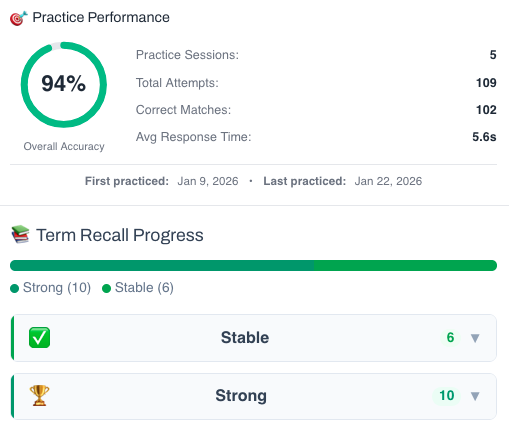
This isn’t a simple quiz — it’s a fully tracked learning system. You build knowledge through recognition, then recall, and your progress feeds directly into the Integrated Practice Bar (Writing tasks, AI Chat, and more).
- Practice sessions, accuracy, and response-time tracking
- Term strength levels (Learning → Stable → Strong)
- Personal progress history for each unit
This feature is available to YSP members.
Explore Membership BenefitsMember-Exclusive Practice Bar
Access a wide range of integrated practice for this unit — from Vocabulary and Grammar activities to AI-curated Writing tasks and Thematic Chat practice.
This feature is available to YSP members.
Explore Membership BenefitsMember-Exclusive Sentence Builder
Reconstruct scrambled sentences to practice word order and develop your grammar intuition.
This feature is available to YSP members.
Explore Membership Benefits