So, You Like Watches? Let’s Talk Like a True Enthusiast
Core PathWay
1 Welcome to the World of Watch Talk
There’s something magical about the moment you start really looking at watches. Suddenly, you notice details everywhere—the way light plays across a dial, the satisfying click of a bracelet, the tiny sub-dials that track seconds and minutes. But here’s the thing: to fully enjoy this hobby and connect with other enthusiasts, you need the right words.
Watch collecting has its own vocabulary, and it’s wonderfully specific. When someone mentions an exhibition caseback, they’re talking about a transparent window that lets you see the movement inside—the beating heart of the watch. When they discuss lume, they mean the glowing material on the hands and indices that helps you read the time in darkness. These aren’t just technical terms; they’re the language of appreciation.
The good news? Once you know these words, everything becomes clearer. You’ll understand what makes an automatic watch different from other types. You’ll know why water resistance matters, what a chronograph actually does, and why collectors get excited about in-house movements. You’ll be able to spot the difference between a strap and a bracelet, understand what complications are (hint: they’re features, not problems!), and talk about patina without feeling lost.
Let’s start with the basics and build your watch vocabulary step by step. By the end, you’ll be ready to join any conversation about timepieces with confidence.
Key Terms
2 The Essential Parts: From Case to Movement
Every watch has a story, and that story starts with understanding its parts. Let’s begin with what you can see and touch, then move to what’s hidden inside.
The dial is the face of the watch—literally. It’s where the hands move and where you’ll find the indices (those markers that show the hours, whether they’re numbers, lines, or dots). Many watches also have a date window, a small opening that displays the current date. Some have sub-dials, which are smaller circles within the main dial that track additional information like seconds, chronograph functions, or even the power reserve—how much energy is left before the watch needs winding.
Protecting all this is the crystal, the transparent cover over the dial. Modern watches typically use sapphire crystal because it resists scratches beautifully. The case itself connects to your wrist through lugs—those projections at 12 and 6 o’clock where the strap or bracelet attaches. The measurement from top lug to bottom lug is called lug-to-lug, and it’s crucial for fit. Many modern watches feature quick-release systems that let you swap straps without tools.
Flip the watch over and you’ll find the caseback. If it’s solid, you won’t see much. But if it’s an exhibition caseback, you’re in for a treat—you can watch the movement at work. The movement is the mechanism that makes everything tick. An automatic movement winds itself using a rotor, a weighted component that spins as you move your wrist. The specific design of a movement is called its caliber, and when a brand designs and manufactures it themselves, it’s called an in-house movement—something collectors really value.
Some watches do more than just tell time. These extra functions are called complications. A chronograph is one of the most popular—it’s essentially a stopwatch built into the watch, controlled by pushers on the side of the case. Other complications include moon phases, perpetual calendars, and world time displays.
Finally, practical concerns: water resistance tells you how much water exposure your watch can handle, measured in meters or atmospheres. And service? That’s the regular maintenance every mechanical watch needs every few years to keep running smoothly. Think of it like servicing a car.
One more thing enthusiasts love: patina. This is the natural aging and color change that happens to certain dial materials and lume over time. Some collectors treasure it because it tells the story of a watch’s life.
Key Terms
3 A Day at the Watch Meetup
Jordan was nervous. It was their first time at the local watch collector meetup, and everyone seemed to know so much. They wore their grandfather’s old automatic watch—a simple piece with a cream dial that had developed beautiful patina over the decades.
‘That’s a lovely piece,’ said Alex, sitting down next to them. ‘May I take a closer look?’
Jordan handed it over carefully. Alex examined the crystal, then turned the watch to check the lugs. ‘Nice proportions. What’s the lug-to-lug measurement?’
‘About 47 millimeters,’ Jordan replied, remembering the measurement they’d taken at home.
‘Perfect size. And look at this lume—it’s aged to a warm cream color that matches the dial perfectly. Do you know what movement is inside?’
Jordan shook their head. ‘I’ve never opened the caseback. I’m not sure if it’s even an exhibition caseback.’
Alex smiled. ‘Let’s check together.’ They carefully turned the watch over. The solid caseback had a few scratches but no window. ‘It’s solid, but that’s fine. Many vintage pieces are. Have you had it serviced recently?’
‘Not yet,’ Jordan admitted. ‘I know I should.’
‘Definitely do that soon,’ Alex advised. ‘An automatic watch needs regular service to keep the rotor and movement healthy. Every five years or so is good.’
Someone else joined them—Chris, wearing a sports watch with three sub-dials on the dial. ‘Is that a chronograph?’ Jordan asked, feeling braver.
‘It is!’ Chris said, clearly pleased. ‘See these pushers on the side? They control the stopwatch function. It’s a complication I actually use—I time everything.’ They pressed the top pusher and one of the sub-dials started moving.
‘What about water resistance?’ Jordan asked. ‘I’m always worried about wearing my watch in the rain.’
‘This one’s rated to 200 meters,’ Chris said. ‘But your vintage piece? I’d keep it away from water unless you know its water resistance rating and it’s been tested recently.’
Alex pointed to the bracelet on their own wrist. ‘I just switched to this bracelet from a leather strap. The quick-release system makes it so easy—no tools needed.’
By the end of the evening, Jordan had learned about in-house movements, examined several exhibition casebacks, and even looked at different calibers through a loupe. They checked the date window on someone’s dress watch and admired the raised indices on another collector’s diver.
Driving home, Jordan realized something wonderful: they could finally speak the language. The words that had seemed mysterious that morning—complications, power reserve, rotor, caliber—now made perfect sense. They weren’t just technical terms anymore. They were the vocabulary of passion, the words that connected everyone at that table.
Jordan glanced at their grandfather’s watch on their wrist, its gentle patina glowing softly in the dashboard light, and smiled. They couldn’t wait for the next meetup.
Key Terms
4 Your Watch Vocabulary Journey
You’ve just learned the core vocabulary that watch enthusiasts use every single day. These aren’t just words to memorize—they’re tools that unlock deeper enjoyment of your hobby.
When you understand that a chronograph is controlled by pushers and displays information on sub-dials, you can actually use and appreciate that function. When you know the difference between a strap and a bracelet, or understand why lug-to-lug measurement matters for fit, you can make better choices about what to wear and buy. When someone mentions an in-house caliber with an exhibition caseback, you’ll know exactly why that’s special—and you’ll want to see that rotor spinning.
The beauty of this vocabulary is that it grows with you. Start by using these terms when you look at your own watches. Notice the indices on your dial. Check if your watch has lume. Look up its water resistance rating. If you’re buying a new strap, pay attention to the lug width. Each time you use these words, they become more natural.
Then take it further. Join online communities, visit watch forums, attend meetups like Jordan did in our story. You’ll hear people discussing power reserve, comparing movements, debating whether patina adds character or needs restoration. You’ll read reviews that mention calibers and complications. And now, you’ll understand every word.
Remember: every expert collector started exactly where you are now. They learned these terms one by one, practiced using them, and gradually built fluency. The movement inside your watch took years to design and perfect. Your vocabulary journey deserves the same patience and appreciation.
So go ahead—look at your watch right now. What do you see on the dial? Is there a date window? How does the crystal catch the light? What kind of strap or bracelet is it wearing? When was it last serviced?
You’re not just learning words. You’re learning to see, appreciate, and talk about something you love. That’s what makes this hobby so rewarding.
5 Put Your Knowledge into Words
Now it’s time to use your new vocabulary naturally. Imagine you’re writing to a friend who’s also interested in watches.
Member-Exclusive Practice Bar
Access a wide range of integrated practice for this unit — from Vocabulary and Grammar activities to AI-curated Writing tasks and Thematic Chat practice.
This feature is available to YSP members.
Explore Membership BenefitsMember-Exclusive Vocabulary Review & Acquisition System
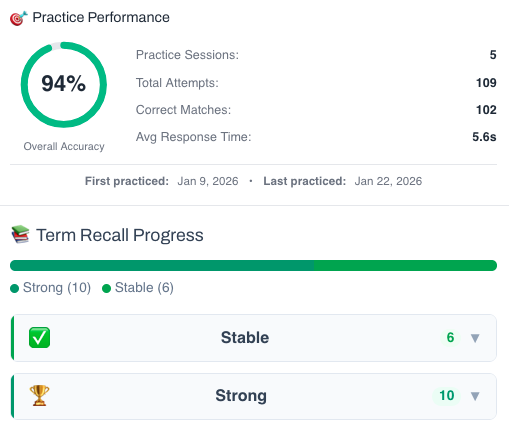
This isn’t a simple quiz — it’s a fully tracked learning system. You build knowledge through recognition, then recall, and your progress feeds directly into the Integrated Practice Bar (Writing tasks, AI Chat, and more).
- Practice sessions, accuracy, and response-time tracking
- Term strength levels (Learning → Stable → Strong)
- Personal progress history for each unit
This feature is available to YSP members.
Explore Membership Benefits🎮 Practice Games
Member-Exclusive Sentence Builder
Reconstruct scrambled sentences to practice word order and develop your grammar intuition.
This feature is available to YSP members.
Explore Membership Benefits