Same Words, Different Meanings: Present Simple and Present Continuous at Work
Core PathWay1 Section 1. Two Tenses, Two Jobs
In English, two tenses do very different jobs. Pay attention to which one a speaker chooses — it tells you something important.
The Present Simple describes habits and routines. This means things a person does regularly — every day, every week, most of the time. Look at these examples:
• I usually start work at eight.
• She generally handles the client emails.
• We normally hold one meeting a week.
Notice the frequency words: usually, generally, normally, once a month. These words are a signal. When you hear them, you are probably hearing a routine.
The Present Continuous (am/is/are + verb-ing) does three different jobs. First, it describes something happening right now — at this moment. Second, it describes a temporary situation — something true this week or this month, but not forever. Third, it describes a fixed future arrangement — a plan already in the diary.
Look at these examples:
• She is talking to the client right now. ← happening now
• This week I’m covering the north region. ← temporary situation
• I’m meeting the team on Thursday. ← future arrangement already planned
The key difference is simple: Present Simple = this is normal. Present Continuous = this is different, new, or temporary.
When you listen to the dialogues on this page, ask yourself one question: Is this speaker describing what they normally do, or what is happening differently right now?
Key Terms
2 Section 2. Dialogue 1: A Different Week at the Office
Listen to Sam, Jordan, and Alex at the start of a Monday morning. They talk about their normal routines — and about what is different this week. Notice how they switch between the two tenses.
💬 Dialogue 1: A Different Week at the Office
Monday morning in a shared office. Sam, Jordan, and Alex work together. They are catching up before the day starts.
📝 Comprehension Check: A Busy Week at the Office
Answer the questions based on what you heard in the audio.
Which speaker is doing a work document earlier than normal this week?
Which speaker is looking after emails for the Henderson account this week?
Which speaker normally stays at home on Mondays but is coming to the office every day this week?
Which speaker tells the others that their manager is travelling to join the meeting?
Which speaker is not taking a long break for lunch today?
Which speaker is working in a different area this week instead of their normal job?
Sam: “Morning, everyone. Jordan, you look busy. What are you working on?”
Jordan: “Hey, Sam. I’m preparing the monthly report. I usually do it on Fridays, but this week I’m doing it today because I’m meeting a client on Friday.”
Alex: “Oh, which client? Is it the Henderson account?”
Jordan: “Yes, exactly. I generally meet them once a month, but this month we’re meeting twice — they want to review the new contract.”
Sam: “That makes sense. I usually handle the Henderson account emails, but this week Alex is taking care of them. I’m covering the north region instead.”
Alex: “Right. And I normally work from home on Mondays, but this week I’m coming in every day because we have a team review on Thursday.”
Jordan: “I forgot about the team review! Do we usually present our numbers at that meeting?”
Sam: “Yes, we always present our numbers. But this time the manager is also joining us — she’s flying in from the head office on Wednesday.”
Alex: “Wow. So this is a big week. I normally finish at five, but I think I’m staying late every day this week to get everything ready.”
Jordan: “Same here. I usually take a long lunch break on Mondays, but today I’m eating at my desk. Too much to do!”
Sam: “Let’s check in again tomorrow. Are you both coming to the morning briefing at nine?”
Alex: “Yes, I’m coming. I usually skip it when I work from home, but this week I’m attending every day. See you both at nine!”
3 Section 3. What Did You Notice? And What Comes Next
Good listening. Now let’s look at some key moments from that dialogue. These pairs show the contrast clearly.
Noticing the contrast
Jordan says two things. First: ‘I usually do it on Fridays.’ This is a routine — the Present Simple with usually. Then: ‘But this week I’m doing it today.’ This is temporary — the Present Continuous with this week. One sentence, one contrast. The word but signals the change.
Sam says: ‘I usually handle the Henderson account emails.’ Routine. Then: ‘But this week Alex is taking care of them.’ Temporary change. Again, but + Present Continuous.
Alex says: ‘I normally work from home on Mondays.’ Routine. Then: ‘But this week I’m coming in every day.’ Temporary.
Sam adds: ‘She’s flying in from the head office on Wednesday.’ This is a fixed arrangement — a plan already made. The Present Continuous + a future time expression (on Wednesday) shows this.
The pattern is clear: routine → but → what is different now.
Getting ready for Dialogue 2
The next dialogue is more complex. It takes place on a construction site. The speakers are project managers. They talk about how this building project is different from a normal one.
Some of the vocabulary is technical. Read these words carefully before you listen.
A building project usually has clear phases — separate stages that happen one after the other. The first phase is the foundation — the base of the building, built into the ground. Next comes the frame. Then comes the fit-out — finishing the inside of the building.
The main structure is the most important part — the walls and frame. The secondary infrastructure is the supporting systems: pipes, cables, and roads.
Subcontractors are separate companies hired to do one specific job, such as electrical or plumbing work. A site meeting is a meeting that happens at the building site itself. A deadline is the date when everything must be finished.
When a project is on track, it is going as planned. Coordination means organising different teams so they work well together. Safety regulations are official rules that keep workers safe.
Now you are ready. Listen for the same pattern: what they normally do, and what is different on this project.
Key Terms
4 Section 4. Dialogue 2: A Different Approach on Site
Listen to Sam, Jordan, and Alex on a construction site. Alex is new to the team and wants to understand the project. Notice how Sam and Jordan use the Present Simple to describe normal practice — and the Present Continuous to show what is different on this project.
💬 Dialogue 2: A Different Approach on Site
A construction site office. Sam and Jordan are experienced project managers. Alex has just joined the team and wants to understand how this project works.
📝 Comprehension Check: A Different Kind of Build
Answer the questions based on what you heard in the audio.
Which speaker says the team is working extra hours to finish on time?
Which speaker says the workers’ area is in a different place this time?
Which speaker says that safety rules do not change on this project?
What does Jordan say about site meetings this month?
What does Sam say about ordering materials on this project?
What does Jordan say about the client’s visits this month?
Alex: “So, can you walk me through the plan? I want to understand how this project is different from a standard build.”
Sam: “Sure. In most construction projects, we build the main structure first and then add the secondary infrastructure. But on this project, we’re building them at the same time to save time and reduce costs.”
Jordan: “That’s right. We usually work in clear phases — foundation, frame, fit-out. But this time we’re running two phases together because the client has a very tight deadline.”
Alex: “Interesting. And what about the materials? Do you normally order everything at the start?”
Sam: “Yes, we normally place one large order at the beginning of a project. But this week we’re ordering materials in smaller batches because storage space on site is limited.”
Jordan: “The site layout is also different. We generally set up the workers’ area on the east side. But right now we’re setting it up on the west side because there’s heavy equipment coming in from the east entrance.”
Alex: “What about the subcontractors? How does that usually work?”
Sam: “We usually bring in subcontractors after we complete the main structure. But on this project, the electrical and plumbing teams are working on site right now, at the same time as the structural team.”
Jordan: “It requires a lot more coordination. We generally hold one site meeting a week. But this month we’re holding them every day because so many teams are working at the same time.”
Alex: “That sounds intense. Is the schedule on track?”
Sam: “Mostly, yes. We normally finish the foundation stage in four weeks. On this project we’re finishing it in three — the team is working extra hours this week to stay on schedule.”
Jordan: “And the client visits the site once a month to check progress. But this month they’re visiting every week because the deadline is so close. It keeps everyone focused.”
Alex: “I can see that. So the whole approach this time is faster and more intensive than usual.”
Sam: “Exactly. We always follow safety regulations — that part never changes. But almost everything else is different on this project. You’ll get used to it quickly.”
5 Section 5. What Did You Notice? Reviewing Dialogue 2
That dialogue had a lot of language to notice. Let’s look at the most important patterns.
The same structure, a new context
Sam says: ‘We normally place one large order at the beginning of a project.’ Routine — Present Simple with normally. Then: ‘But this week we’re ordering materials in smaller batches.’ Temporary change — Present Continuous with this week.
Jordan says: ‘We generally hold one site meeting a week.’ Routine. Then: ‘But this month we’re holding them every day.’ The deadline is close, so everything is more intensive.
Sam says: ‘We normally finish the foundation stage in four weeks.’ Routine. Then: ‘On this project we’re finishing it in three.’ This project is different.
The line that never changes
At the end, Sam says something important: ‘We always follow safety regulations — that part never changes.’ This is a permanent rule, not a routine that can change. The Present Simple here shows something fixed and non-negotiable.
Temporary vs permanent
Almost everything in Dialogue 2 is temporary — it is true for this project only. The speakers use the Present Continuous to signal this. But the safety rules are always true. That is why Sam uses the Present Simple for that one statement.
What to remember
When you hear usually, generally, or normally + Present Simple, the speaker is describing what is normal.
When you hear this week, this month, right now, at the moment + Present Continuous, the speaker is describing something temporary or different.
When you hear a future time expression like on Wednesday or on Thursday + Present Continuous, the speaker is describing a fixed plan.
These three signals — frequency words, temporary time markers, and future time expressions — are your listening tools. Use them every time you hear these tenses in natural speech.
6 Section 6. Page Recap: Two Tenses, Three Signals
This page covered two important grammar forms and how they sound in real conversations.
Present Simple describes habits and routines. You hear it with words like usually, generally, and normally. It tells you: this is what the person does most of the time.
Present Continuous (am/is/are + verb-ing) has three uses:
1. Something happening right now — She is talking to the client.
2. A temporary situation — This week I’m covering the north region.
3. A fixed future arrangement — I’m meeting the team on Thursday.
In both dialogues, the speakers used the same pattern: Present Simple for the routine, then but + Present Continuous for what is different. This contrast is very common in natural English. When you hear it, you know the speaker is signalling a change.
Three listening signals to remember:
• Frequency words (usually, generally, normally) → Present Simple → routine
• Temporary time markers (this week, this month, at the moment) → Present Continuous → temporary
• Future time expressions (on Wednesday, on Thursday) → Present Continuous → fixed plan
Keep these signals in mind the next time you listen to English in a real situation. Notice which tense the speaker chooses — and ask yourself: is this normal, or is this different?
Member-Exclusive Practice Bar
Access a wide range of integrated practice for this unit — from Vocabulary and Grammar activities to AI-curated Writing tasks and Thematic Chat practice.
This feature is available to YSP members.
Explore Membership BenefitsMember-Exclusive Vocabulary Review & Acquisition System
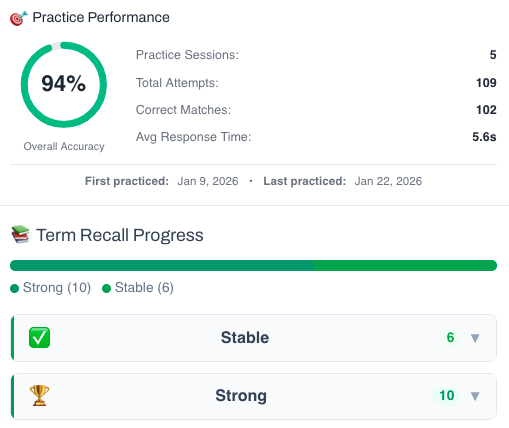
This isn’t a simple quiz — it’s a fully tracked learning system. You build knowledge through recognition, then recall, and your progress feeds directly into the Integrated Practice Bar (Writing tasks, AI Chat, and more).
- Practice sessions, accuracy, and response-time tracking
- Term strength levels (Learning → Stable → Strong)
- Personal progress history for each unit
This feature is available to YSP members.
Explore Membership BenefitsMember-Exclusive Sentence Builder
Reconstruct scrambled sentences to practice word order and develop your grammar intuition.
This feature is available to YSP members.
Explore Membership Benefits